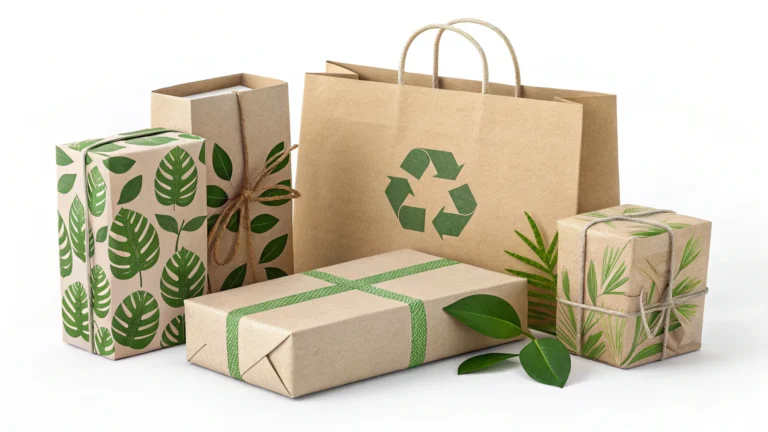
Struggling with generic, unsustainable packaging? It can damage your brand's image. Kraft boxes1 offer a simple, stylish, and eco-friendly2 solution that customers absolutely love.
A Kraft box is packaging made from unbleached wood pulp, giving it a natural brown color and texture. Brands choose it for its eco-friendly2, durable3, and customizable4 qualities. It provides an authentic, rustic look5 that is very popular with modern consumers who value sustainability.
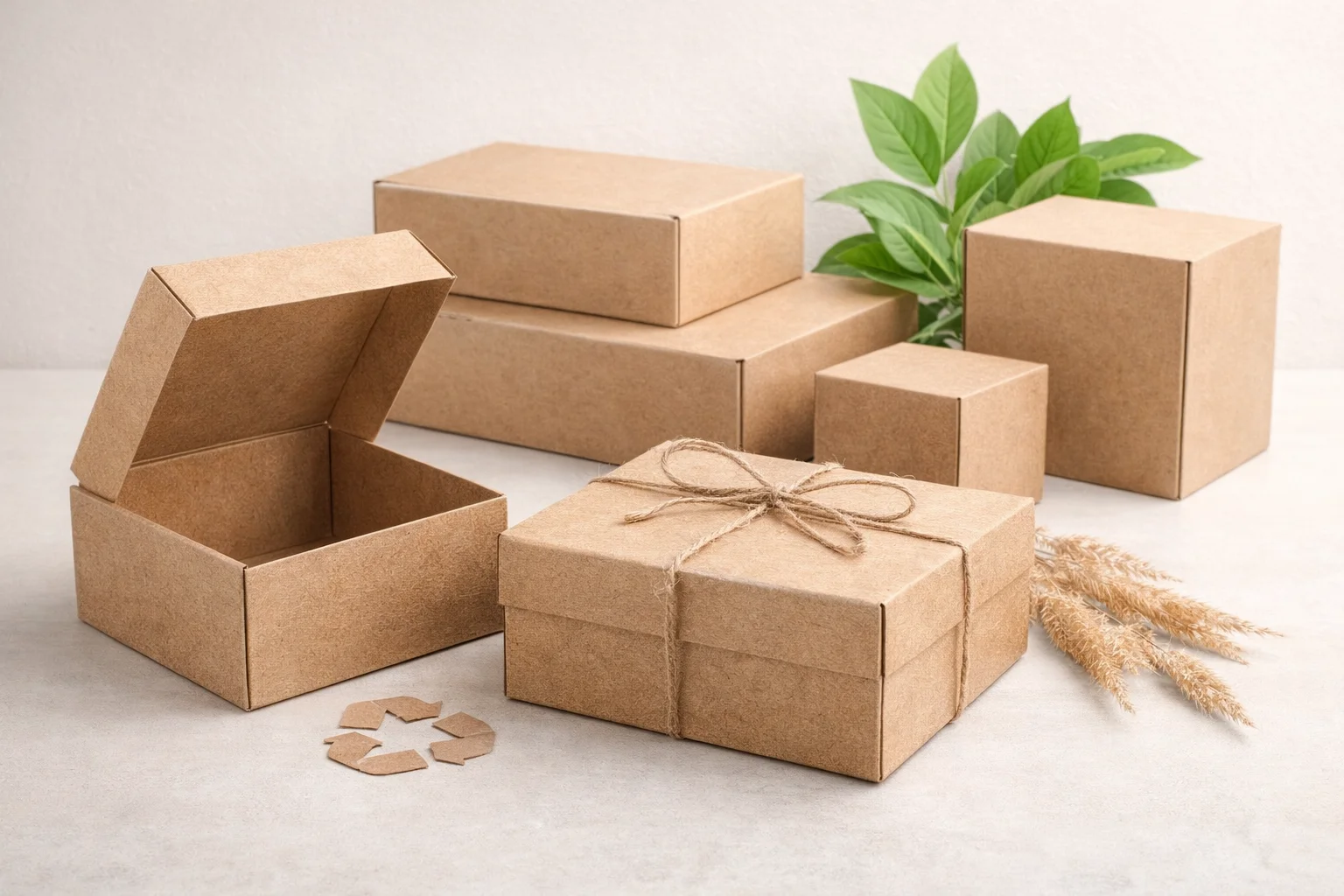
This simple brown box seems straightforward, but there is a lot more to it. From my experience in the factory, I have seen how small details can make a huge difference in quality. If you are wondering whether Kraft is the right choice for your products, keep reading. We will break down everything you need to know to make a smart decision.
What Exactly Is a Kraft Box?
Confused by all the packaging terms out there? You hear "Kraft" everywhere, but what does it really mean? Let's clear it up so you can make an informed choice for your brand.
A Kraft box is made from Kraft paperboard, which comes from a specific wood pulping process called the Kraft process6. This method produces strong, unbleached paper fibers, resulting in the box's signature natural brown color and excellent durability.
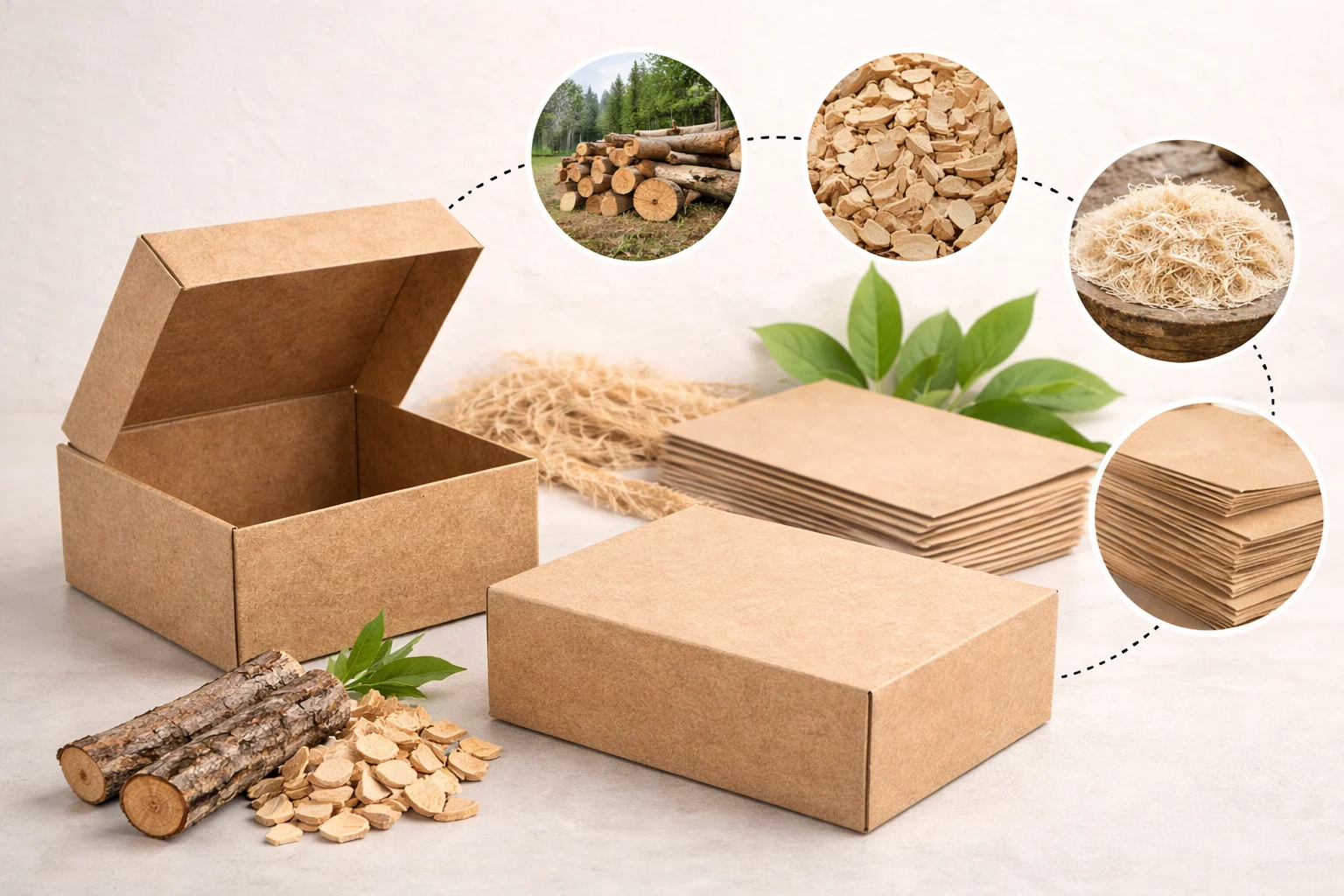
The term "Kraft" actually comes from the German word for "strength," and that's its main feature. The process it undergoes is gentler on the wood fibers, keeping them long and strong. This makes Kraft paper highly resistant to tearing and puncturing.
The Science Behind the Strength
The Kraft process6, also known as the sulfate process, uses sulfates to break down wood chips into pulp. Unlike other methods, it effectively removes lignin (the glue that holds wood fibers together) without significantly weakening the cellulose fibers. This results in a paperboard with superior structural integrity. I have seen it firsthand in our factory; when we compare it to other paper types of the same thickness, Kraft almost always performs better in stress tests. This is why it's a top choice for e-commerce brands that need to protect their products during rough shipping journeys.
Color and Texture
The classic brown color is the result of using unbleached pulp. It’s the natural color of the wood fibers. While it can be bleached to create a white Kraft box, many brands prefer the natural look. It communicates honesty, sustainability, and a connection to nature. The texture is slightly rough, which adds a tactile, premium feel to the unboxing experience7.
Why Are Kraft Boxes So Popular Right Now?
Want your brand to feel modern and responsible? Using outdated or plastic-heavy packaging can make you look out of touch. Kraft boxes1 help align your brand with current consumer trends.
Kraft boxes1 are popular because they are eco-friendly2, which appeals to conscious consumers8. Their minimalist, natural aesthetic also fits modern branding trends. They are strong, versatile, and cost-effective9, making them a smart choice for businesses of all sizes.
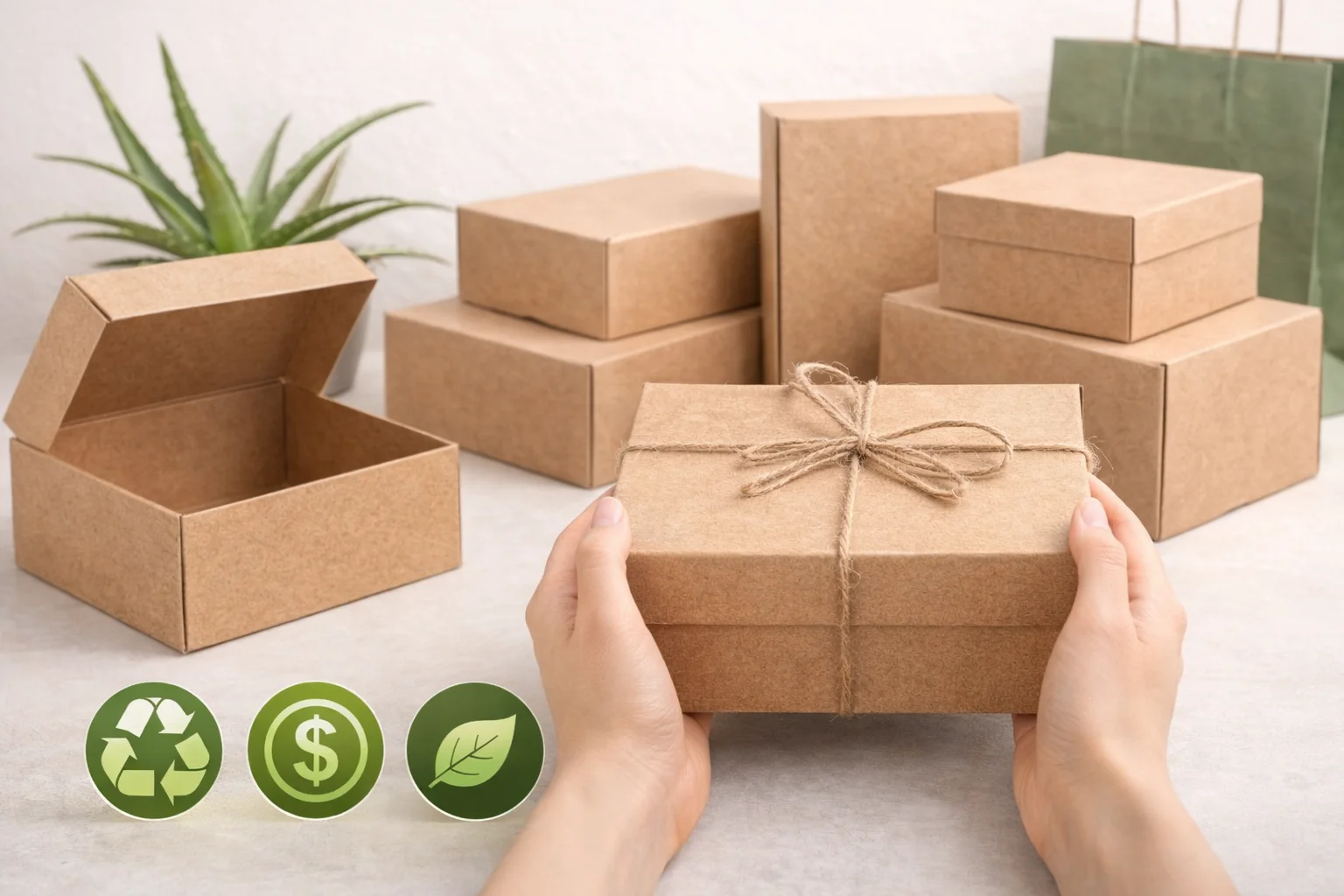
The shift in popularity isn't just a random trend; it's a direct response to changing consumer values and market needs. People are more aware than ever of their environmental impact, and they want to support brands that share their values.
The Rise of the Conscious Consumer
Today's shoppers actively look for sustainable products10, and packaging is a huge part of that. A Kraft box is an immediate visual cue that your brand cares. It’s recyclable, often made from recycled content, and biodegradable. This isn't just a "nice-to-have" feature anymore; for many customers, it's a requirement. I've had clients tell me their sales increased after switching to Kraft simply because they could market their product as being sustainably packaged.
The "Unboxing" Effect
Social media has turned unboxing into a key part of the customer experience. Kraft boxes1 look fantastic on camera. The natural, matte texture prevents glare and provides a perfect, neutral background for the product inside. It feels authentic and photographs beautifully, making it ideal for Instagram and TikTok unboxing videos. It’s free marketing that helps build a community around your brand.
What Are the Key Benefits of Kraft Boxes for a Business?
Is your packaging budget getting too high? Are you worried about products getting damaged in transit? Kraft boxes1 solve these common business problems effectively and affordably.
The key benefits are its strength-to-weight ratio, which protects products while keeping shipping costs11 low. It's also highly sustainable, cost-effective9 to produce, and offers a versatile canvas for custom branding that appeals to modern consumers.
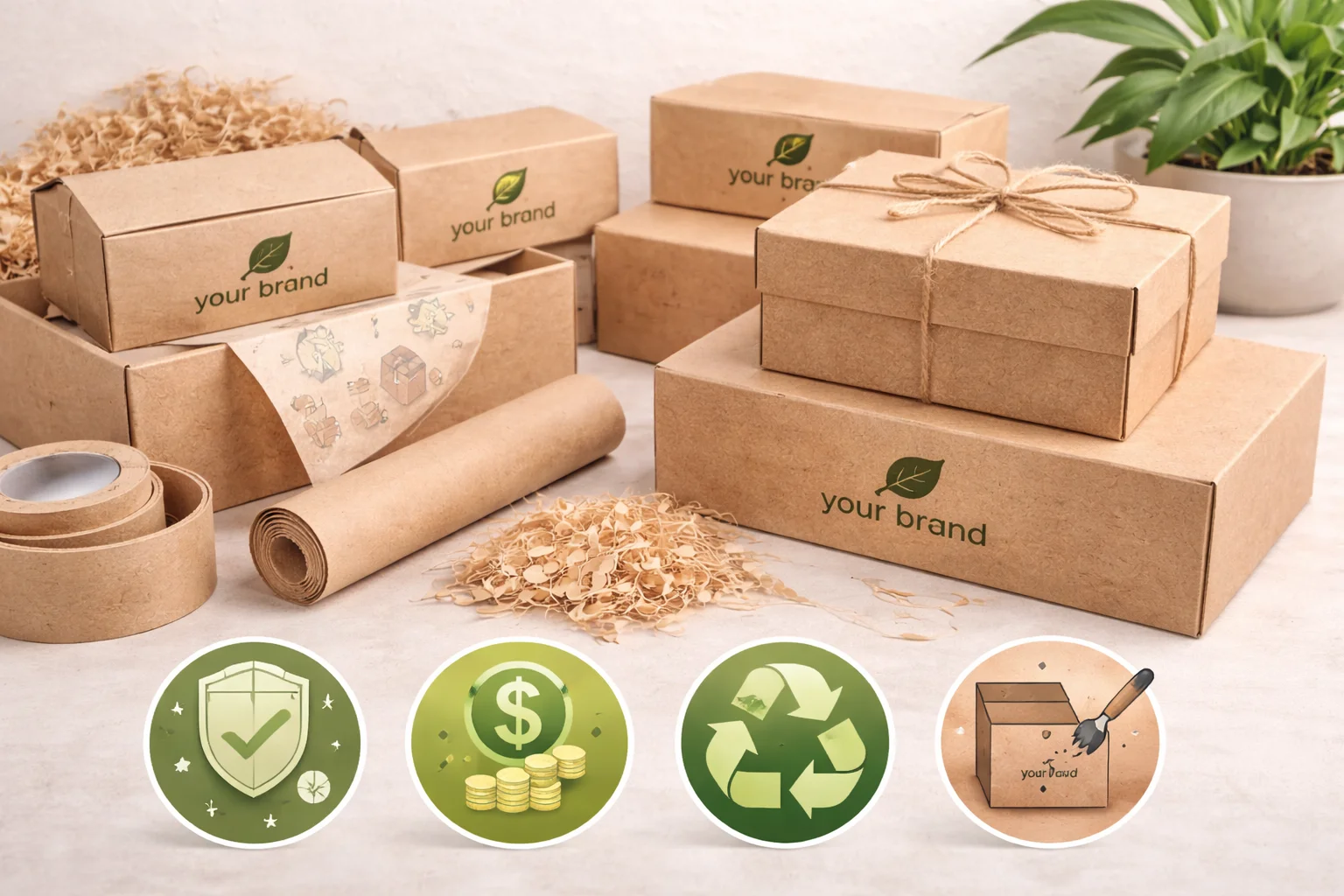
From a practical, day-to-day business perspective, choosing Kraft packaging brings several tangible advantages. It's not just about looking good; it's about operating smarter. I always walk my clients through these core benefits when we're deciding on materials.
A Breakdown of Business Benefits
The advantages touch on nearly every part of the business, from finance to marketing. It’s a choice that pays off in multiple ways. Here is a simple table I use to explain the impact:
| Benefit | Business Impact |
|---|---|
| High Durability | Fewer products are damaged during shipping, which means lower return rates and happier customers. This directly protects your bottom line. |
| Eco-Friendly | This attracts the growing market of conscious consumers8. It improves your brand's reputation and can be a powerful marketing tool. |
| Cost-Effective | The production process is less intensive than for highly bleached and coated papers. This often translates to lower unit costs for your boxes. |
| Brand Image | The natural, minimalist look conveys authenticity and quality. It helps your brand tell a story of being down-to-earth and trustworthy. |
I always tell my e-commerce clients that strength should be their number one priority. A beautiful box that arrives crushed is a complete failure. We always perform drop tests to ensure the Kraft box and its inserts can handle the real-world journey to the customer's doorstep.
What Are the Most Common Kraft Box Styles?
Choosing the wrong box style can be a costly mistake. It can lead to damaged goods, higher shipping costs11, or a poor customer experience. Let's look at the best options.
The most common styles include Mailer Boxes for e-commerce, Product Boxes for retail shelves, and Shipping Cartons for bulk transport. Each is designed for a specific purpose, from creating a premium unboxing experience7 to providing maximum protection.
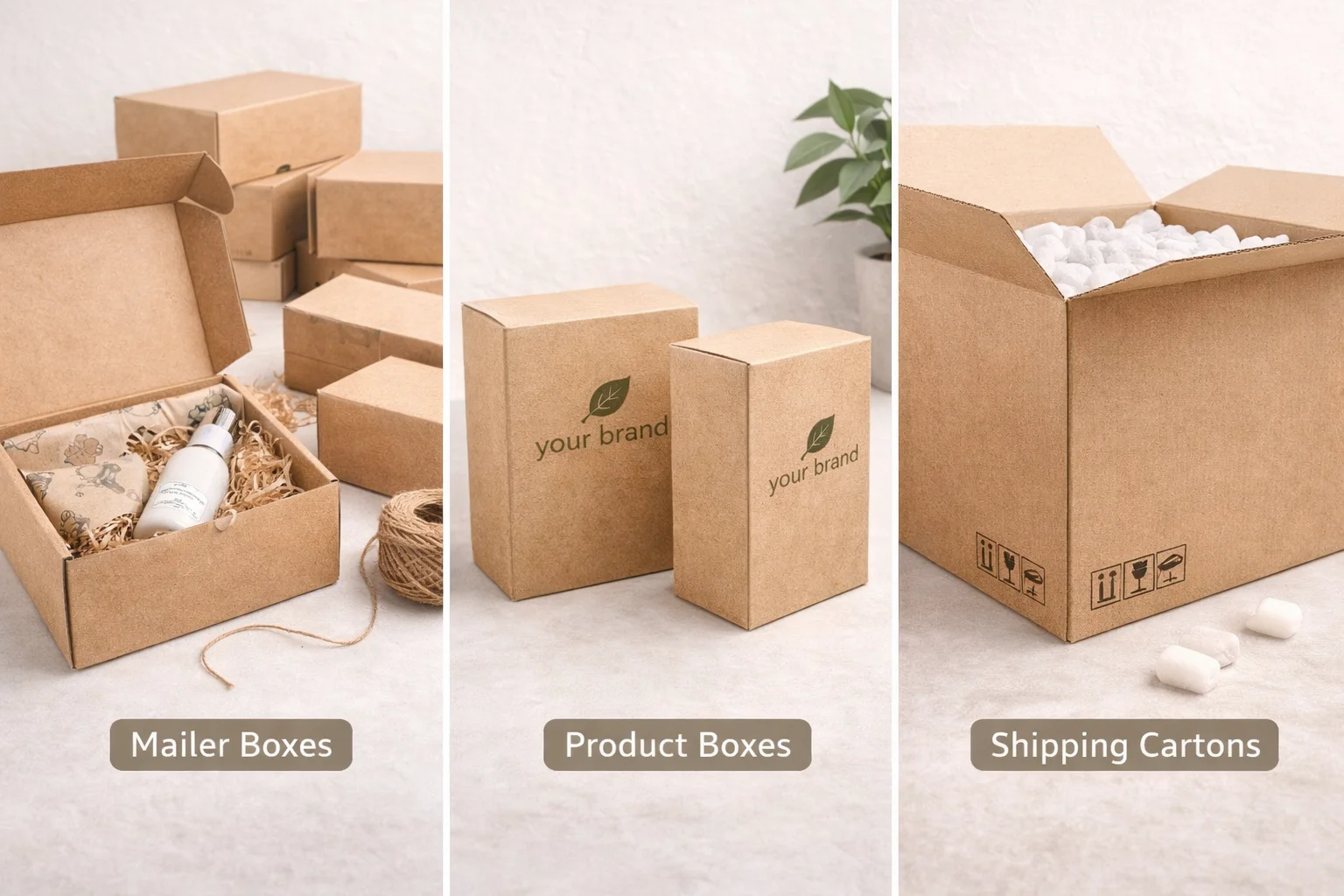
The style of the box is just as important as the material. The right structure ensures your product is secure, easy to pack, and presents well to the customer. In the factory, we create dies for each of these styles, and the precision of the cuts and creases is everything.
Mailer Boxes (Roll End Tuck Front - RETF)
This is my top recommendation for e-commerce and subscription box brands. Mailer boxes are cut from a single piece of paperboard and fold together to create a secure, lid-locking box. They don't require any tape or glue to assemble, which gives them a clean, premium feel. They are very sturdy and create an exciting, gift-like unboxing experience7.
Product Boxes (Straight Tuck End - STE)
This is the classic box you see on retail shelves. Think of a box for a candle, a bottle of perfume, or a small electronic device. It has a simple design with flaps on the top and bottom that tuck in to close. It's great for lightweight products and is designed to look good on a shelf, with a large, flat front panel for branding.
Shipping Cartons (Regular Slotted Container - RSC)
This is the standard "cardboard box" everyone knows. It's made from corrugated board (which often uses Kraft paper as its outer layers) and is designed for maximum strength for shipping. It ships flat, is assembled easily, and is sealed with tape. The focus here is pure protection, not presentation.
What Products Are Best for Kraft Boxes?
Worried your product won't look right in a brown box? This fear can stop you from choosing a great packaging option. Let me show you what works beautifully with Kraft.
Kraft boxes1 are ideal for organic, natural, or handmade products like cosmetics, soaps, candles, and artisanal foods. They also work well for minimalist tech accessories, eco-friendly2 apparel, and subscription box items where an authentic brand image is desired.
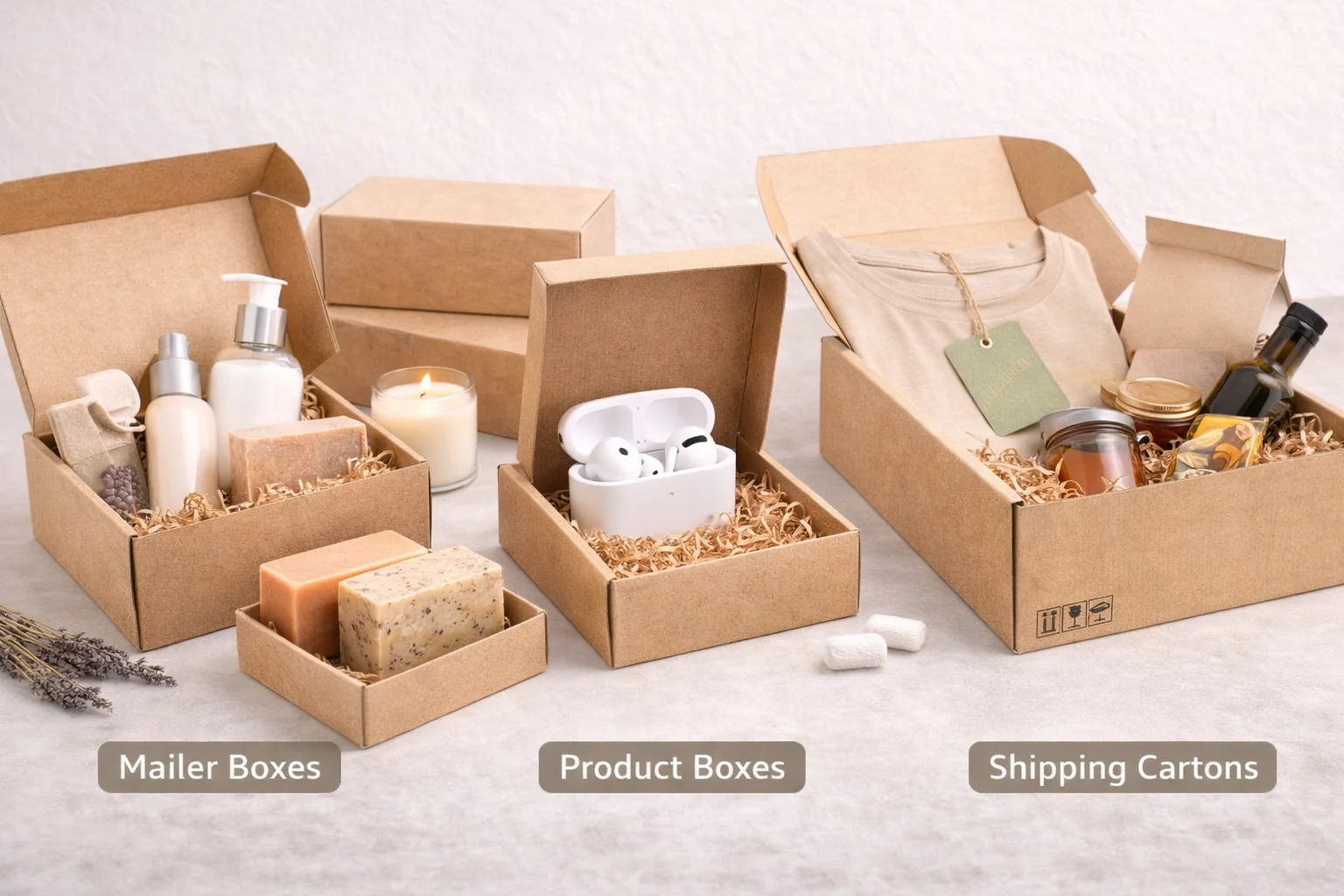
The aesthetic of a Kraft box naturally complements certain products, enhancing their story and appeal. The rustic, earthy vibe creates a perfect pairing with brands that value authenticity and simplicity.
Natural and Organic Goods
This is the most obvious fit. If you sell skincare, coffee, tea, or health foods, Kraft packaging reinforces your "all-natural" message before the customer even sees the product. The packaging becomes an extension of the product's ethos.
Handcrafted and Artisanal Items
For products like handmade jewelry, pottery, or candles, a Kraft box feels personal and special. It doesn't look mass-produced, which aligns perfectly with the unique, crafted nature of the item inside. It suggests that care was taken in every step, from making the product to packaging it.
Minimalist and Modern Brands
It's not just for rustic brands. I've worked with sleek, modern companies that sell tech accessories or high-end stationery. They use Kraft boxes1 with a sharp, simple black or white logo. The contrast between the simple, raw material and the modern design is incredibly striking and looks very sophisticated.
How Can You Make a Kraft Box Look Expensive?
Think Kraft boxes1 always look cheap? This common misconception can limit your branding potential. With the right design touches, Kraft can look incredibly high-end and luxurious.
To make a Kraft box look expensive, use minimalist design12 with high-contrast printing (like black or white ink). Add premium finishes13 like embossing14, debossing, or foil stamping. A custom-fit insert and clean typography will also elevate the perceived value significantly.
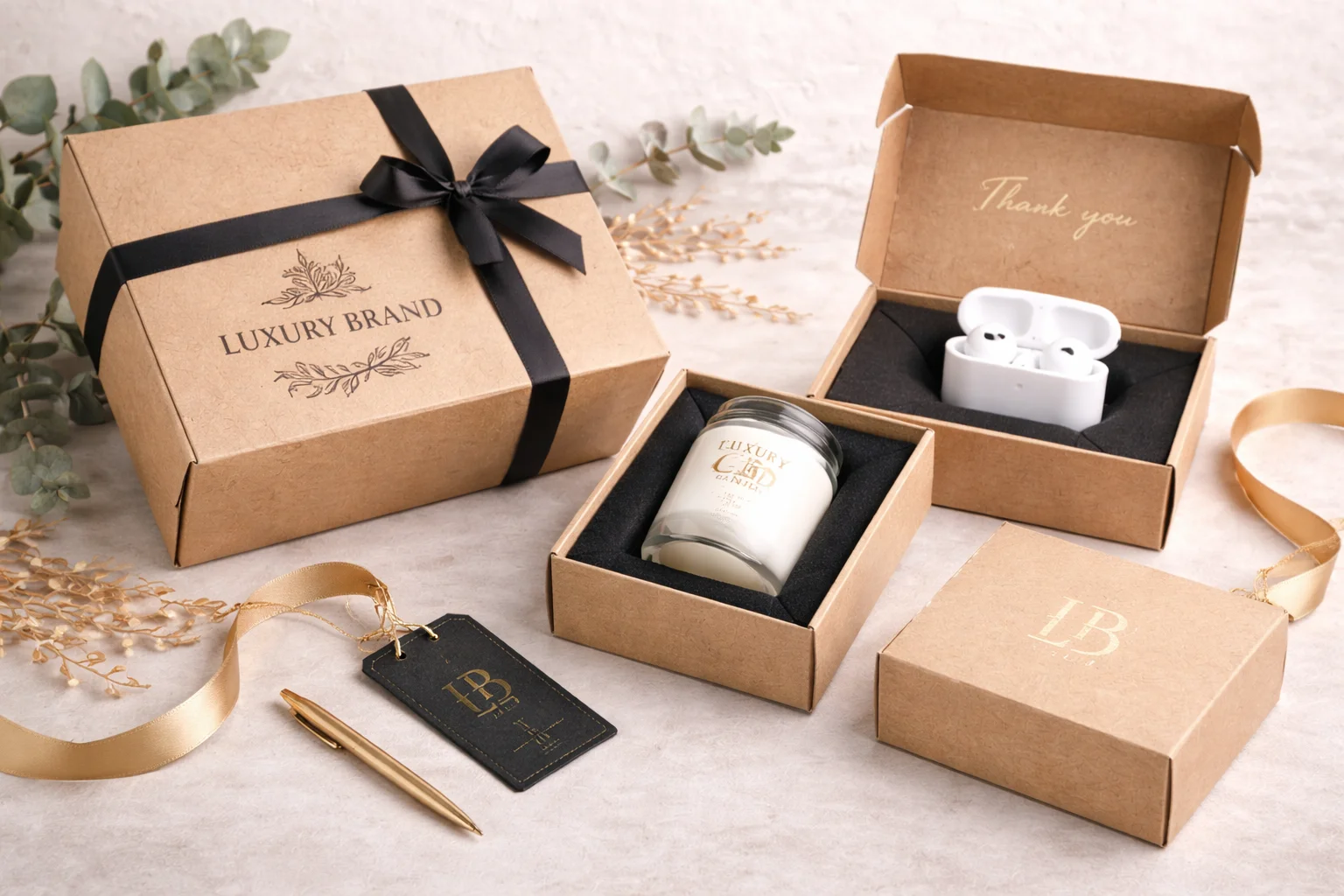
From my factory perspective, the key to a premium result is restraint. The biggest mistake I see is when brands try to over-design their Kraft packaging by covering it with too much ink. The beauty of Kraft is its natural texture. Let that be the hero.
Printing Techniques That Pop
Instead of a full-color, busy design, focus on simple, elegant printing.
- One-Color Printing: A crisp black or clean white ink logo on a brown Kraft box is a timeless combination. It's bold, confident, and easy to read.
- Foil Stamping: This is my favorite trick for adding luxury. Applying a metallic foil (like gold, silver, or copper) to your logo or text instantly makes the box feel more expensive and special.
Structural and Tactile Enhancements
How the box feels is just as important as how it looks.
- Embossing/Debossing: This process presses your logo into the paper, creating a raised (emboss) or indented (deboss) effect. It adds a subtle, tactile element that customers notice.
- Custom Inserts: An insert that holds your product perfectly in place is a sign of quality. It shows you've thought about every detail of the customer's experience.
How Do You Choose the Right Kraft Box?
Overwhelmed by all the packaging choices15? It is easy to get lost and make a bad decision for your business. This simple checklist will guide you to the perfect box quickly.
To choose the right Kraft box, first define its purpose (shipping, retail, or gift). Then, measure your product for a snug fit. Select the right material thickness16 for protection, and finally, plan your design and budget. Always get a sample first.
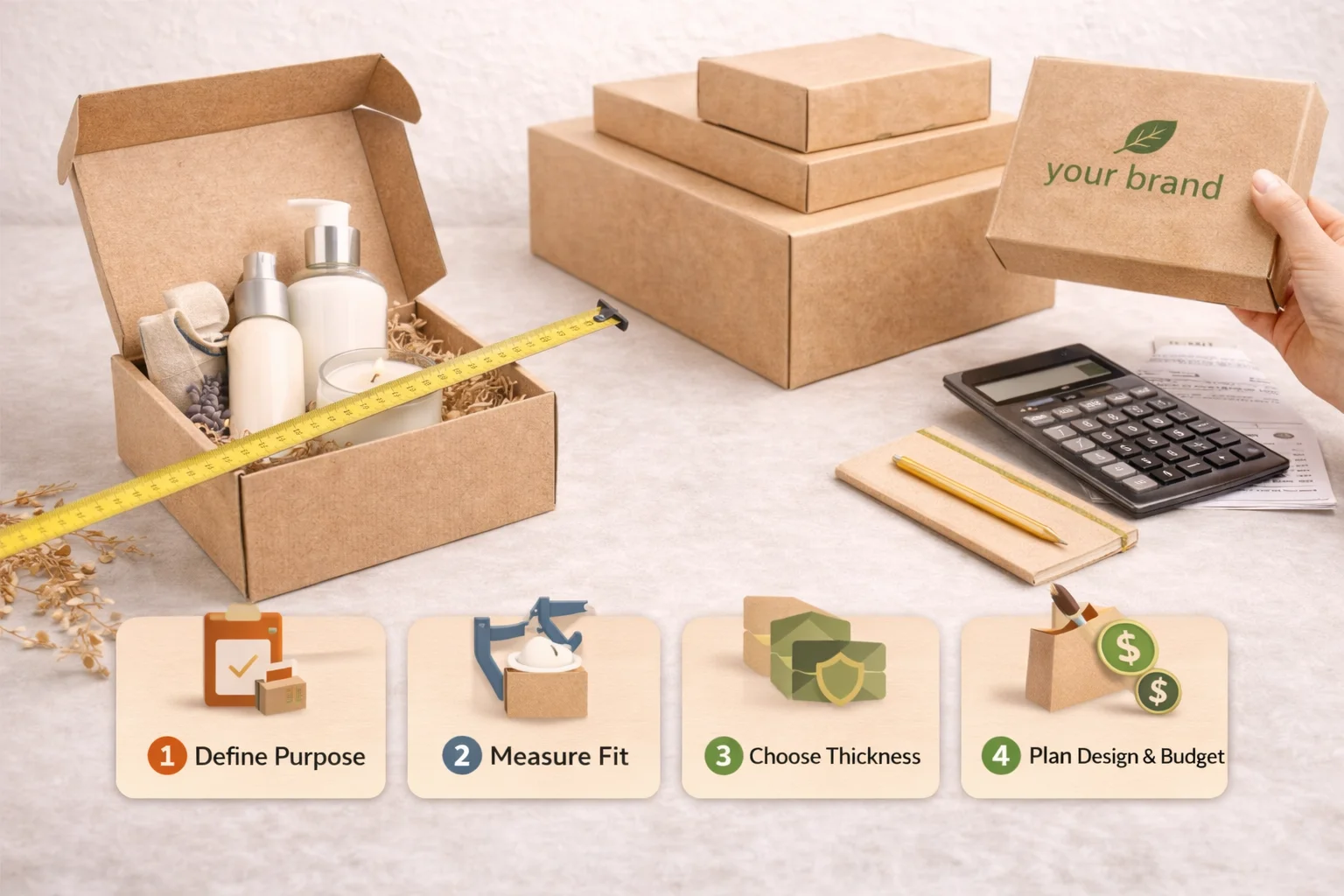
Choosing the right box involves a few logical steps. Rushing this process can lead to problems later, like products not fitting or boxes failing during transit. I always advise my clients to follow this simple checklist to ensure we cover all the bases.
- Define Your Goal: What is the box for? If it's for shipping directly to customers, you need a sturdy mailer box. If it's for sitting on a store shelf, you need a visually appealing product box. The purpose dictates the style.
- Measure Your Product: Get the exact length, width, and height of your item. Your box should provide a snug fit. Too much extra space means the product can move around and get damaged. Too little, and it's hard to pack and unpack.
- Choose the Material Thickness: Paperboard thickness is measured in points (PT) or grams per square meter (GSM). For lightweight items, a thinner board is fine. For heavier or fragile items, you need a thicker, more protective board. For e-commerce, I always recommend going slightly thicker than you think you need.
- ALWAYS Order a Sample: This is the most critical step and my most important piece of advice. Before you order thousands of boxes, get a physical sample. Check the size, test the strength, and see how your printed design looks on the actual material. This one step can save you thousands of dollars and a huge headache.
Have More Questions About Kraft Boxes?
Still have a few nagging questions? It is perfectly normal to want all the details before investing in new packaging. Here are quick answers to the most common questions I hear.
Common questions cover if Kraft boxes1 are waterproof (no, but they can be coated), if they're food-safe (yes, with the right coating), and if they cost less than white boxes (generally, yes, because they use less processing).
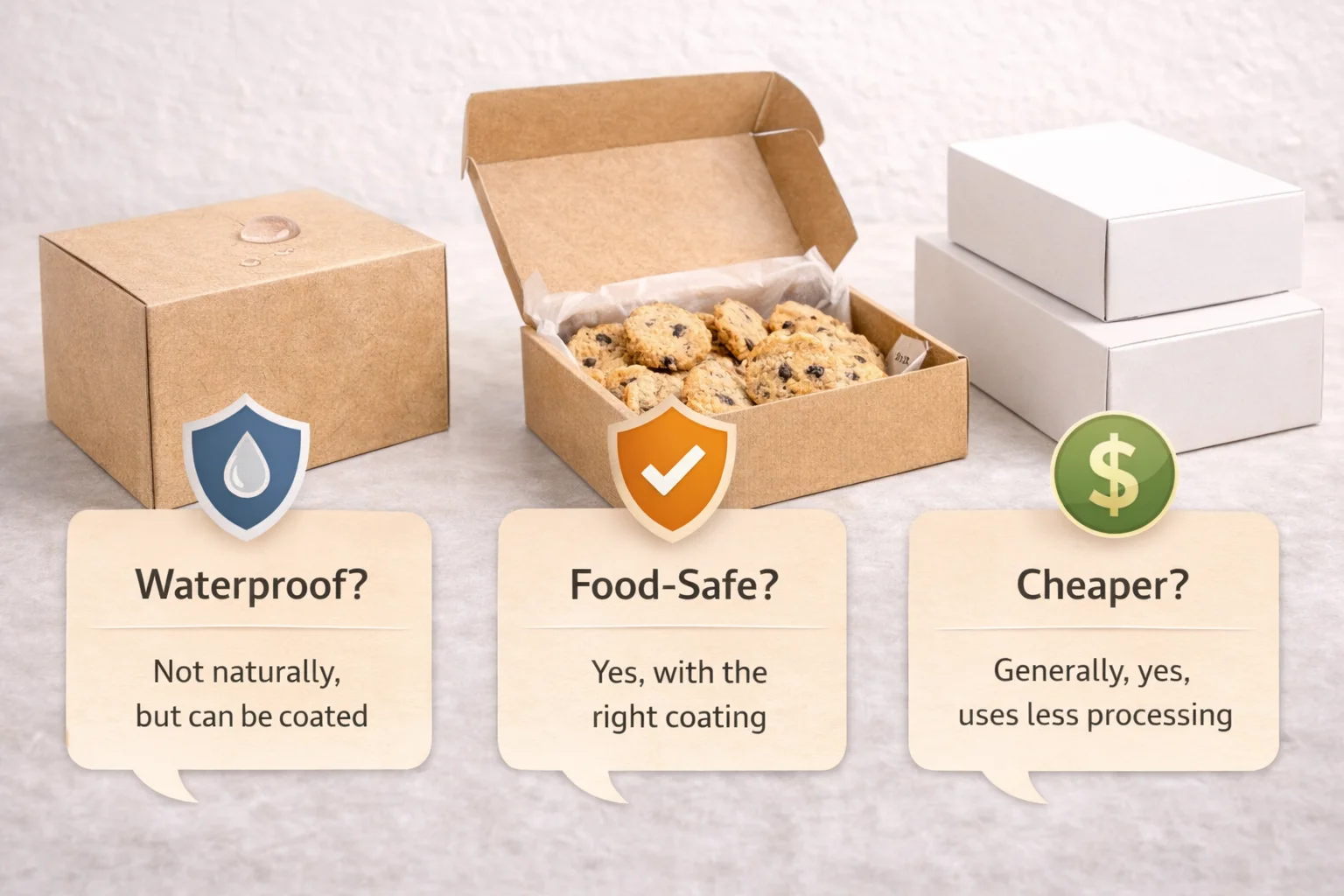
Getting the details right is important. Here are some of the technical questions that come up all the time when I'm working with brands new to Kraft packaging.
Are Kraft boxes1 waterproof?
No, a standard Kraft box is not waterproof. The paper fibers will absorb moisture. However, for businesses that need water resistance (like for some food products or bath products), we can add a very thin coating to the paper during production. This makes it water-resistant but can sometimes affect its recyclability, so it's a trade-off to consider.
Are Kraft boxes food-safe?
Virgin Kraft paper (made from fresh pulp) is generally considered food-safe for direct contact with dry foods like baked goods or coffee beans. For wet or greasy foods, the box needs a food-grade barrier coating inside to prevent absorption and ensure safety. Always confirm with your packaging supplier that they are using food-grade materials if this is a requirement for you.
Is Kraft paper the same as cardboard?
This is a common point of confusion. "Cardboard" is a general term people use for any thick paper-based box. Technically, many of those boxes are "corrugated fiberboard." Kraft paper is a specific type of strong paper that is often used as the flat linerboard layers on the outside of that corrugated material. So, they are closely related, but not exactly the same thing.
Conclusion
Kraft boxes are more than just a trend. They are a smart, sustainable, and stylish choice for modern brands. They offer strength, affordability, and a great look.
Explore the advantages of Kraft boxes, including sustainability and durability, to enhance your brand's image. ↩
Learn how eco-friendly packaging can boost your brand's reputation and attract conscious consumers. ↩
Discover the durability of Kraft boxes and how they protect products during transit. ↩
Find out how to personalize Kraft boxes to reflect your brand's identity and values. ↩
Understand why a rustic aesthetic resonates with modern consumers and enhances brand authenticity. ↩
Learn about the Kraft process and how it contributes to the strength and sustainability of Kraft paper. ↩
Learn about the importance of packaging in creating a memorable unboxing experience for customers. ↩
Explore the characteristics of conscious consumers and how to cater to their preferences. ↩
Discover how Kraft boxes can reduce production costs while maintaining quality. ↩
Stay updated on the latest trends in sustainability and how they impact consumer choices. ↩
Discover how Kraft boxes can lower shipping expenses while maintaining product safety. ↩
Explore how minimalist design can enhance brand perception and attract customers. ↩
Find out how premium finishes can elevate the look of Kraft boxes and enhance perceived value. ↩
Learn about embossing techniques and how they add a tactile element to packaging. ↩
Get insights on key factors to consider for selecting the right packaging for your products. ↩
Understand the importance of selecting the right material thickness for product protection. ↩