Confused by all the kraft box options? The wrong choice can damage your products and brand reputation. I'll guide you through the essentials to get it right.
Before ordering kraft paper boxes1, brands must know about the material's printing limitations2, its specific strength grades3 for shipping, and how its natural texture4 aligns with their brand. Understanding these factors ensures your packaging is both beautiful and functional, preventing costly mistakes down the line.

I've seen it all in my years in the packaging industry5. Brands fall in love with the eco-friendly6 look of kraft paper but often overlook the critical details. It's not just a brown box; it's a strategic choice. To help you avoid common pitfalls, let's dive into the specifics. What exactly are these boxes made of, and why does it matter?
What Are Kraft Paper Boxes?
Heard the term "kraft paper" but unsure what it means? This lack of clarity can lead to poor packaging decisions. Here's a simple, clear definition.
Kraft paper boxes are containers made from kraft pulp, a material produced using the kraft process. This method results in strong, durable paperboard with a natural brown color, known for its high tear resistance and eco-friendly6 properties because it uses all types of wood.

The name "kraft" actually comes from the German word for "strength," and that's the key. The process involves cooking wood pulp in a chemical solution. This process removes most of the lignin, leaving long, strong cellulose fibers behind. This is why kraft paper is so much stronger than regular paper. I remember a client who switched from a standard paperboard to kraft for their heavy glass candles. The reduction in shipping damage was immediate.
There are two main types you'll encounter:
- Virgin Kraft: Made directly from wood pulp. It's the strongest and offers the most consistent color and printing surface.
- Recycled Kraft: Made from post-consumer recycled materials. It's more eco-friendly6 but can have variations in color, texture, and strength.
It's important to know which one you're getting. Here’s a quick breakdown:
| Feature | Virgin Kraft | Recycled Kraft |
|---|---|---|
| Strength | Highest | Good, but variable |
| Appearance | Consistent brown | Speckled, color varies |
| Printability | Good | Challenging |
| Eco-Impact | Lower (uses new trees) | Higher (uses waste) |
Choosing between them depends on your priorities: pure strength or maximum sustainability. We always discuss this tradeoff with clients upfront.
Why Do Brands Choose Kraft Paper Boxes?
Want your packaging to stand out and reflect your values? Choosing generic packaging can make your brand forgettable. Kraft boxes offer a unique combination of benefits that resonate with modern consumers.
Brands choose kraft paper boxes1 for three main reasons: their sustainable, eco-friendly6 image; their durability and strength for product protection; and their natural, rustic aesthetic7 that signals authenticity. This combination helps brands connect with environmentally conscious customers and enhance their perceived value.

The appeal of kraft boxes goes beyond just being a container. It's a statement. When I work with brands, especially in the organic, natural, or handmade space, kraft is often their first choice. Why?
First, sustainability sells. The visible fibers and brown color immediately tell a story of being natural and recyclable. Customers see it and think "this brand cares about the planet." It's a powerful non-verbal message that builds trust.
Second, there's the rustic aesthetic7. It feels honest and authentic. In a world of glossy, over-produced packaging, the simplicity of kraft stands out. It suggests the product inside is the real hero, not the fancy box. I had a client selling handmade soaps who saw a sales lift just by switching to simple kraft boxes with a single-color stamp.
Finally, there's the practical strength. As we discussed, kraft is strong. Brands choose it because they trust it to protect their products during shipping, reducing costs from returns and damages. It's the perfect blend of looking good and working well.
What Are the Common Types of Kraft Paper Boxes?
Feeling overwhelmed by different box styles? Ordering the wrong type can lead to wasted money and a poor unboxing experience8. Let's simplify the most common kraft box structures.
The most common types of kraft paper boxes1 are mailer boxes9 (for e-commerce), product boxes10 (for retail shelves), and shipping cartons11 (for logistics). Each type is designed for a specific purpose, from creating a premium unboxing experience8 to providing maximum protection during transit.

Not all kraft boxes are created equal. The structure of the box is just as important as the material. When we design packaging, we start with the box type that fits the product's journey. Here are the main players:
1. Mailer Boxes
These are my favorite for e-commerce brands. They have interlocking flaps and wings, creating a secure, self-locking box that doesn't need tape. They provide a fantastic unboxing experience8 and are very sturdy. Think subscription boxes or high-end product deliveries.
2. Product Boxes (or Folding Cartons)
These are the boxes you see on a retail shelf. They are typically made from a thinner kraft paperboard and are designed to be lightweight and visually appealing. Common styles include tuck-end boxes. Their main job is to look good and protect the product in a low-impact environment.
3. Shipping Cartons (RSC)
RSC stands for "Regular Slotted Container." These are your standard, heavy-duty brown shipping boxes that need to be taped shut. They are made from corrugated kraft paper for maximum strength and are focused purely on protection during transit.
| Box Type | Primary Use | Key Feature | Material |
|---|---|---|---|
| Mailer Box | E-commerce, Subscriptions | Self-locking, premium feel | Corrugated Kraft |
| Product Box | Retail Shelves | Lightweight, printable | Kraft Paperboard |
| Shipping Carton | Logistics, Bulk Shipping | Maximum strength, stackable | Corrugated Kraft |
Choosing the right one is critical. You wouldn't put a delicate retail product in a flimsy product box and ship it across the country.
What Products Are Kraft Boxes Best For?
Worried if kraft is the right fit for your product? A mismatch can compromise protection and branding. Let's identify which products benefit most from kraft packaging.
Kraft boxes are best for organic, natural, and handmade goods like cosmetics, soaps, candles, and artisanal foods12. They also excel for apparel and durable e-commerce products where an eco-friendly6, rustic brand image is desired and the contents are not overly fragile or heavy.

The natural vibe of kraft makes it a perfect match for certain products, but it's not a universal solution. The key is aligning the packaging's message with the product inside.
I've found it works exceptionally well for brands that want to communicate an earthy, honest, or minimalist value. Think about it:
- Natural Cosmetics & Skincare: The brown paper reinforces the "free from chemicals" message.
- Handmade Goods & Crafts: It complements the uniqueness and personal touch of the item.
- Organic & Artisanal Foods: It suggests farm-to-table quality and simple ingredients.
- Apparel & Eco-friendly Accessories: It aligns perfectly with sustainable fashion brands.
However, there are times I advise clients against it. For example, ultra-luxury tech gadgets that demand a sleek, modern, and flawless finish might not pair well with the rustic texture of kraft. Also, very heavy or sharp-edged industrial parts might require a more robust, specialized solution. It's about brand alignment and functional fit.
| Good Fit | Use Caution |
|---|---|
| Cosmetics, Soaps | High-end electronics |
| Candles, Home Goods | Very heavy industrial parts |
| Apparel, Textiles | Products needing a sterile look |
| Artisanal Food, Coffee | Ultra-luxury goods |
Kraft Box Customization: What Should You Know?
Want to print a vibrant design on your kraft box? The natural brown paper can absorb ink and dull colors. Here's what you need to know before customizing.
For kraft box customization13, understand that the brown background affects color. Dark inks like black, dark green, or brown work best. For vibrant colors, a layer of white ink must be printed first, which adds cost. Simple, bold designs are more effective than complex, multi-colored ones.
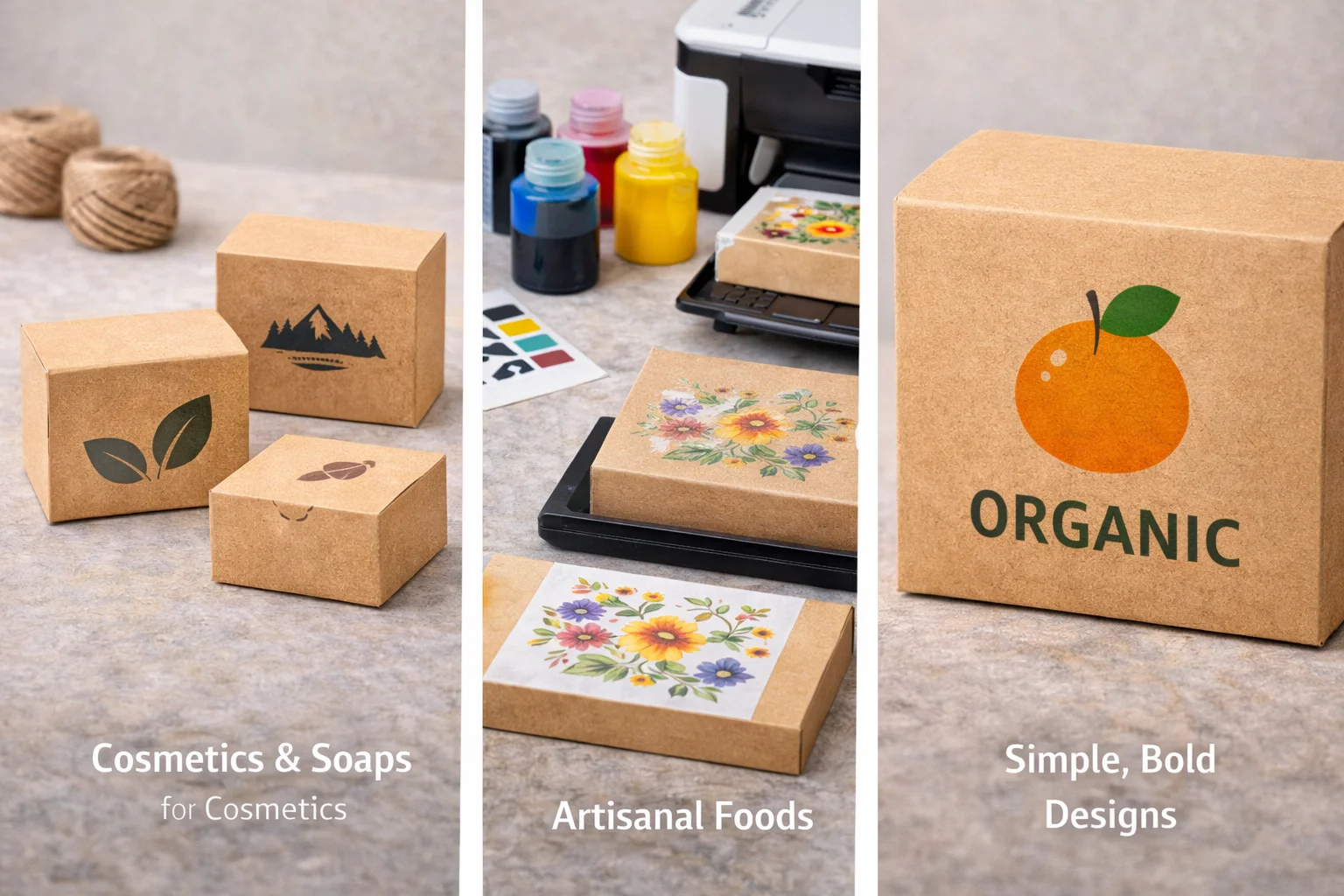
This is where I see the most frequent mistakes. A brand sends us a beautiful, vibrant design intended for a white box and expects the same result on kraft. It just doesn't work that way. The kraft paper acts like a colored filter.
Printing on Kraft
Think of it like drawing with markers on brown construction paper versus white paper. The colors will look different.
- What works well: Black is a classic. It always looks sharp and clean. Other dark, earthy tones like forest green, navy, or deep red also work. The key is contrast.
- What's challenging: Yellows, light blues, and pinks will look muted and dirty. They don't have enough pigment to overcome the brown background.
The White Ink Solution
If you absolutely need a bright color, there's a workaround. We can print a layer of opaque white ink first, directly onto the kraft paper. Then, we print your color on top of the white. This creates a vibrant result, but it's essentially a two-step printing process and will increase your costs. We always prepare clients for this budget consideration. It's a trade-off between design and cost. Other options like hot foil stamping (gold or silver) and embossing (raised design) look fantastic on kraft and avoid ink issues entirely.
How Strong Are Kraft Boxes for Shipping?
Afraid your products will get crushed during shipping? Choosing a box based on looks alone can lead to disaster. Let's talk about the real-world strength of kraft boxes.
The strength of a kraft box depends on its structure (e.g., corrugated) and paper weight (GSM14 or ECT rating15). Corrugated kraft mailers and shipping cartons11 are very durable for shipping. However, thin kraft product boxes10 are not suitable for transit on their own and need an outer shipper.

"Is it strong enough?" This is the number one question I get from e-commerce brands. The answer is: it depends. The strength isn't just about the "kraft" material, but the box's construction.
Corrugated Kraft: The Shipping Champion
For shipping, you need corrugated kraft paper. This isn't just one flat sheet. It's a sandwich: two flat linerboards with a wavy, fluted sheet in the middle. This structure creates pockets of air that provide incredible cushioning and rigidity. It's what makes mailer boxes9 and shipping cartons11 so tough.
How Strength is Measured
We don't just guess. Strength is measured scientifically. You'll often see terms like:
- ECT (Edge Crush Test): This measures the stacking strength of the corrugated board. A higher ECT means it can handle more weight stacked on top of it. A standard shipping box is often 32 ECT.
- GSM14 (Grams per Square Meter): This is the weight of the paper itself. Heavier paper is generally stronger.
I once worked with a brand shipping glass bottles. Their initial boxes were failing. We didn't change the box size, we just upgraded them from a standard 32 ECT box to a stronger 44 ECT corrugated kraft box. The problem was solved. It's about matching the right spec to the product's weight and fragility.
What Are the Common Mistakes Brands Make with Kraft Boxes?
Want to avoid costly packaging errors? Many brands make the same few mistakes with kraft boxes, hurting their budget and brand. Let's make sure you're not one of them.
The most common mistakes16 are: underestimating printing challenges and expecting bright colors, choosing a box structure too weak for shipping (e.g., a product box for mail), and not ordering a physical sample first. These errors can lead to poor branding and damaged goods.

From my perspective in manufacturing, I see the same preventable problems over and over. Smart decisions are made before production, not after a crisis. Here are the big ones to avoid:
1. Ignoring Print Limitations: As I mentioned, brands fall in love with a colorful design and don't consider how it will look on brown paper.
- Consequence: Disappointment, brand inconsistency, and wasted money on a print run that doesn't look right.
- Solution: Design for kraft. Use dark inks, simple logos, or plan for the cost of a white ink base. Always get a printed sample.
2. Mismatching Box Type and Use: A client might order a beautiful, thin kraft product box and try to ship it directly.
- Consequence: The box gets destroyed in transit, the product is damaged, and the customer is unhappy.
- Solution: Understand the difference between retail product boxes10 and shipping-grade mailer boxes9. Use the right box for the job.
3. Forgetting About Sizing and Void Fill: Brands guess the size and end up with a box that's too big.
- Consequence: The product rattles around and breaks. You also pay more for shipping based on dimensional weight and waste money on excessive void fill.
- Solution: Measure your product precisely and design a box with a snug fit. A little planning saves a lot of money.
How Do You Choose the Right Kraft Box Supplier?
Worried about picking a bad supplier17? A poor partner can lead to delays, quality issues, and high costs. Here’s how to find a supplier17 you can trust.
Choose a supplier17 who acts as a partner, not just a printer. They should ask about your product, shipping process, and brand goals. Look for supplier17s who offer samples, have clear expertise in kraft materials, and can advise you on structure, printing, and logistics.
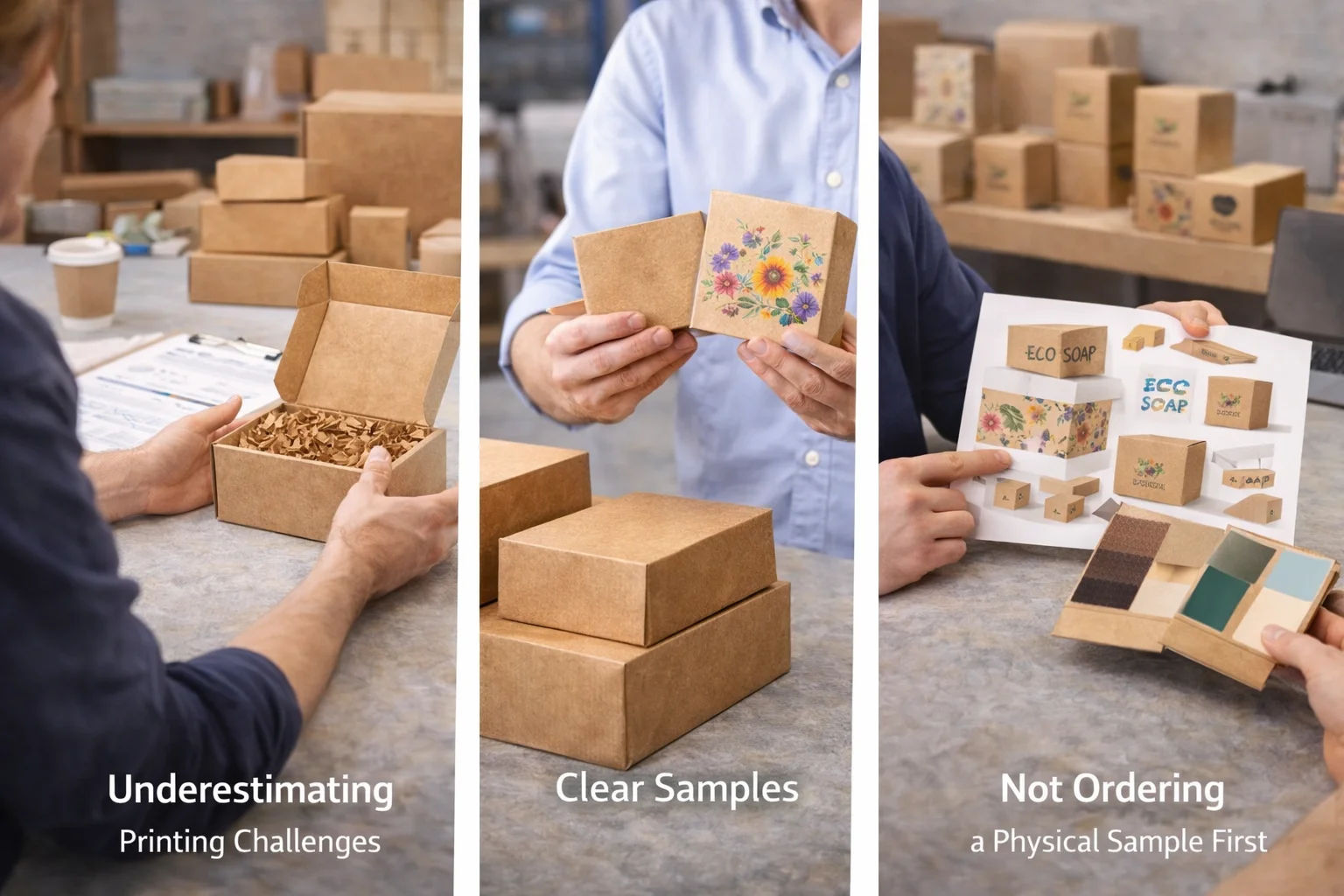
Your supplier17 is your most important partner in packaging. A cheap quote from a bad supplier is the most expensive mistake you can make. When you're vetting potential partners, don't just look at the price list. Look for a team that wants to help you succeed.
I believe a good supplier should start by asking you questions. What is your product? How much does it weigh? How will it be shipped? What is your brand's story? If they just ask for "dimensions and quantity," they are a printer, not a partner.
Here’s a checklist I give to brands looking for a supplier:
- Do they offer physical samples? Never place a full order without holding a sample in your hands.
- Can they explain the difference between ECT ratings and paper weights? This shows they have technical expertise.
- Do they provide guidance on printing? They should be able to show you examples of print on kraft and advise on your design.
- Do they ask about your logistics? This shows they are thinking about the entire product journey, not just making a box.
Finding a supplier who collaborates with you from the start is the best way to ensure your packaging is a success.
Conclusion
Choosing the right kraft box is a strategic decision. By understanding the material, planning for its limits, and working with a good partner, your packaging will be successful.
Explore the unique advantages of kraft paper boxes for sustainable packaging solutions. ↩
Understanding printing limitations can help you avoid costly mistakes in your packaging design. ↩
Learn about the different strength grades to ensure your products are well-protected during shipping. ↩
Discover how kraft paper's texture can enhance your brand's image and appeal to eco-conscious consumers. ↩
Stay updated on the latest trends and innovations in the packaging industry. ↩
Find out why kraft paper is a sustainable choice for environmentally conscious brands. ↩
Understand how the rustic look of kraft packaging can resonate with modern consumers. ↩
Understand the elements that contribute to a memorable unboxing experience. ↩
Discover how mailer boxes can enhance the unboxing experience for your customers. ↩
Learn about product boxes and their role in retail packaging. ↩
Understand the significance of shipping cartons for safe and efficient product delivery. ↩
Explore how kraft packaging enhances the appeal of artisanal food products. ↩
Get tips on customizing kraft boxes to align with your brand's identity. ↩
Learn how GSM affects the durability and strength of kraft paper for packaging. ↩
Find out how ECT ratings determine the strength of shipping boxes. ↩
Avoid costly errors by learning about the common pitfalls in kraft box packaging. ↩
Discover key factors to consider when selecting a reliable kraft box supplier. ↩