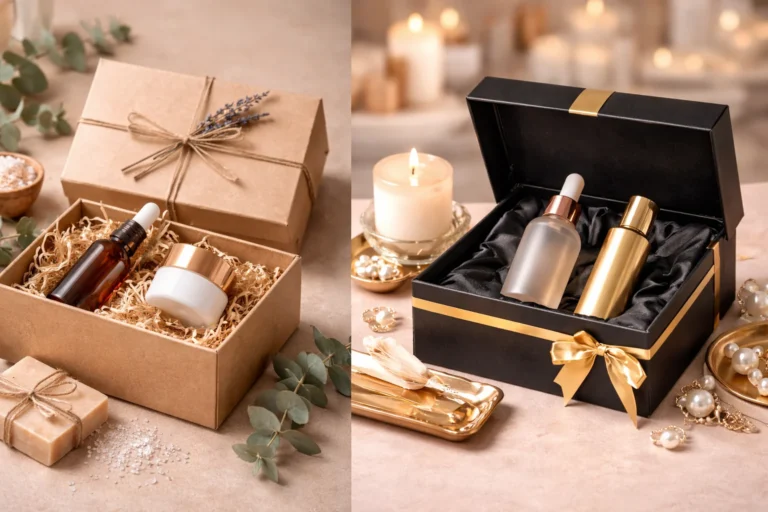
Are you confused about whether kraft boxes1 are right for your brand? They seem eco-friendly2 and stylish, but they might not fit your product. Let's explore if they're for you.
Kraft boxes are a great choice for brands seeking a natural, rustic look3 and durable packaging4. They are cost-effective5 and eco-friendly2. However, they are not ideal for vibrant color printing6 or achieving a high-end luxury feel7. Their suitability depends entirely on your brand's aesthetic and product needs.
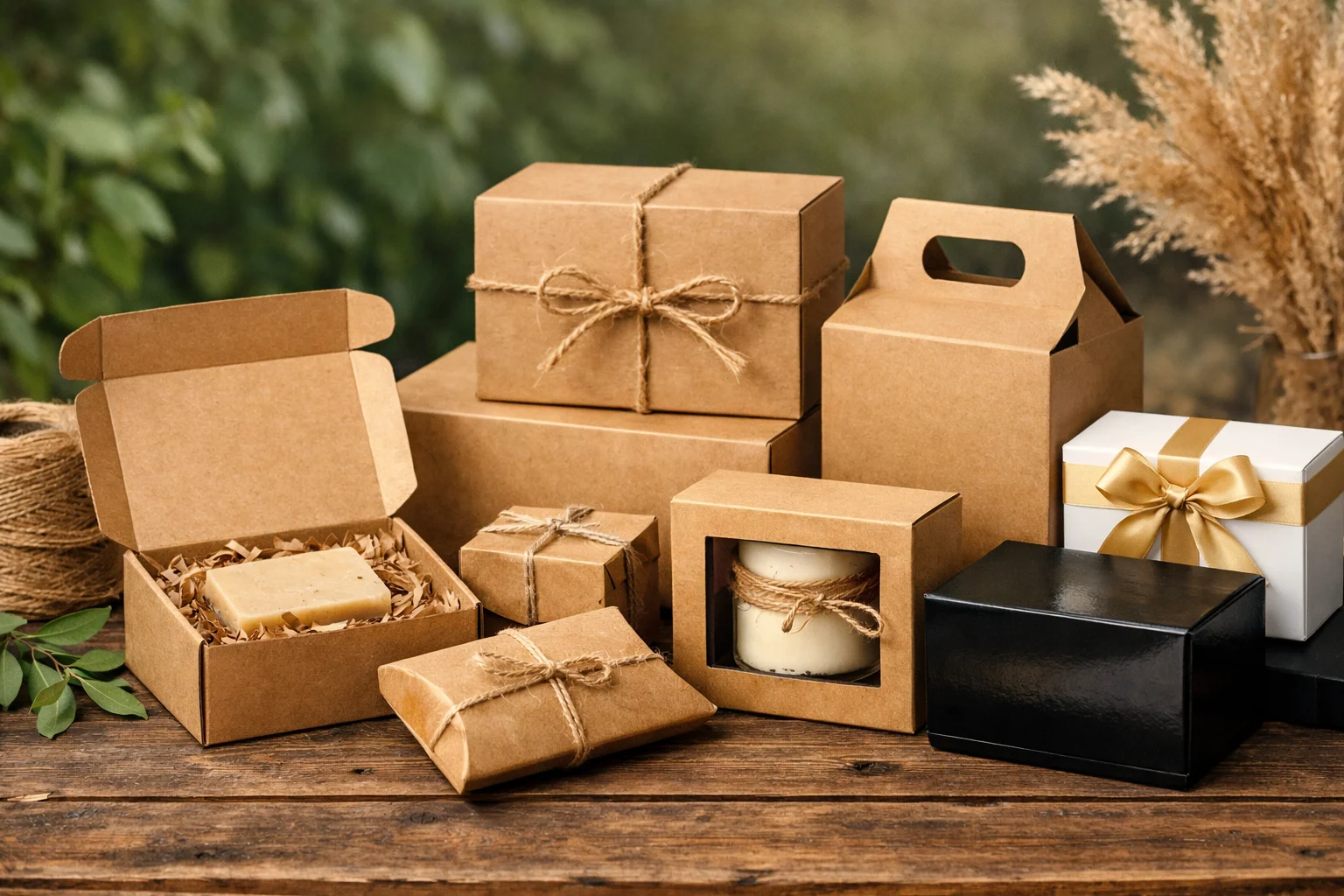
I've seen so many brands struggle with this decision. They see kraft boxes1 all over social media and think it's an easy win for their packaging. But as a manufacturer, I can tell you there's more to it than just picking a brown box. The material itself has unique properties that can either elevate your brand or create a total mismatch. Let's dig into the details so you can make a smart choice for your business and avoid costly mistakes.
What Exactly Is a Kraft Box?
Have you heard the term "kraft paper" but aren't sure what it means for your packaging? It’s more than just brown paper. The process behind it is key to its benefits.
A kraft box is made from kraft paperboard, which comes from a specific wood pulping process called the "Kraft process." This method produces strong, durable paper fibers, giving the boxes their signature strength and natural brown color. It's known for being unbleached and often recyclable.
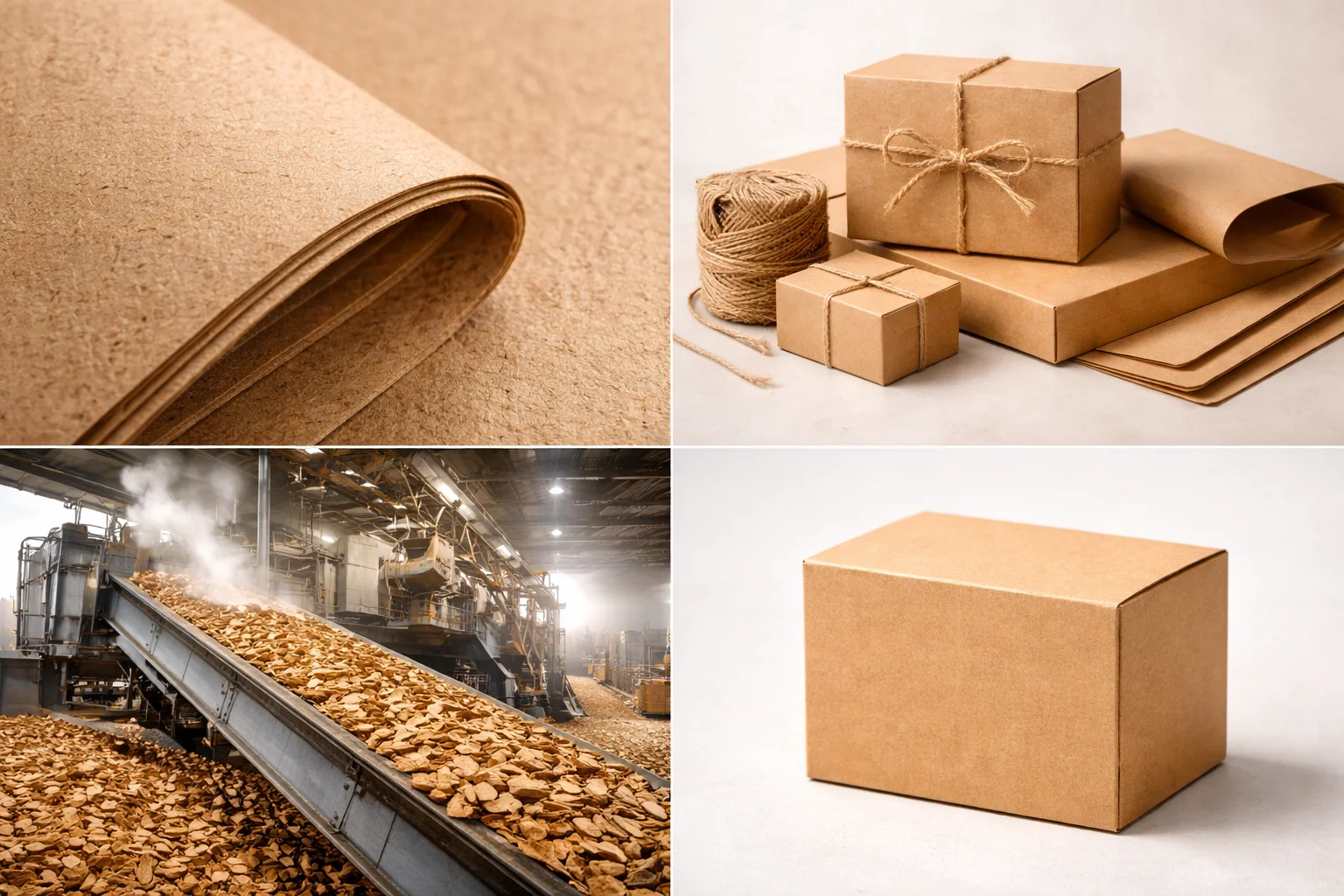
When you hear "kraft," it's easy to think it just means "brown paper." But it's a specific type of material defined by how it's made. The word "kraft" actually means "strength" in German, and that's the perfect description.
The "Kraft" Process
The process involves cooking wood chips in a chemical solution that breaks down the wood into pulp. The key here is that this process removes most of the lignin, a component that holds wood fibers together but also makes paper weaker. By removing the lignin but leaving the long, strong cellulose fibers, you get a paper that is incredibly durable and tear-resistant. This is why you see kraft paper used for heavy-duty grocery bags8 and strong packaging.
What This Means for Your Box
From my factory's perspective, this process results in a very stable and predictable material. We get huge rolls of this paperboard, and its quality is consistent from batch to batch. This is a massive advantage in production because it leads to fewer defects and a smoother manufacturing run. So when you choose a kraft box, you're not just choosing a color; you're choosing a material known for its inherent strength and reliability right from the start.
What Are the Key Advantages of Using Kraft Boxes?
Do you want packaging that is strong, affordable, and good for the planet? Juggling these priorities can be tough, and it often feels like you have to make a compromise somewhere.
The main advantages are strength, cost-effective5ness, and sustainability9. Kraft paper is naturally durable, protecting your products well. It's generally cheaper to produce than bleached or coated paperboard. Plus, its recyclable and often biodegradable nature appeals to eco-conscious consumers, boosting your brand image.
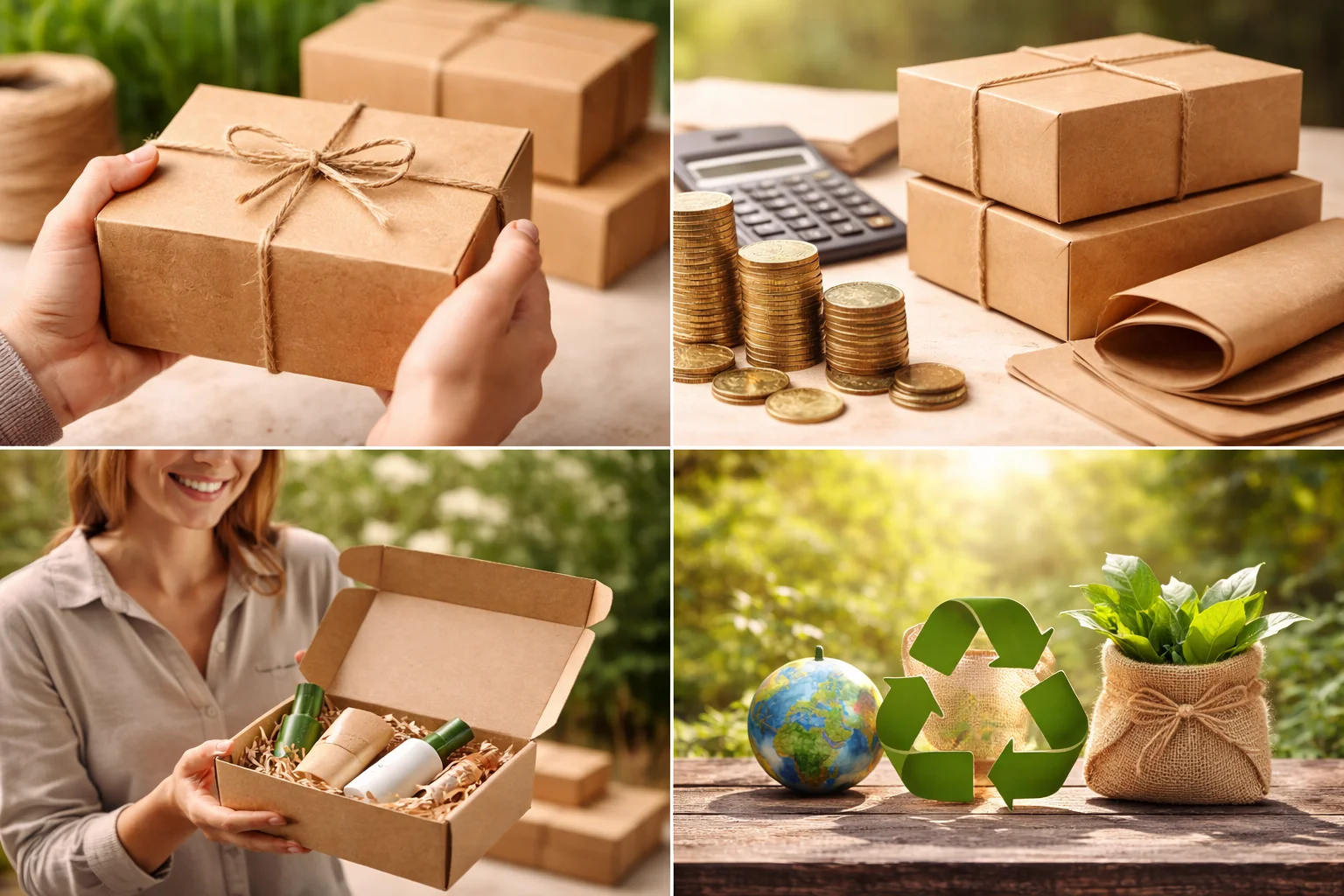
In my 20+ years in the packaging industry, I’ve seen kraft boxes1 solve problems for countless brands, especially when their goals are durability and a natural brand image. Let's break down these advantages based on what I see on the production floor every day. One of my clients, Avin from the USA, was shipping delicate cosmetic jars across the country. He was using a standard, thin folding carton and told me his damage rates were frustratingly high. We suggested a switch to a slightly thicker kraft box. The result? His damage rates dropped to almost zero. The long, strong fibers in the paper made all the difference during transit. This is a perfect example of kraft's superior strength in action.
| Feature | Benefit for Your Brand |
|---|---|
| High Strength | Fewer products damaged during shipping, leading to a better customer experience and lower replacement costs. |
| Lower Cost | The manufacturing process is simpler with less bleaching and coating. This saves on material and energy costs, which we can then pass on to you. |
| Eco-Friendly Image | The unbleached, recyclable nature is a huge selling point. It helps you connect with modern consumers and build a powerful brand story. |
| Natural Aesthetic | The earthy, brown texture instantly creates an authentic, rustic, or organic feel that is very popular right now. |
What Are the Real Disadvantages of Kraft Boxes You Should Know?
Are you thinking that kraft boxes1 are a perfect, no-compromise solution for your packaging? Unfortunately, their natural qualities come with some very real limitations that you simply cannot ignore.
The main disadvantages are limited color printing, a rougher surface texture, and moisture absorption10. The brown background can dull colors, making vibrant designs difficult. The material isn't ideal for high-gloss or super-smooth finishes, and it can weaken if it gets wet without a protective coating11.
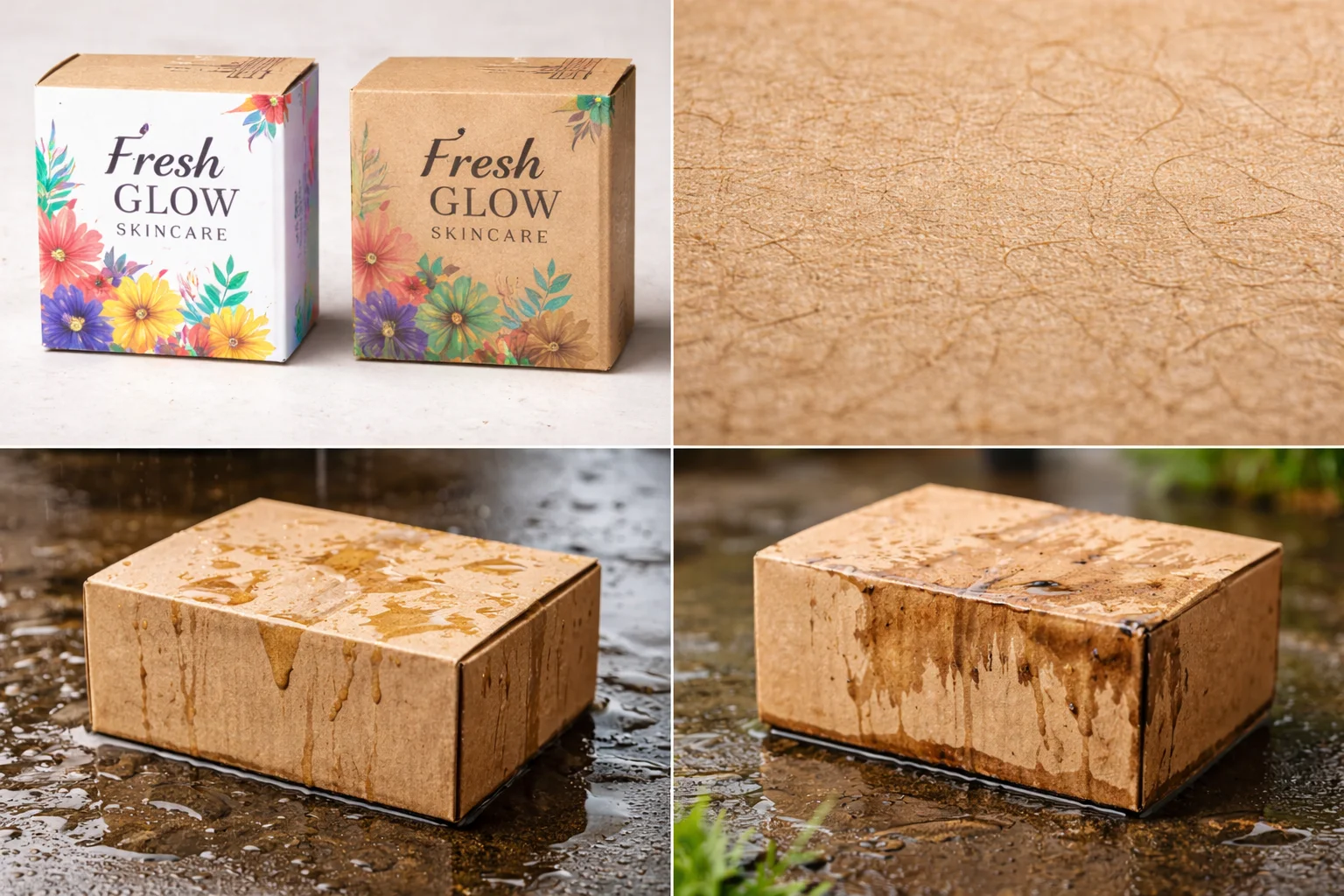
This is where my experience as a manufacturer becomes really important for my clients. The number one problem we encounter is a mismatch between a brand's design expectations12 and what kraft paper can actually deliver. A client once sent us a design file with a beautiful, light yellow logo. They insisted on printing it directly onto the kraft box. I warned them it wouldn't show up well, but they wanted to try. The final product was a disaster; the logo was practically invisible against the brown background. We had to redo the entire order, first printing a solid white ink base and then the yellow on top. This solved the problem but added cost and time that could have been avoided.
The brown paper acts like a color filter. Bright pinks look muted, and light pastels become earthy and dull. If your brand identity relies on specific, vibrant Pantone colors, kraft is probably not the right choice for you. Furthermore, you can't achieve that ultra-smooth, premium feel13 you get from coated white paperboard. Finishes like soft-touch lamination don't adhere as well to its porous surface. And finally, raw kraft paper is like a sponge. For any product that might be exposed to humidity, like cosmetics stored in a bathroom, a protective coating11 is non-negotiable.
When Do Kraft Boxes Make Sense, and When Don’t They?
Are you still unsure if a kraft box is the right fit for your specific product? Choosing the wrong material can disrupt your brand's image and end up wasting a lot of money.
Kraft boxes are a perfect fit for organic, natural, or rustic brands. Think handmade soaps, eco-friendly2 cosmetics, or artisanal foods14. They are a poor choice for ultra-luxury brands that need vibrant colors, high-gloss finishes, or a sleek, modern aesthetic that relies on pristine white backgrounds.
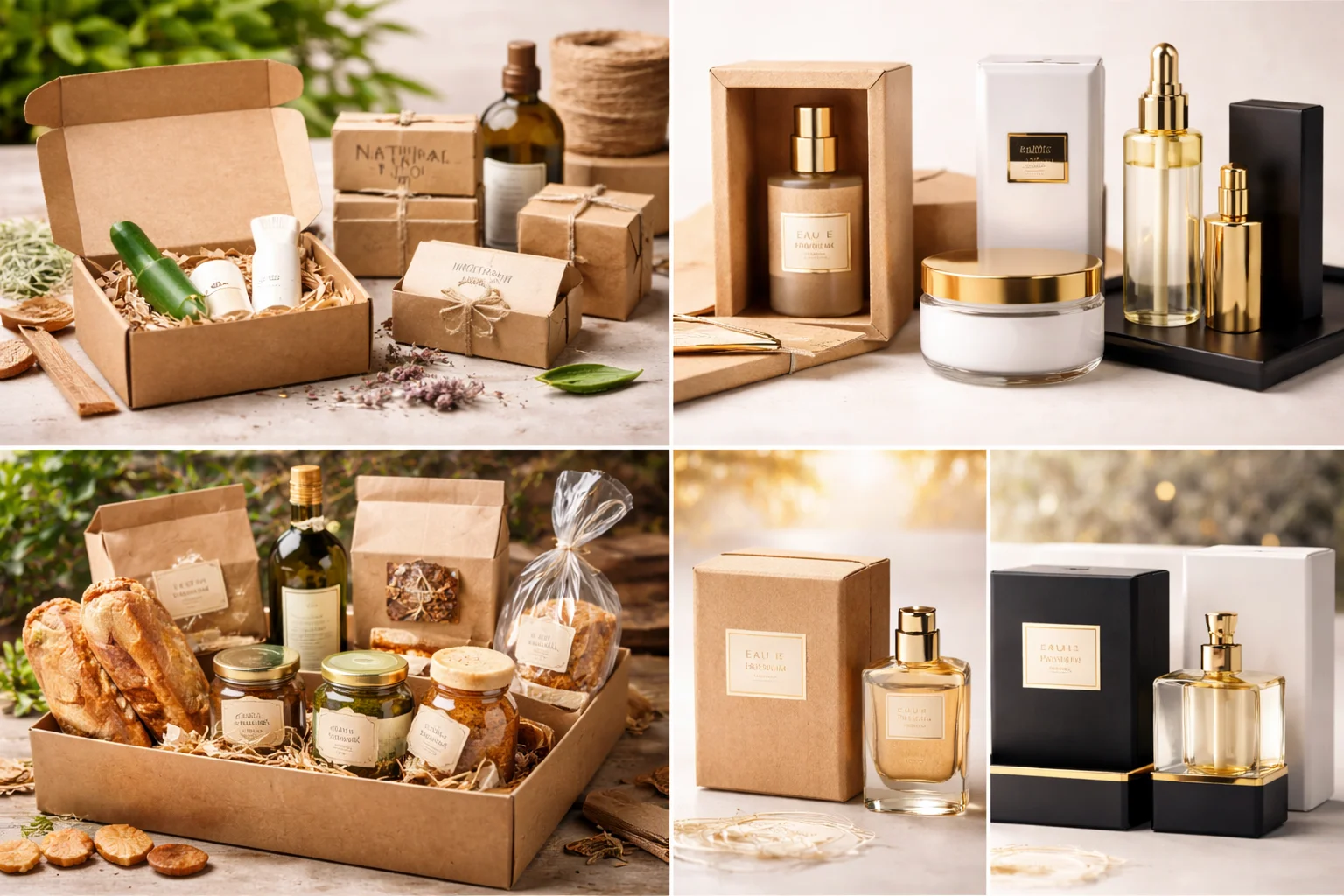
The success of your packaging depends entirely on context. I've seen this play out time and time again. Let me share a story about two clients with very different products.
The Perfect Match: When to Use Kraft
One client was launching a line of organic beard oils. His brand was all about natural ingredients, craftsmanship, and an earthy vibe. For him, kraft boxes1 were a home run. We used a simple black ink15 print for his logo and product information. The packaging looked authentic, felt substantial, and perfectly communicated his brand values. It was a natural extension of the product itself. Kraft works best for:
- Brands with an "earthy" or "natural" identity.
- Products where durability is more important than color pop.
- E-commerce brands who want sturdy shipping boxes that double as primary packaging.
The Wrong Choice: When to Avoid Kraft
Another client was developing a high-tech, clinical anti-aging serum. The product was expensive, and the brand was meant to feel scientific and luxurious. He initially requested a kraft box because he liked the "eco-friendly2" trend. We made a prototype, and it just looked cheap and completely out of place. The rustic box clashed with the sleek, modern serum bottle inside. We quickly pivoted to a rigid, thick white paperboard box with silver foil stamping. The final package looked clean, premium, and trustworthy—a much better fit for a high-end skincare product. Avoid kraft for:
- High-end luxury goods competing with sleek, modern brands.
- Brands that depend on bright, specific colors.
- Products that need a sterile or clinical look.
How Do Kraft Boxes Compare to White Paperboard Boxes?
Are you trying to decide between the classic brown of a kraft box and the clean look of a white paperboard box? They look different, but their performance and cost differences are even bigger.
Kraft boxes offer superior strength and a natural, eco-friendly2 look at a generally lower cost. White paperboard boxes provide a clean, premium canvas for vibrant, accurate color printing and high-end finishes. The choice depends on whether your priority is durability and rustic charm or color fidelity and a modern feel.
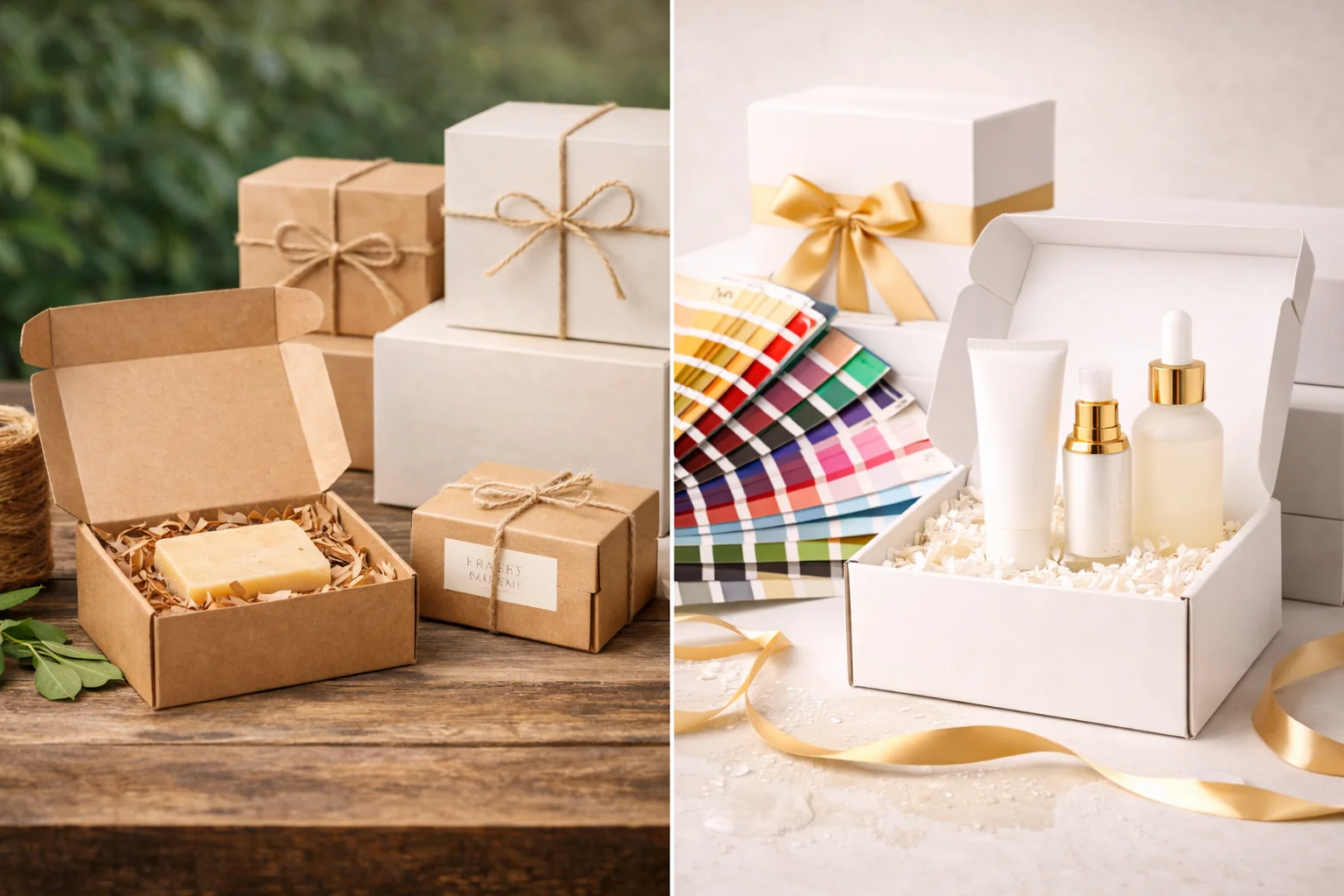
As a manufacturer that handles both materials every day, I can tell you that neither one is "better" than the other. They are simply tools for different jobs. The right choice always comes back to your brand identity, your product, and your budget. White paperboard, often called SBS (Solid Bleached Sulfate), is more processed. It's bleached to create that pure white surface, which is perfect for printing. That extra processing adds cost. Kraft paper skips the bleaching, which is a big reason why it's more cost-effective5. Here’s a simple breakdown to help you compare them.
| Aspect | Kraft Box | White Paperboard Box (SBS) |
|---|---|---|
| Aesthetic | Rustic, natural, earthy | Clean, modern, premium |
| Strength | Very high due to long fibers | Good to high, depends on thickness16 |
| Printability | Poor for vibrant colors | Excellent, true color reproduction |
| Cost | Generally lower | Generally higher |
| Eco-Perception | Very high (unbleached, recyclable) | High (recyclable, but bleached) |
| Best For | Organic/natural products, durable shipping | High-end cosmetics, vibrant branding |
Think of it this way: if your box is a canvas, white paperboard is a primed, smooth white canvas ready for any color. Kraft paper is a textured, raw wood panel. It has its own character that becomes part of the final artwork.
How Do You Choose the Right Kraft Box for Your Product?
Have you decided that kraft is the way to go, but now you're faced with an overwhelming number of options? The thickness16, style, and finish can make or break your final packaging.
First, consider your product's weight and fragility to determine the right paper thickness16 (measured in GSM or points). Second, match the box style (e.g., mailer, tuck-top) to your product's shape and unboxing experience17. Finally, decide on a printing method that complements the kraft material, like black ink15 or foiling.
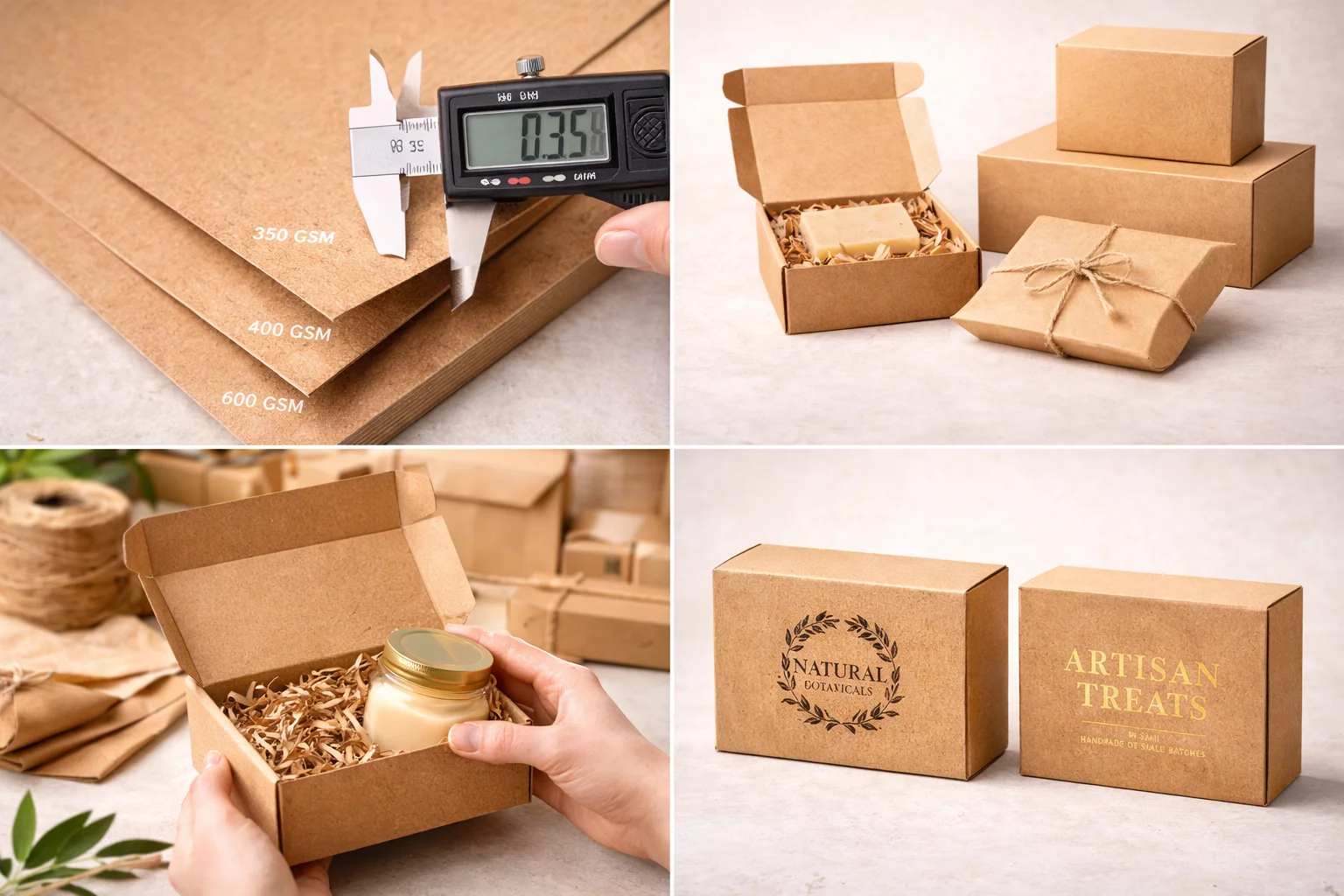
Choosing the right specifications is critical. Over the years, I've developed a simple, 3-step process to guide my clients so they get a box that not only looks great but also functions perfectly.
Step 1: Determine the Right Thickness
Paperboard thickness16 is measured in GSM (grams per square meter) or points. The heavier and more fragile your product, the thicker the paper needs to be. For a lightweight item like a lipstick or a small soap bar, a 250-300 GSM kraft paper might be enough. But for a heavy glass jar of face cream, you'll want to go with 350 GSM or even 400 GSM to prevent the box from sagging or breaking. We always ask our clients for the product's weight and dimensions to recommend the right specification.
Step 2: Select the Box Style
The style of the box affects both protection and the unboxing experience17.
- Tuck-End Boxes: Classic and great for retail shelves.
- Mailer Boxes (Roll-End Tuck-Front): Very sturdy, perfect for e-commerce and shipping directly to customers.
- Two-Piece Boxes: The lid and base style feels more premium and is great for gift sets.
Step 3: Plan Your Design and Printing
Since vibrant colors are out, you need to think differently. Simple designs often work best.
- Black Ink: Looks sharp, modern, and high-contrast on kraft paper.
- White Ink: Can create a nice rustic effect, but you need a supplier with good equipment to make it opaque enough.
- Hot Foil Stamping: This is my favorite way to elevate a kraft box. A gold, silver, or copper foil logo adds a touch of luxury that contrasts beautifully with the rustic paper.
What Are the Common Mistakes Brands Make with Kraft Boxes?
Do you want to use kraft boxes1 for your products without looking cheap or unprofessional? Many brands make simple, avoidable errors that completely undermine their packaging and brand image.
The most common mistakes18 include expecting vibrant color printing6, choosing a thickness16 that's too flimsy for the product, and ignoring the need for a protective coating11 for items sensitive to moisture. Another error is pairing a rustic kraft box with an ultra-modern, sleek product, creating a brand disconnect.
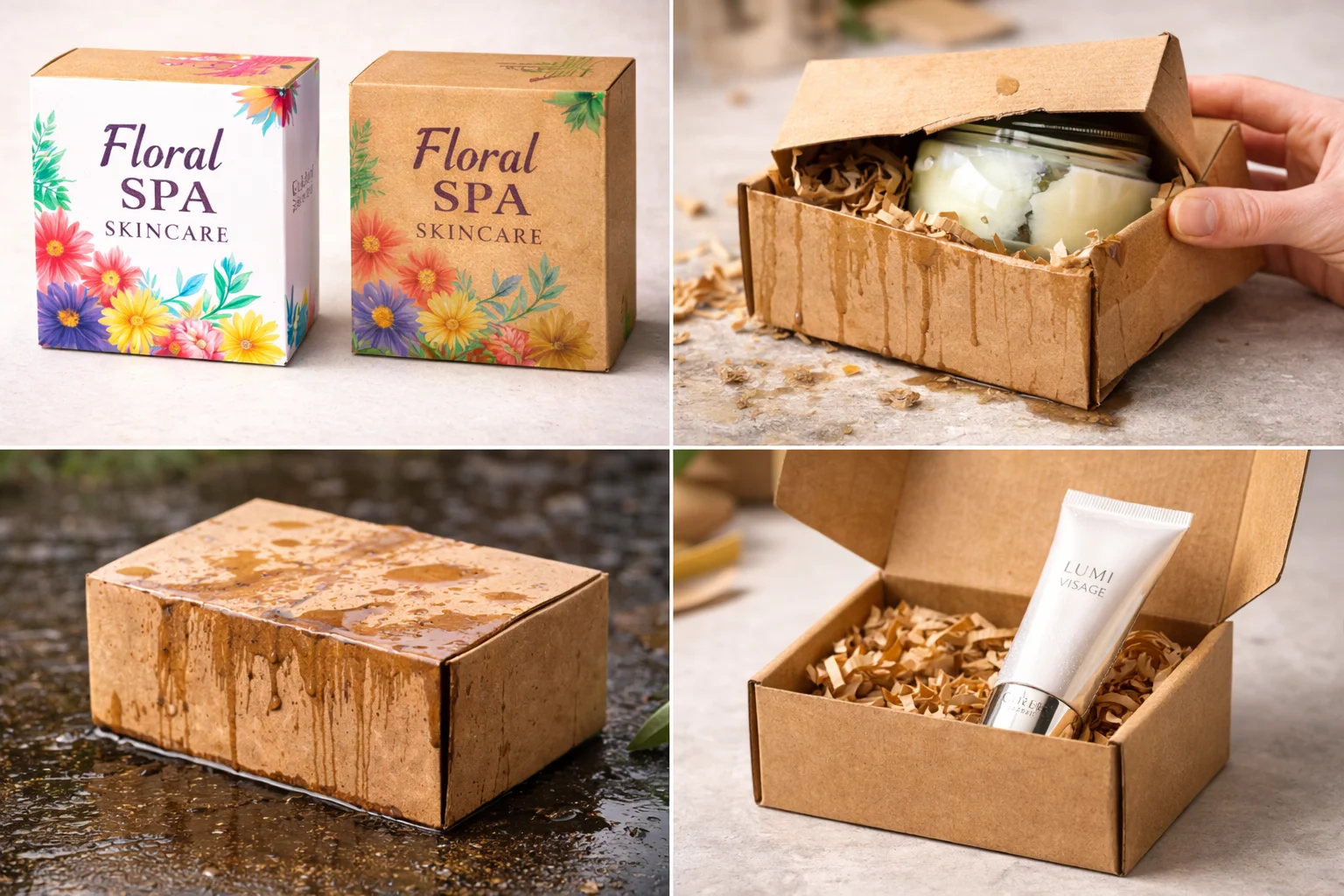
I see these same mistakes happen over and over. By being aware of them, you can easily avoid the headaches and extra costs they cause. Here are the top issues we help our clients navigate.
The Color and Design Mismatch
I can't say this enough: brands send us beautiful, bright design files and expect them to look the same on brown paper. It's a physics problem. The brown paper will always absorb some light and mute the colors. The best approach is to embrace the limitation. Design for the material. Use bold, dark colors like black or deep brown, or add a premium touch with metallic foil.
Ignoring Product Weight and Function
A client once insisted on ordering 250 GSM kraft boxes1 for a 1-pound glass candle to save a few cents per box. The boxes arrived, and as soon as they put the candles inside, the bottoms sagged. The packaging looked weak and cheap on the retail shelf. We had to rush an order for a much thicker 400 GSM board. Always, always get a sample and test it with your actual product inside before placing a bulk order.
Forgetting the Product's Environment
Another brand wanted to package their bath bombs in raw, uncoated kraft boxes. I had to explain that the first time a customer put that box on a damp bathroom counter, the paper would get soggy and possibly fall apart. We solved this by adding a simple, food-safe aqueous coating to the inside of the box. It was an invisible change that protected the packaging and the customer's experience.
Conclusion
Kraft boxes are a strong, eco-friendly, and affordable choice when used correctly. Align them with your brand identity and product needs, and they will be an excellent packaging solution.
Explore the advantages of kraft boxes, including their eco-friendliness and durability, to see if they fit your brand. ↩
Learn how eco-friendly packaging can enhance your brand image and attract environmentally conscious consumers. ↩
Discover packaging solutions that align with a natural aesthetic, perfect for organic and artisanal brands. ↩
Discover materials that provide strength and protection for your products during shipping. ↩
Find out how kraft boxes can save you money while providing quality packaging for your products. ↩
Understand the challenges of printing on kraft material to avoid design mismatches. ↩
Explore alternatives to kraft boxes that can elevate your brand's luxury image. ↩
Explore materials that provide strength and durability for heavy-duty grocery bags and packaging. ↩
Learn about the importance of sustainability in packaging and its effect on consumer loyalty. ↩
Understand the impact of moisture on packaging materials to ensure product safety. ↩
Find out how protective coatings can enhance the durability of kraft packaging against moisture. ↩
Discover strategies to ensure your design aligns with the limitations of your chosen packaging material. ↩
Learn about packaging options that can elevate your product's perceived value and quality. ↩
Find out which packaging solutions enhance the appeal of artisanal food products. ↩
Learn about effective printing techniques that work well with kraft material for a polished look. ↩
Understand the importance of selecting the right thickness for your packaging to prevent damage. ↩
Discover how thoughtful packaging design can create a memorable unboxing experience for customers. ↩
Learn about frequent errors in kraft packaging to avoid costly mistakes and enhance your brand. ↩