Struggling to match your green goals with real-world packaging? You're not alone. Many brands find the process complex and full of hidden risks that can derail a launch.
To implement eco-friendly cosmetic packaging1, focus on material selection2, supply chain stability3, and regulatory compliance4 from the start. Integrating sustainability5 into your initial design phase, not as an afterthought, is the key to avoiding costly mistakes and production delays. This approach ensures your vision becomes a reality.
I've seen many brands with fantastic sustainable missions get stuck. They have the vision, but turning it into a physical, manufacturable product is a huge challenge. The gap between a great idea and a great package is real, often caused by underestimating things like material stability or lead times6. Let's break down how to bridge that gap, starting with what "eco-friendly" actually means for a business like yours.
What does eco-friendly cosmetic packaging1 really mean for B2B brands?
Is the term "eco-friendly" confusing you? Vague definitions can lead to poor choices and accidental greenwashing7. Let's get clear on what it means for your business-to-business needs.
For B2B brands, eco-friendly packaging means using materials and processes that reduce environmental impact across the entire lifecycle. This includes sourcing, manufacturing, shipping, and end-of-life, focusing on aspects like recyclability8, compostability9, reduced material usage, and a lower carbon footprint10.
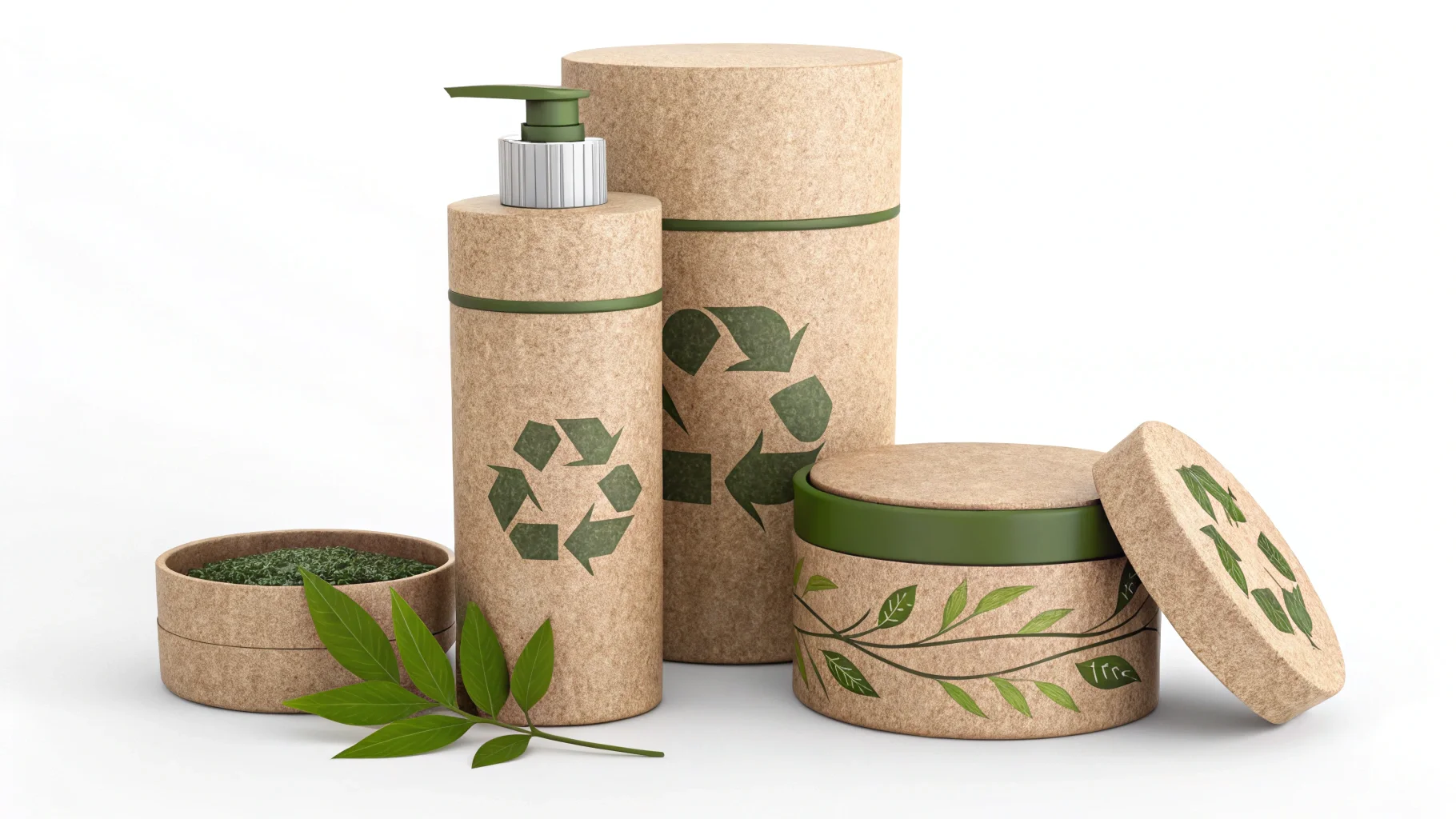
I often find that brands think "eco-friendly" just means using recycled paper. But it's so much more than that, especially in the B2B space where you're dealing with larger volumes and complex supply chains. You have to think about the entire journey of your packaging, from its creation to its disposal. This means looking beyond just the material itself. It is a holistic view that protects your brand and delivers on your promise to customers.
The Three Pillars of B2B Eco-Packaging
- Material Sourcing: Where do your materials come from? Are they from responsibly managed forests, like FSC-certified paper? Are they post-consumer recycled (PCR) plastics? The origin story of your material is the first chapter of its sustainable life and a key part of your brand story.
- Manufacturing Process: How is the packaging made? Does your supplier use renewable energy? Do they have processes to reduce water usage and waste? A "green" material made in a polluting factory isn't truly eco-friendly. You have to look at your partner's operations.
- End-of-Life: What happens to the package after the end consumer is done with it? Is it easily recyclable in standard facilities? Is it compostable? This is a critical piece that many forget. A package that can't be properly disposed of just becomes another piece of waste, undermining your efforts.
Why does eco-friendly packaging matter in the US & Canada market?
Think sustainability5 is just a "nice-to-have"? Consumer demand and new laws are making it essential. Ignoring this shift could cost you market share and valuable retail partnerships.
In the US and Canada, eco-friendly packaging is crucial for meeting consumer demand, securing retail partnerships, and complying with growing regulations. Major retailers now have strict sustainability5 requirements, and customers increasingly choose brands that align with their environmental values, directly impacting sales.

It’s no longer a niche concern. I was in a meeting with a major retail buyer recently, and their first question wasn't about our product's formula, but its packaging story. They had a sustainability5 checklist. Does it use PCR content? Is it recyclable? Is the ink soy-based? This is the new reality. Your B2B clients, the retailers, are facing immense pressure from their own customers and from new legislation. They pass that pressure directly on to you, the brand.
Key Drivers in North America
- Retailer Mandates: Big players like Sephora, Ulta, Target, and Walmart have public sustainability5 goals. If your packaging doesn't help them meet their targets, they simply won't stock your product. It’s a gatekeeping issue now, and you need the right key to get on the shelf.
- Consumer Behavior: Studies consistently show that a significant percentage of consumers, especially Millennials and Gen Z, will pay more for products in sustainable packaging. They check labels and they are vocal online about brands that don't meet their standards. Their voice directly influences retail buyers.
- Regulatory Pressure: States like California, Oregon, and Colorado are leading the way with Extended Producer Responsibility (EPR)11 laws. These laws make brands financially responsible for the end-of-life of their packaging. This is a game-changer that directly impacts your bottom line and makes sustainable choices12 a financial imperative.
What key regulations and certifications should you know, without the jargon?
Drowning in acronyms like EPR, FSC, and PCR? Navigating regulations feels like learning a new language. This complexity can stop great projects in their tracks. Let's simplify the most important ones.
Focus on Extended Producer Responsibility (EPR)11 laws, which make you pay for recycling. For materials, look for certifications like Forest Stewardship Council (FSC)13 for paper and Post-Consumer Recycled (PCR)14 for plastics. These are key for compliance, market access, and building trust.

I know the legal side can be intimidating. I've seen brand owners get completely lost in the details. But you don't need to be a lawyer. You just need to understand the big concepts that affect your business decisions. Knowing these basics will help you have more productive conversations with your packaging partners and make smarter, safer choices for your brand. Let's break down the essentials in simple terms.
The Must-Knows
| Term/Certification | What It Really Means | Why It Matters to You |
|---|---|---|
| EPR (Extended Producer Responsibility) | "You made it, you pay to recycle it." States charge fees based on how much and what kind of packaging you sell. | This is a direct cost to your business. Using easily recyclable materials can lower your fees in the future. |
| FSC (Forest Stewardship Council) | Your paper or wood components come from a forest that is managed responsibly. It's not from a clear-cut area. | This is a powerful marketing tool and is often required by high-end retailers. It shows you care about deforestation. |
| PCR (Post-Consumer Recycled) | Your plastic or paper contains material that has already been used by a consumer and recycled. | Many new laws and retailer policies mandate a certain percentage of PCR content. It's becoming non-negotiable. |
| "Compostable" vs. "Biodegradable" | Compostable means it breaks down into soil in a specific industrial facility. Biodegradable is a vague term. | Only use "compostable" if you have official certification (like BPI). Using "biodegradable" can be seen as greenwashing7. |
What are the common eco-friendly packaging materials for cosmetics?
Choosing between glass, PCR plastic, and paper feels overwhelming. Each option has hidden pros and cons that can impact your budget, your product's safety, and your carbon footprint10.
Common materials include PCR plastics (lightweight, versatile), glass (recyclable, premium feel), aluminum (infinitely recyclable), and FSC-certified paper/board (great for secondary packaging). The best choice depends on your product's formula, budget, brand image, and distribution channels.
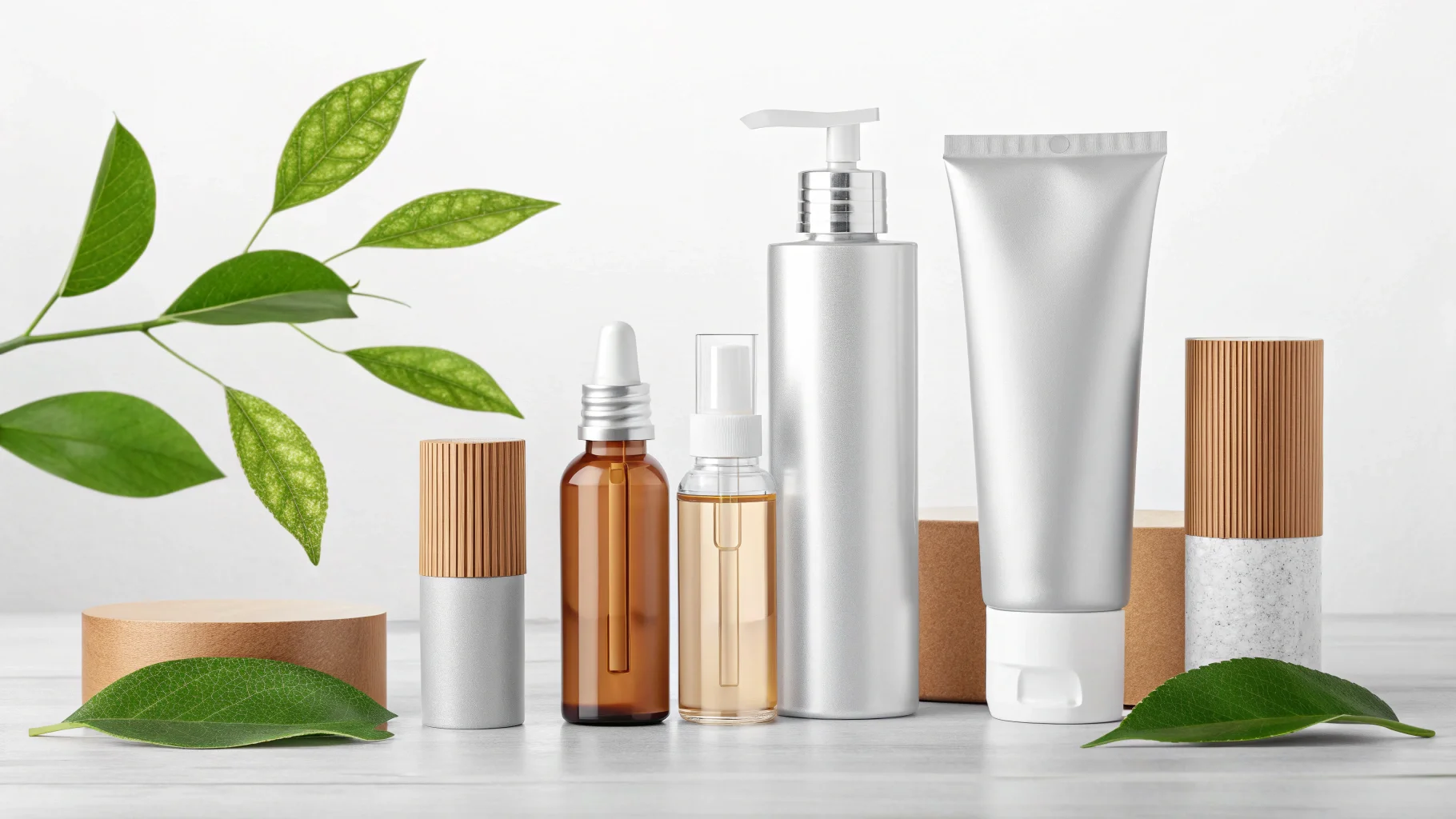
There is no single "best" material. The right choice is always a trade-off. I remember a client who was adamant about using only glass for their products. But one product was a daily-use shower gel. The weight made shipping costs skyrocket, and the risk of breakage was a huge customer concern. We switched to a 100% PCR plastic bottle, which was lighter, safer, and had a lower overall carbon footprint10 due to transport. You have to think practically.
Material Showdown
| Material | Pros | Cons | Best For... |
|---|---|---|---|
| PCR Plastic (PET, HDPE) | Lightweight, durable, versatile shapes, good recycling infrastructure. | Can have slight color variations, availability can be tight. | Lotions, serums, shampoos, cleansers. |
| Glass | Feels premium, protects formula well, infinitely recyclable. | Heavy, fragile, higher shipping carbon footprint10, energy-intensive to produce. | Luxury creams, serums, foundations. |
| Aluminum | Lightweight, infinitely recyclable, excellent barrier properties. | Dents easily, can be more expensive than plastic for some applications. | Tubes, bottles, deodorant sticks. |
| FSC-Certified Paper/Board | Biodegradable, compostable, great for printing, lightweight. | Not suitable for direct contact with wet formulas, offers less protection. | Outer boxes, cartons, inserts. |
| Monomaterials | A package made of a single type of plastic (e.g., an all-PP jar and lid). | Can be less decorative than mixed materials, pump mechanisms are a challenge. | Jars, simple caps, airless pumps. |
How can you implement eco-friendly packaging step-by-step without increasing risk?
Worried that switching to green packaging will cause product leaks, formula degradation, or massive delays? It's a valid fear. A structured process can protect your product, your timeline, and your brand's reputation.
Start by defining your sustainability5 goals clearly. Then, involve your packaging partner early to vet materials for compatibility and stability. Conduct rigorous testing and plan for longer lead times6. Don't treat sustainability5 as a final add-on; build it into your process from day one.
This is where I see most brands get into trouble. They develop a product, and then at the very end, someone says, "Oh, and let's make the packaging eco-friendly." That's a recipe for disaster. Sustainable materials often behave differently. PCR plastic might have different tolerances. A plant-based material might react with your formula. You have to build sustainability5 in from the beginning, not tack it on at the end.
A Safer 5-Step Process
- Step 1: Define & Prioritize. What does "eco-friendly" mean for this specific product? Is the priority recyclability8? PCR content? Lightweighting? You can't do everything at once. Pick one or two primary goals to focus on.
- Step 2: Early Supplier Collaboration. Don't just send a final design to a manufacturer. Bring them in early. Ask them: "We want to achieve X. What materials and processes do you recommend?" They know the realities of production, MOQs, and lead times6. Their early input is invaluable.
- Step 3: Material Vetting & Compatibility Testing. This is non-negotiable. You must test your final formula in the new packaging under real-world conditions like heat, cold, and shipping simulations. I've seen beautiful PCR bottles get ruined because the essential oils in the formula attacked the plastic. Test, test, and test again.
- Step 4: Design for Disassembly. If you're using multiple materials, like a pump on a bottle, can they be easily separated for recycling? Design with the end-of-life in mind. Use labels that can be removed easily or are made of compatible material.
- Step 5: Pilot Run & Scale. Before you order 100,000 units, do a smaller pilot run15. This lets you catch any issues in manufacturing, filling, or shipping before it becomes a million-dollar problem.
What do most brands get wrong about the cost and challenges?
Think eco-friendly packaging is always more expensive? The truth is more complex. Misunderstanding the real costs and hidden challenges can derail your entire project and destroy your budget.
Brands often underestimate hidden costs and challenges. The unit price might be higher, but the real issues are longer lead times6, higher MOQs for custom materials, and the risk of material instability. Failing to budget time and resources for these can be more costly than the material itself.
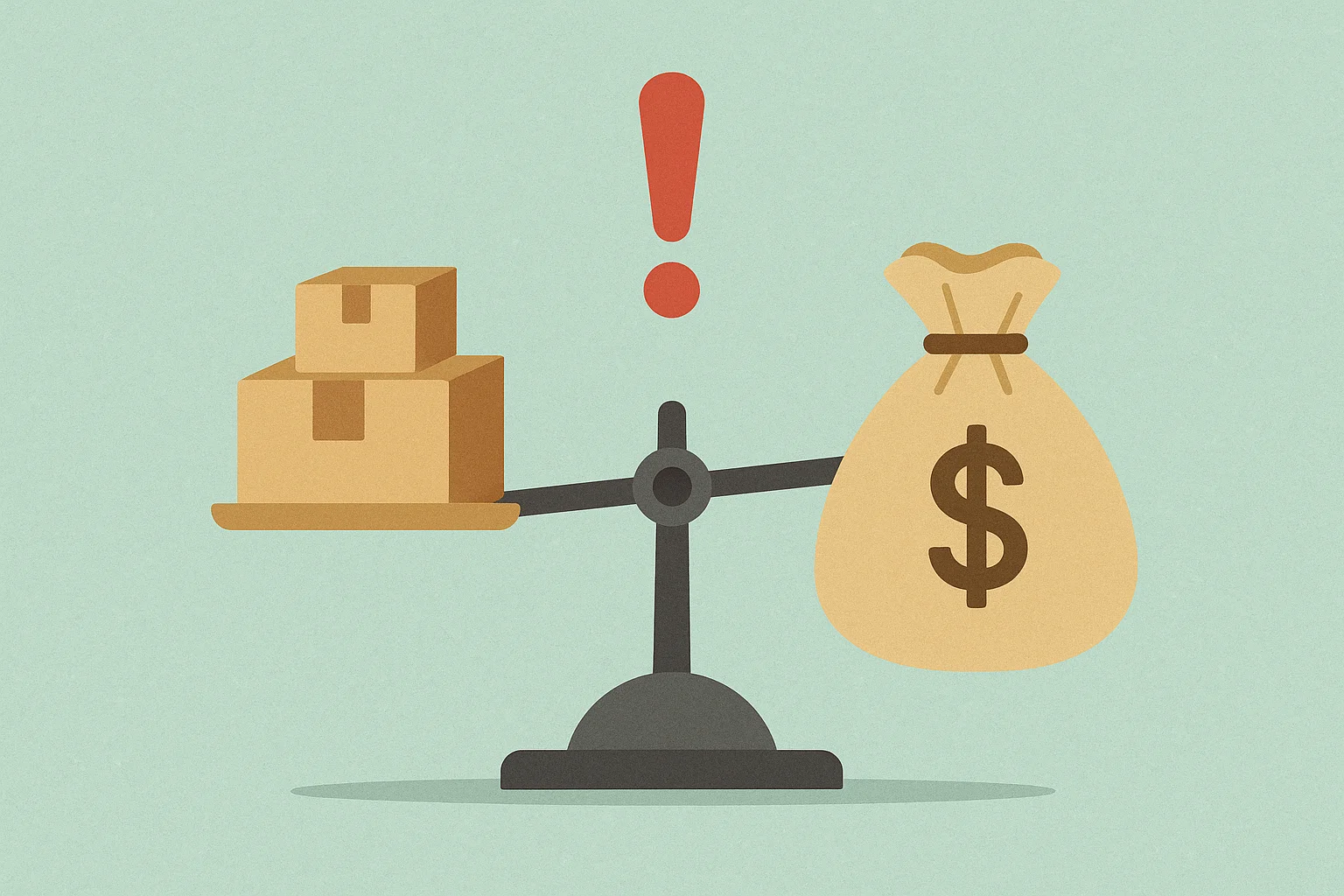
Everyone asks me, "Is it more expensive?" Sometimes the unit cost is a few cents higher, yes. But the biggest mistake I see is focusing only on that price. The real challenges are operational. A brand I worked with found a great compostable plastic. The price was fine. But the Minimum Order Quantity (MOQ) was five times what they needed, and the lead time was 20 weeks instead of 8. Their launch was delayed by three months, which cost them far more in lost sales than they would have spent on conventional packaging.
The Real Challenges to Plan For
- Supply Chain Volatility: The market for high-quality PCR and other sustainable materials is still developing. Supply can be inconsistent. You need a partner who has strong relationships with material suppliers to secure your inventory.
- Higher MOQs: Specialized materials often require larger production runs from the source. This can be a major hurdle for indie brands or for new product launches. You need to be prepared for this cash flow impact.
- Longer Lead Times: Sourcing, testing, and producing with new materials simply takes more time. You cannot use your old timelines. Add at least 30-50% more time to your project plan for a sustainable packaging transition.
- Technical Performance: Don't assume a PCR bottle will perform exactly like a virgin plastic bottle. It might be more brittle or have a different reaction on your filling line. You have to account for these technical risks with thorough testing.
How do you choose the right eco-friendly packaging partner?
Is your current supplier just a salesperson? A true partner helps you navigate sustainability5 complexities. Choosing the wrong one can lead to greenwashing7 claims, production nightmares, and wasted money.
Choose a partner with proven expertise in sustainable materials, not just a catalog. They should ask about your formula and compliance needs, offer material testing, and have a transparent supply chain. A good partner is a problem-solver, not just an order-taker.
A good partner is the single most important factor for success. I once saw a brand get pitched a "bamboo" jar that sounded incredibly eco-friendly. But their supplier failed to mention that it was just a plastic jar with a thin bamboo shell glued on, making it completely non-recyclable. It was classic greenwashing. A true partner would have been honest about the material's limitations from the start. They are your guide and your safety net in this complex process.
Questions to Ask a Potential Partner
- "Can you show me successful projects using the materials you're recommending?" They need to provide case studies, not just theories. Ask for examples of brands with products similar to yours.
- "What is your process for compatibility and stability testing?" If they don't have a clear, rigorous process, that's a huge red flag. They should be leading this conversation, not waiting for you to ask.
- "How do you ensure supply chain stability for materials like PCR?" Ask about their relationships with raw material suppliers. Do they have multiple sources? How do they handle shortages?
- "Can you provide all necessary compliance and certification documents (e.g., FSC, GRS)?" They must be able to provide clear, legitimate documentation to back up their claims. Do not just take their word for it.
Conclusion
Implementing eco-friendly packaging is a journey, not a simple switch. By integrating sustainability from the start and choosing the right partner, you can turn your vision into a successful reality.
Explore this resource to understand how to effectively implement eco-friendly packaging in your cosmetic line. ↩
Learn about the importance of material selection in creating sustainable packaging solutions. ↩
Discover how supply chain stability impacts the success of your eco-friendly packaging initiatives. ↩
Stay informed about the regulations that affect eco-friendly packaging to ensure compliance. ↩
Understand the significance of sustainability in packaging and its impact on consumer choices. ↩
Discover the importance of lead times in planning for sustainable packaging transitions. ↩
Learn how to identify and avoid greenwashing in your packaging strategies. ↩
Explore the concept of recyclability and its importance in eco-friendly packaging. ↩
Learn the key differences between compostable and biodegradable materials for better packaging choices. ↩
Find strategies to minimize your packaging's carbon footprint and enhance sustainability. ↩
Get insights into EPR laws and how they affect your packaging responsibilities. ↩
Discover the advantages of adopting sustainable practices in your packaging approach. ↩
Learn about FSC certification and its role in promoting sustainable forestry practices. ↩
Understand the significance of PCR materials in creating sustainable packaging solutions. ↩
Understand the importance of conducting a pilot run before full-scale production. ↩