
Are your sustainable packaging1 concepts failing during mass production? This costs you time and money. Here's how to design packaging that is both eco-friendly2 and manufacturable from the start.
Creating sustainable packaging1 means designing for the entire lifecycle, not just choosing a "green" material. Up to 80% of its environmental impact3 is set during the design phase4. It must balance eco-goals with practical factors like cost, manufacturability5, and supply chain6 reliability for true sustainability.

I've seen so many brands get this wrong. They pick a cool new material but don't think about how it will run on a machine. The result is a mess. But it doesn't have to be that way. By understanding the core ideas, you can make choices that are good for the planet and good for your business. Let's break it down, starting with the basics.
What Is Sustainable Packaging Design, Really?
The term "sustainable packaging1" is thrown around a lot, causing confusion. This can lead to choices that aren't truly green. Let's clarify what it really means for your brand.
Sustainable packaging design is a holistic approach. It considers the entire lifecycle: sourcing7, manufacturing, transportation, and end-of-life (recycling8, composting9, or reuse). The goal is to minimize the total environmental footprint, not just focus on one aspect like the material itself.

Sustainable design isn't a single checkbox you can tick. I've seen companies switch to a compostable plastic, only to find out there are no composting9 facilities for their customers. That's not a real solution. It's about thinking through the entire journey of your package, from start to finish.
The Full Lifecycle View
We need to look at every single step.
- Sourcing: Where do the raw materials come from? Is it a renewable resource like paper from a managed forest, or a finite one like oil?
- Manufacturing: How much energy and water does it take to produce the package?
- Transportation: Is the design lightweight and compact to reduce shipping emissions?
- Use: Does it protect the product effectively to prevent waste?
- End-of-Life: What happens after the customer is done with it? Can it be easily recycled, composted, or reused?
More Than Just "Green" Materials
As I mentioned, 80% of the impact is locked in during the design phase4. This means your choices about the shape, size, and structure matter more than you think. A simple design change that reduces material use by 10% can have a bigger environmental impact3 than switching to a fancy new biomaterial that can't be produced at scale. True sustainability is the balance of green goals and real-world manufacturability5.
Why Does Sustainable Packaging Matter So Much Today?
Customers and regulators are pushing for greener options. Ignoring this shift can damage your brand image and your bottom line. Let's look at why this is a massive opportunity for you.
It matters for three key reasons: consumer demand10, regulatory pressure11, and brand reputation12. Today's shoppers actively choose brands that align with their values. Also, new laws are making unsustainable practices costly. Ultimately, it builds trust and long-term loyalty with your customers.
This isn't just a fleeting trend; it's a fundamental shift in how business is done. I was talking to a client just last week who saw a 20% sales lift after switching to simpler, recyclable packaging and telling that story to their customers.
The Voice of the Customer
People are more informed than ever. They check labels, they look up recycling8 information, and they talk about brands on social media. A clunky, wasteful package can become a viral complaint overnight. On the other hand, a smart, sustainable design can earn you loyal fans who feel good about buying from you. They are voting with their wallets for a cleaner planet.
The Pressure from Regulations
Governments worldwide are cracking down. Think of plastic bag bans, Extended Producer Responsibility (EPR) fees, and mandatory recycled content levels. These aren't suggestions; they are laws with real financial penalties. Designing for sustainability now is just smart future-proofing for your business. It protects you from fines down the road and keeps you ahead of the competition.
Building a Better Brand
Your packaging is often the first physical thing a customer touches. It's a statement about your values. Sustainable packaging says you care about more than just profit. It builds trust, strengthens your brand story, and creates a positive connection that goes beyond the product itself.
What Are the Core Principles of Sustainable Packaging Design?
You want to design sustainable packaging1 but feel lost on where to begin. Without clear guiding principles, your efforts won't have a real impact. Here are the core ideas that will guide you.
The core principles are often summarized as Reduce, Reuse, and Recycle. We should also add a fourth: Renew. This means using less material, designing for multiple uses, choosing easily recyclable materials, and prioritizing materials made from renewable resources like plants instead of fossil fuels.
These principles are your roadmap. They force you to think critically at the design stage, which is where you have the most influence. From my experience in manufacturing, the 'Reduce' principle often provides the biggest and most immediate wins.
1. Reduce
This is the most important principle. The most sustainable packaging1 is the packaging you don't use. Ask yourself: Can I make this box smaller? Can I remove this extra layer? Can I use a thinner material? Reducing weight and volume not only saves resources but also cuts down on shipping costs and emissions.
2. Reuse
This involves creating packaging that can be used again. Think of a durable shipping box that customers can use for returns, or a beautiful jar that a customer will keep for storage. This extends the life of the packaging and adds value for the customer.
3. Recycle
If you can't reduce or reuse, make sure it's recyclable. This means using a single material (mono-material) whenever possible. Avoid mixing materials like plastic-coated paper, as these are very difficult to recycle. Your design must make recycling8 easy and obvious for the consumer.
4. Renew
This is about your material source. Prioritize materials that come from responsibly managed, renewable resources. Think paper from FSC-certified forests or bioplastics13 made from corn starch. This moves us away from finite resources like oil.
| Principle | Key Action in Design | Practical Example |
|---|---|---|
| Reduce | Minimize material, size, and weight. | A smaller, lighter shipping box. |
| Reuse | Design for durability and a second life. | A product jar that can be used for storage. |
| Recycle | Use mono-materials14; clear labeling. | A clear PET plastic bottle. |
| Renew | Choose materials from renewable sources. | Paperboard from a certified forest. |
What Are the Most Common Sustainable Packaging Materials?
The number of "green" materials is overwhelming. Choosing the wrong one can backfire, costing you money and failing your eco-goals. Let's look at the most reliable and practical options.
Common sustainable materials include recycled cardboard and paper, glass, aluminum, and mono-plastics like PET or HDPE. Newer options like compostable bioplastics13 and mushroom packaging also exist, but their practicality depends heavily on your product, supply chain6, and the available waste infrastructure for your customers.
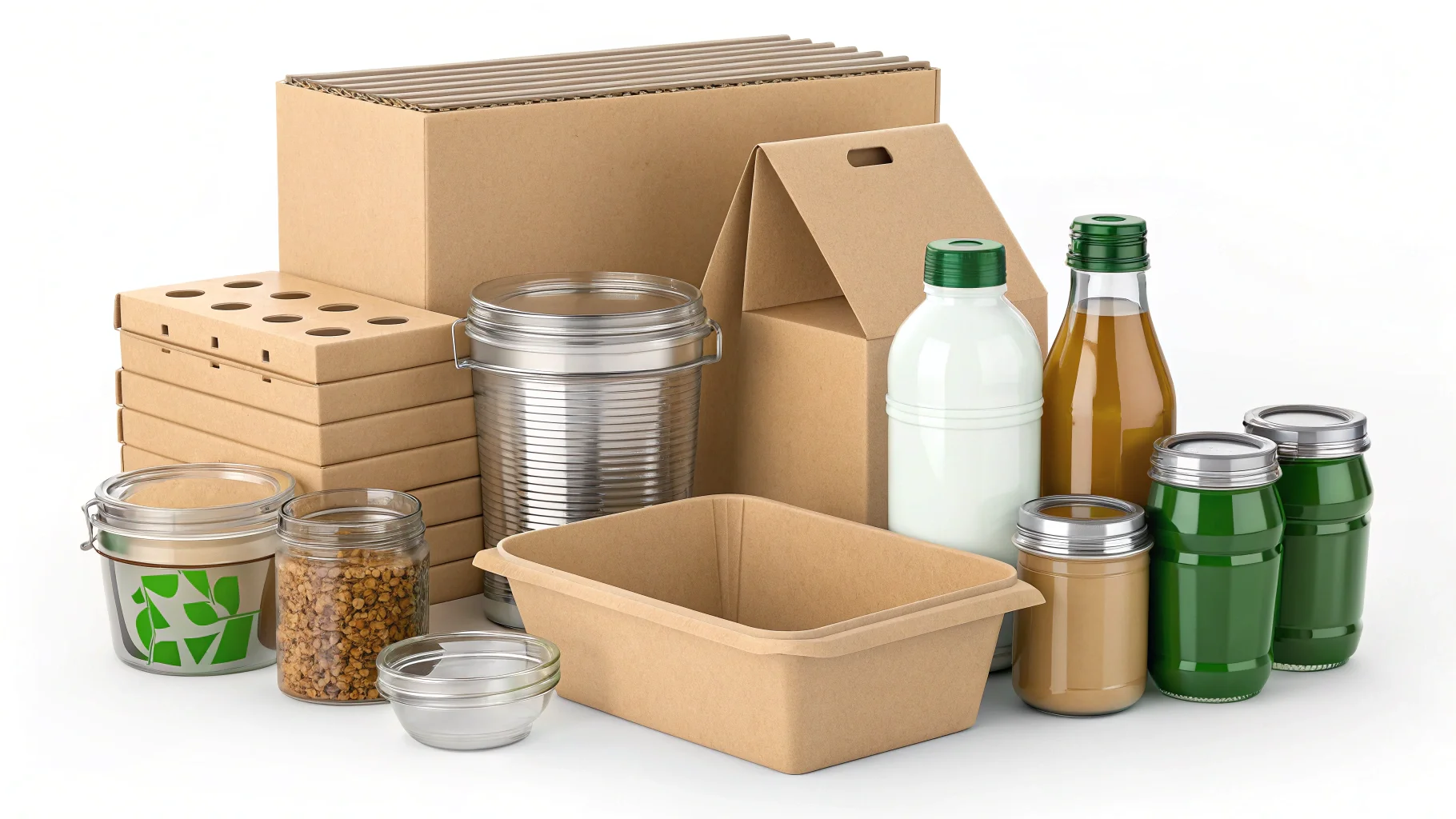
The "best" material doesn't exist. The right choice depends on your specific needs. I always tell my clients to think about production reality first. A cool-sounding material is useless if you can't get a stable supply or if it constantly jams your machines.
The Classics: Tried and True
These materials have well-established recycling8 streams, which is a huge advantage. They are reliable, scalable, and understood by consumers.
- Recycled Paper & Cardboard: Excellent for secondary packaging. It's lightweight, affordable, and has one of the highest recycling8 rates.
- Glass & Aluminum: Great for primary packaging, especially for food and beverages. They offer great protection and are infinitely recyclable without losing quality.
- Mono-Plastics (PET, HDPE): When used correctly, plastics can be sustainable. They are lightweight, durable, and energy-efficient to transport. The key is using a single type that is widely recycled.
The Newcomers: Promising but Complex
These materials are exciting but require more careful consideration of your specific supply chain6.
- Bioplastics (PLA): Made from plant starches. They can be compostable, but only in industrial facilities, which are not available everywhere.
- Molded Pulp/Mushroom Packaging: Great for protective inserts to replace styrofoam. They are biodegradable and often made from agricultural waste.
| Material | Pros | Cons | Best For |
|---|---|---|---|
| Recycled Paper | Widely recyclable, renewable | Not waterproof | Boxes, mailers, inserts |
| Glass | Infinitely recyclable, premium feel | Heavy, breakable | Jars, bottles |
| Aluminum | Infinitely recyclable, lightweight | Can be expensive | Cans, tubes |
| Mono-Plastics | Lightweight, durable, efficient | Fossil-fuel based, low recycling8 rates | Bottles, tubs, films |
| Bioplastics | Renewable source, compostable | Needs industrial composting9, can be brittle | Food service items |
What Are 8 Practical Strategies for Sustainable Packaging Design?
You know the principles, but how do you actually apply them? Without concrete steps, it's all just theory. Here are eight practical strategies to start using in your design process today.
Key strategies include: right-sizing15 your packaging, choosing mono-materials14, designing for recyclability, using recycled content, reducing weight, eliminating unnecessary components, printing with eco-friendly inks16tps://beautypluspacking.com/how-can-cosmetic-packaging-be-eco-friendly/)2 inks, and clearly communicating disposal instructions to your customers. These steps have a real, measurable impact on your footprint.
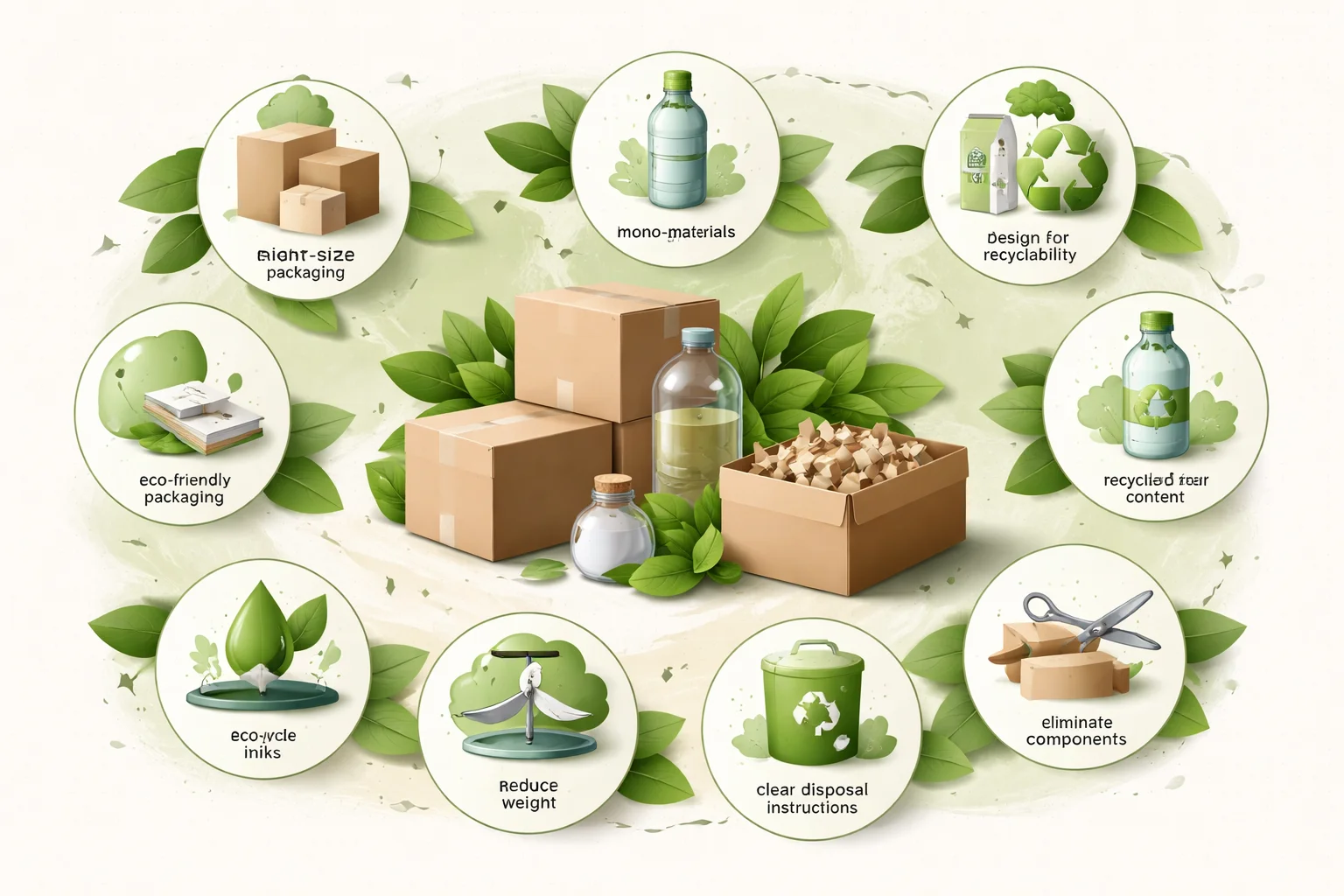
Let's get into the specific actions you can take during the design phase4. These are the things that separate a theoretical "green" package from one that is truly sustainable in the real world.
- Right-Size Your Packaging: Eliminate empty space. This is my number one tip. It directly reduces material use and lowers shipping costs because you can fit more units on a pallet.
- Stick to Mono-Materials: Avoid combining different materials. A paper box with a plastic window is much harder to recycle than an all-paper box. Simplicity is key for recycling8 success.
- Design for Disassembly: If you must use multiple materials, make them easy for the customer to separate. A paper label that peels off a glass jar easily is a good example.
- Use Recycled Content: Specify post-consumer recycled (PCR) content in your materials. This creates demand for recycled materials and helps close the loop.
- Lightweight Your Design: Can you use a thinner grade of cardboard? A lighter plastic bottle? Every gram you save adds up to a massive impact across millions of units.
- Eliminate the Unnecessary: Do you really need that inner wrap? Or that extra slip of paper? Question every single component. Each one adds to the environmental cost.
- Use Eco-Friendly Inks: Opt for soy-based or water-based inks instead of petroleum-based ones. They are less harmful to the environment and make recycling8 easier.
- Educate Your Customer: Use simple icons and clear language to tell your customer how to recycle or dispose of the package. Don't make them guess.
What Are the Common Mistakes Brands Make with Sustainable Packaging?
Trying to be sustainable is great, but it's easy to get it wrong. These mistakes can cost you money and sometimes do more harm than good. Let's cover the common pitfalls.
The biggest mistakes include: choosing a material without considering the end-of-life infrastructure (like compostable plastics), over-engineering the solution, "greenwashing17" with misleading claims, and forgetting about manufacturability5. A design that can't be produced at scale is not a solution at all.

I see these mistakes happen over and over. They usually come from good intentions but a lack of practical, supply-chain-focused thinking.
Mistake 1: Ignoring the End-of-Life Reality
A brand I know switched to a beautiful compostable mailer. The problem? Less than 5% of their customers had access to industrial composting9. So, almost all of those mailers ended up in a landfill, where they don't break down properly. You must design for the systems that actually exist for your customers.
Mistake 2: Greenwashing
This means making vague or false claims. Using terms like "eco-friendly2" or "earth-friendly" without any proof is a huge red flag for consumers today. Be specific. Say "Made from 70% recycled cardboard" instead of just "sustainable." Honesty builds trust.
Mistake 3: Forgetting About Production
This is the big one. A designer creates a complex, folded box from a single piece of paper to avoid glue. It looks great on a computer screen. But then they find out it takes a person two minutes to fold each one by hand, or it requires a new machine that costs a million dollars. The design is a failure because it can't be produced efficiently. Always, always talk to your manufacturer during the design process.
What Are Some Real-World Examples of Great Sustainable Packaging?
All this theory is helpful, but what does it look like in practice? It can be hard to picture. Let's look at a few brands that are getting it right.
Great examples include Puma's "Clever Little Bag," which reduced cardboard use by 65%. Also, Dell's use of bamboo and mushroom packaging to replace foam. And Lush's move to "naked" products, eliminating packaging altogether. These show a focus on the core principles.
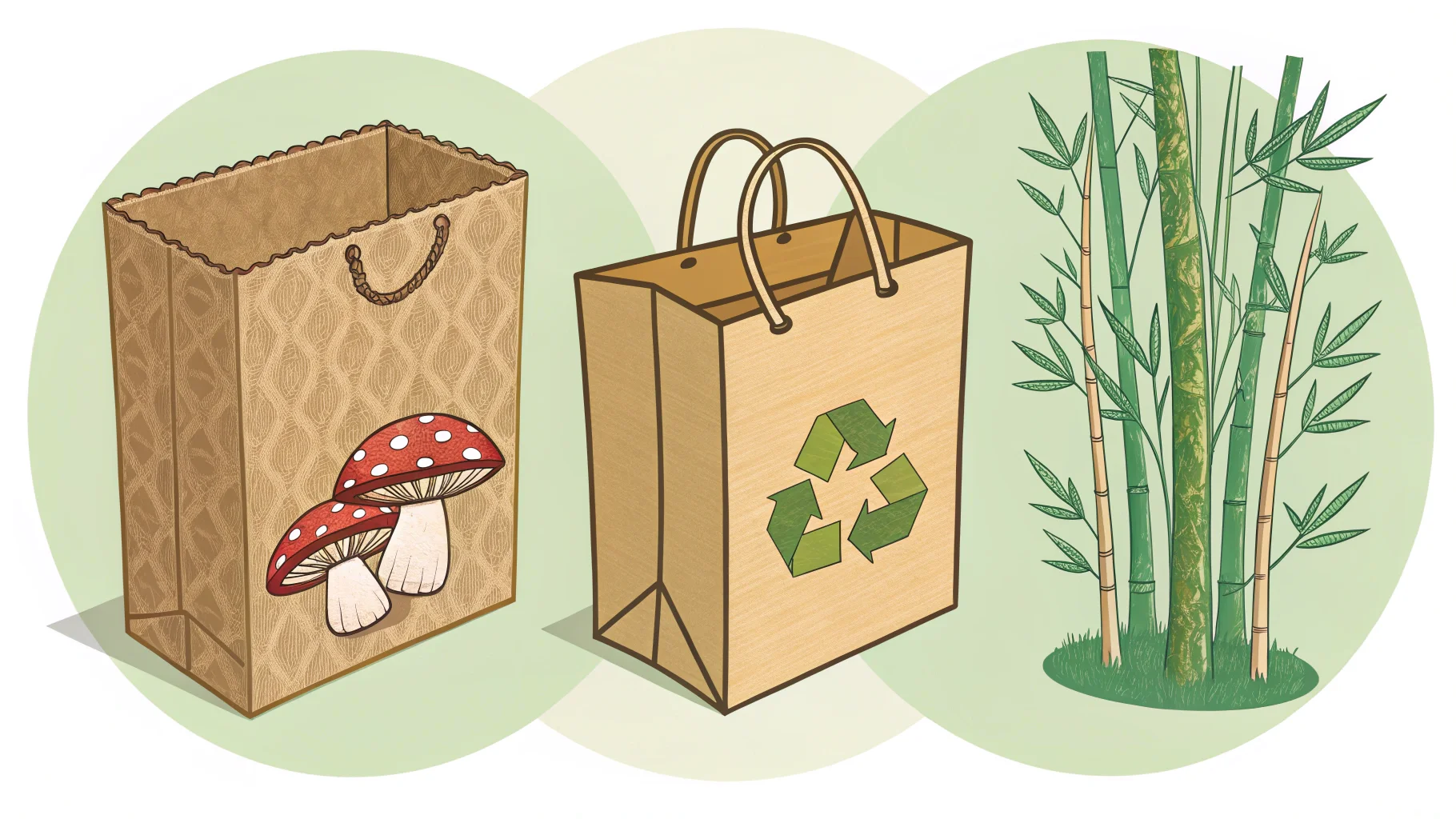
These brands didn't just pick a new material; they re-thought the entire packaging system. That's the key takeaway.
Puma's Clever Little Bag
Puma tackled the shoebox. Instead of a full box, they created a simple cardboard frame and a reusable bag. This design drastically cut cardboard usage, reduced weight for shipping, and gave the customer a useful bag. This is a perfect example of the "Reduce" and "Reuse" principles in action. It was a complete system redesign, not just a material swap.
Dell's Use of Renewables
Dell needed to protect its computers during shipping. Instead of using plastic foam, they turned to rapidly renewable materials like bamboo and mushroom-based molded pulp. These materials perform well, are compostable, and come from agricultural waste streams. This is a great example of the "Renew" principle, replacing a fossil-fuel product with a plant-based one.
Lush's "Naked" Products
The most sustainable package is no package at all. Lush Cosmetics championed this by reformulating products like shampoo and conditioner into solid bars. This completely eliminates the need for a plastic bottle. It's the ultimate example of the "Reduce" principle and challenges us to think if packaging is even necessary in the first place.
What Certifications and Compliance Should You Know About?
You're making your packaging sustainable, but how do you prove it? Without credible certifications, your customers might not believe your claims. Here are the logos to look for.
Key certifications to know are the Forest Stewardship Council (FSC) for paper, which ensures responsible sourcing. Also, look for symbols indicating recyclability (the chasing arrows) and compostability (like BPI certification). These provide third-party validation for your sustainability claims and guide consumers.
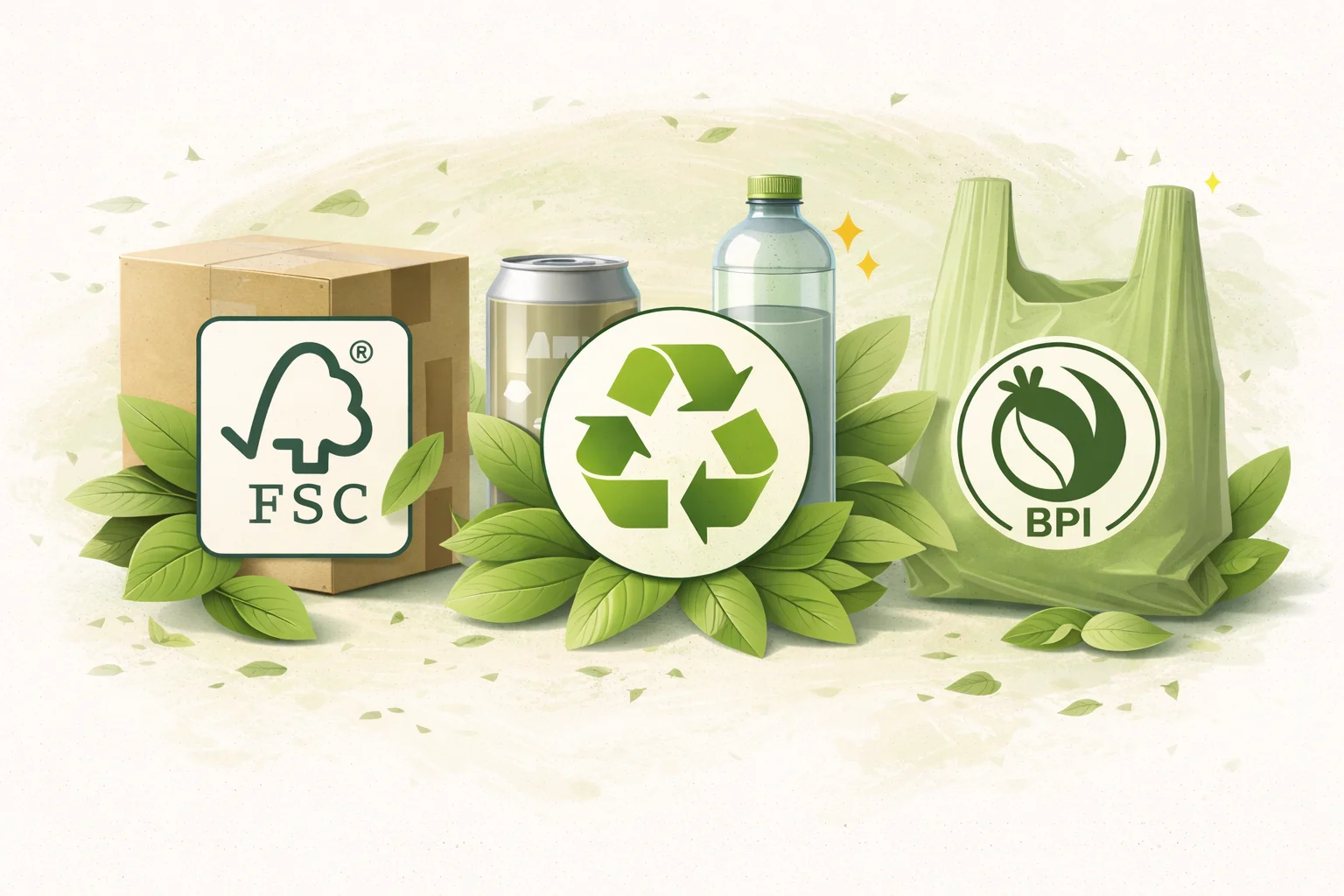
These logos aren't just for decoration. They are a shorthand way to communicate your commitment to sustainability and help your customers make the right choices. They show you've done the work to verify your claims.
For Sourcing: FSC
The Forest Stewardship Council (FSC) logo is the gold standard for paper and wood products. When you see this logo, it means the paper comes from a forest that is managed responsibly. It protects animal habitats and ensures the forests are still around for future generations.
For Recyclability
The chasing arrows symbol is universally recognized. However, it can be confusing. It's important to be clear. Use phrases like "Widely Recyclable" or "Check Locally." The How2Recycle label is a great system that provides specific instructions for each packaging component.
For Compostability
For a product to be truly compostable, it needs to break down in a specific environment. In the US, the BPI (Biodegradable Products Institute) certification is key. It proves that a material will break down in an industrial composting facility without leaving harmful residues behind.
| Certification | What It Means | Why It Matters |
|---|---|---|
| FSC | Paper is from a responsibly managed forest. | Proves responsible sourcing of renewable materials. |
| BPI Certified | Material is certified compostable in industrial facilities. | Verifies end-of-life claims for compostable items. |
| How2Recycle | Standardized label with clear disposal instructions. | Reduces consumer confusion and improves recycling rates. |
Conclusion
Sustainable packaging isn't about one magic material. It's about smart, practical design choices that consider the entire lifecycle, from manufacturing to disposal. Start with design, and you'll succeed.
Explore the concept of sustainable packaging to understand its significance in reducing environmental impact. ↩
Learn about the advantages of eco-friendly materials in packaging and their impact on sustainability. ↩
Understand the various factors that influence the environmental impact of packaging choices. ↩
Explore the importance of the design phase in determining the sustainability of packaging. ↩
Discover how manufacturability plays a crucial role in the effectiveness of sustainable packaging. ↩
Explore the role of the supply chain in determining effective sustainable packaging solutions. ↩
Learn about effective sourcing strategies for sustainable packaging materials. ↩
Find out how to effectively recycle packaging materials to minimize waste. ↩
Explore the challenges associated with composting packaging and how to overcome them. ↩
Understand how consumer preferences shape the landscape of sustainable packaging. ↩
Learn about the regulations that affect sustainable packaging and their implications for businesses. ↩
Discover the connection between sustainable packaging and brand reputation in today's market. ↩
Learn about bioplastics and their role in sustainable packaging solutions. ↩
Learn about the advantages of mono-materials for recycling and sustainability. ↩
Understand the concept of right-sizing and its impact on sustainability in packaging. ↩
Learn about the benefits of using eco-friendly inks in sustainable packaging. ↩
Understand the concept of greenwashing and how to ensure honest sustainable practices. ↩