Your customers want eco-friendly packaging1. But the options are confusing, and a wrong move can be costly. I'll show you how to navigate this change successfully and make smart choices.
To implement eco-friendly cosmetic packaging, you must first define your sustainability goals2. Then, research materials, engage suppliers early in the process, and design for the entire product lifecycle3, not just the material. This ensures your choice is both sustainable and scalable for your brand's growth.
You now have a high-level overview of the process. But making the right decisions requires a deeper understanding of the "why" and "what" behind sustainable packaging. Let's start by exploring why this matters so much for your cosmetic brand today. This will set the foundation for everything that follows.
Why Does Eco-Friendly Packaging Matter for Your Cosmetic Brand?
Thinking eco-packaging is just a trend? Ignoring it means losing customers and falling behind competitors. Let's explore why this shift is now a crucial business decision for your survival.
Eco-friendly packaging matters because modern consumers4 demand it, influencing their loyalty and purchasing decisions. It also helps your brand comply with growing environmental regulations5, reduce its carbon footprint6, and build a stronger, more responsible brand identity7 that attracts conscious buyers and investors.
I've seen it firsthand in my work with many brands. The ones that don't adapt get left behind. It's not just about a small group of activists anymore. The modern consumer is more informed and has higher expectations for the brands they support.
The Modern Consumer
Today's buyers check labels and research brand ethics before they purchase. They share their findings on social media, creating powerful word-of-mouth marketing for or against you. A study I recently read showed that a majority of consumers are willing to change their buying habits to reduce their environmental impact. This is a massive market segment you simply can't afford to ignore. Their voice is getting louder every day.
Regulatory Pressures
Governments worldwide are also stepping in with new laws. We're seeing more rules around single-use plastics, mandatory recycling targets, and Extended Producer Responsibility (EPR)8 fees. These aren't just suggestions; they are legal requirements with real financial penalties. Getting ahead of these regulations now saves you from costly scrambles and fines later on. It positions your brand as a leader, not a follower.
Building Brand Trust
Ultimately, this is all about trust. Your packaging is often the first physical interaction a customer has with your brand. When it reflects a commitment to sustainability, it sends a powerful message. It says you care about more than just profit. This builds a loyal community around your brand, which is far more valuable than a single sale could ever be.
What Does "Eco-Friendly" Cosmetic Packaging Really Mean?
The term "eco-friendly" is thrown around so much it's almost lost its meaning. This confusion can lead to poor choices and accusations of greenwashing9. Let's define it clearly.
Eco-friendly cosmetic packaging refers to a system that minimizes environmental impact throughout its lifecycle. This includes using sustainable materials10 (recycled, renewable, or biodegradable), reducing overall material use, and ensuring the packaging can be easily recovered through recycling or composting at its end-of-life.
I always tell my clients that "eco-friendly" isn't a single feature; it's a whole system. Many brands make the mistake of focusing only on the material, like using bamboo, but forget about the rest of the journey. True sustainability is about the entire lifecycle of the packaging, from creation to disposal.
Beyond the Material
A package made from a "green" material isn't truly eco-friendly if its production creates massive waste or if it can't be recycled in the real world. For example, a complex compostable plastic that only breaks down in industrial facilities is useless if customers don't have access to them. It just ends up in a landfill, and you've solved nothing. We have to think bigger than just the label.
The Core Principles of Sustainable Packaging
The best way I've found to think about this is through a simple framework. It helps you evaluate options from multiple angles.
| Principle | Description | Example in Cosmetics |
|---|---|---|
| Reduce | Use less material overall to create the package. | A concentrated serum in a smaller bottle; eliminating outer boxes. |
| Reuse | Design packaging for multiple uses by the customer. | Refillable lipstick cases or skincare jars with refill pods. |
| Recycle | Use materials that can be easily recycled by most consumers. | Mono-material PET or glass bottles with clear recycling labels. |
| Renew | Use materials that come from renewable sources. | Packaging made from sugarcane (bio-plastic) or FSC-certified paper. |
Using this framework helps ensure you are making a genuinely positive impact, not just a superficial one.
What Are the Pros and Cons of Common Eco-Friendly Packaging Materials?
You need to choose a material, but the options are overwhelming. Glass, PCR plastic, and bioplastics11 all have hidden drawbacks that can trip you up. Let's compare them honestly.
Recycled plastics (PCR) reduce waste but can have supply issues. Glass is recyclable but heavy, increasing shipping emissions. Bioplastics can be renewable but often require industrial composting. Paper is recyclable but may not protect all formulas. Each has a trade-off between sustainability and practicality.
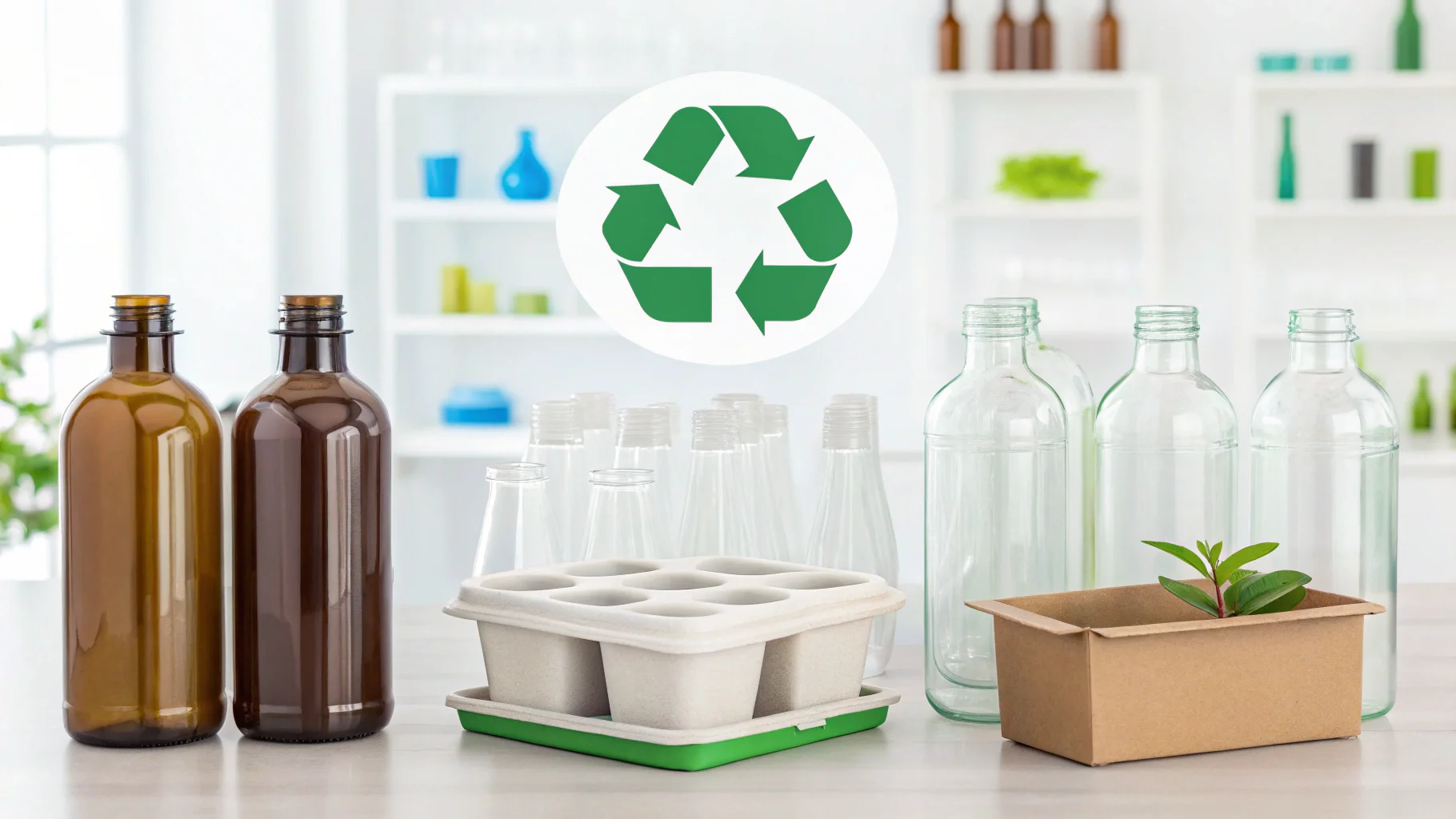
From my perspective in manufacturing, the "best" material on paper is often not the best in reality. Supply chain stability and processing efficiency are just as important as the material's origin. A material with an unstable supply can halt your production entirely. Here’s a breakdown I use with clients to look at the full picture.
Comparing Your Options
This table gives a realistic look at the trade-offs you'll face.
| Material | Pros | Cons | My Manufacturing Insight |
|---|---|---|---|
| PCR Plastic | Reduces plastic waste, lower carbon footprint6 than virgin plastic. | Color/clarity variation, potential for supply inconsistency, can be more expensive. | High scrap rates can occur if the PCR quality is poor. You must work with a supplier who has strong quality control on their PCR source. |
| Glass | Infinitely recyclable, premium feel, excellent barrier properties. | Heavy (high shipping costs/emissions), breakable, energy-intensive to produce. | Tooling for custom glass shapes is very expensive. I advise brands to stick to stock molds if they're starting out to keep costs and lead times down. |
| Aluminum | Lightweight, highly recyclable, good barrier against light and air. | Dents easily, internal liner often required (can complicate recycling). | Sourcing aluminum, especially recycled aluminum, can have long lead times. You have to plan your inventory and orders very carefully. |
| Paper/Cardboard | Renewable (if FSC-certified), biodegradable, easily recyclable. | Poor barrier for liquids, can be easily damaged by water. | Great for secondary packaging, but be mindful of coatings. Plastic coatings make it non-recyclable. Always use water-based varnishes instead. |
| Bioplastics (PLA) | From renewable resources (corn, sugarcane), can be compostable. | Often requires industrial composting (not backyard), can contaminate plastic recycling streams. | Processing bioplastics11 often requires special tooling and machine settings. It is not a simple drop-in replacement for traditional plastics. |
How Can You Implement Eco-Friendly Cosmetic Packaging Step-by-Step?
You know the options, but how do you actually make the switch? Without a clear process, projects fail and costs rise. Here is a simple, step-by-step plan to follow.
Start by auditing your current packaging and defining clear sustainability goals2. Then, collaborate with suppliers to research materials and design for recyclability12. Next, test the new packaging for compatibility and performance. Finally, launch with a clear communication plan for your customers.
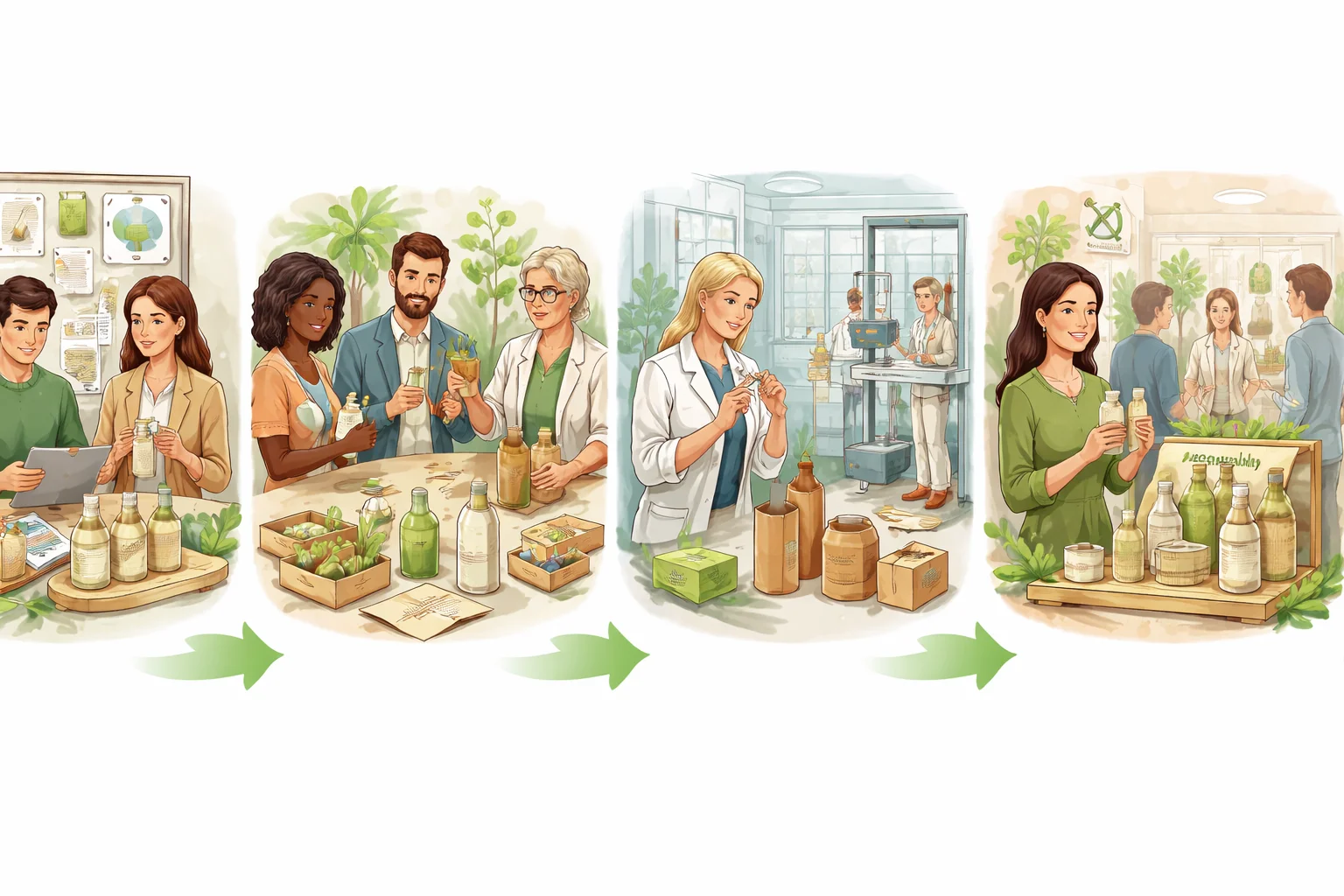
A successful transition to sustainable packaging is all about process. Rushing this is the most common and costly mistake I see brands make. You need to be methodical and deliberate with each step.
Step 1: Audit and Goal Setting
First, look at what you have now. What materials are you using? How much waste is there? Then, set a specific, measurable goal. Is it to use 50% PCR plastic by next year? Or to make all packaging refillable in three years? A clear goal guides every other decision you will make.
Step 2: Supplier Collaboration and Design
This is the most critical step. Do not design your package in a vacuum and then hand it to a manufacturer. Bring your packaging supplier into the conversation early. Tell them your goals. They know what's possible, what's scalable, and what will cause problems in production. This one step will save you so much time and money. They can advise on material choice, tooling efficiency, and small design tweaks that improve both sustainability and manufacturability.
Step 3: Test, Test, Test
Never skip testing. You must test for product compatibility to see if the formula reacts with the new material. You must also test for shipping durability to see if it breaks in transit. And finally, you must test the user experience to see if it is easy for the customer to use and recycle.
Step 4: Launch and Educate
When you launch, tell your customers what you did and why. Most importantly, tell them how to properly dispose of the packaging. Use clear icons and simple instructions on the product itself.
What Certifications, Compliance, and Claims Should You Know?
You want to tell customers about your sustainable efforts. But one wrong word can lead to huge fines and accusations of greenwashing9. Let's cover the rules you must know.
Familiarize yourself with the FTC's Green Guides, which govern environmental marketing claims in the US. Key certifications to look for include Forest Stewardship Council (FSC) for paper. Be specific about claims like "recyclable" or "compostable" based on real-world accessibility for consumers.
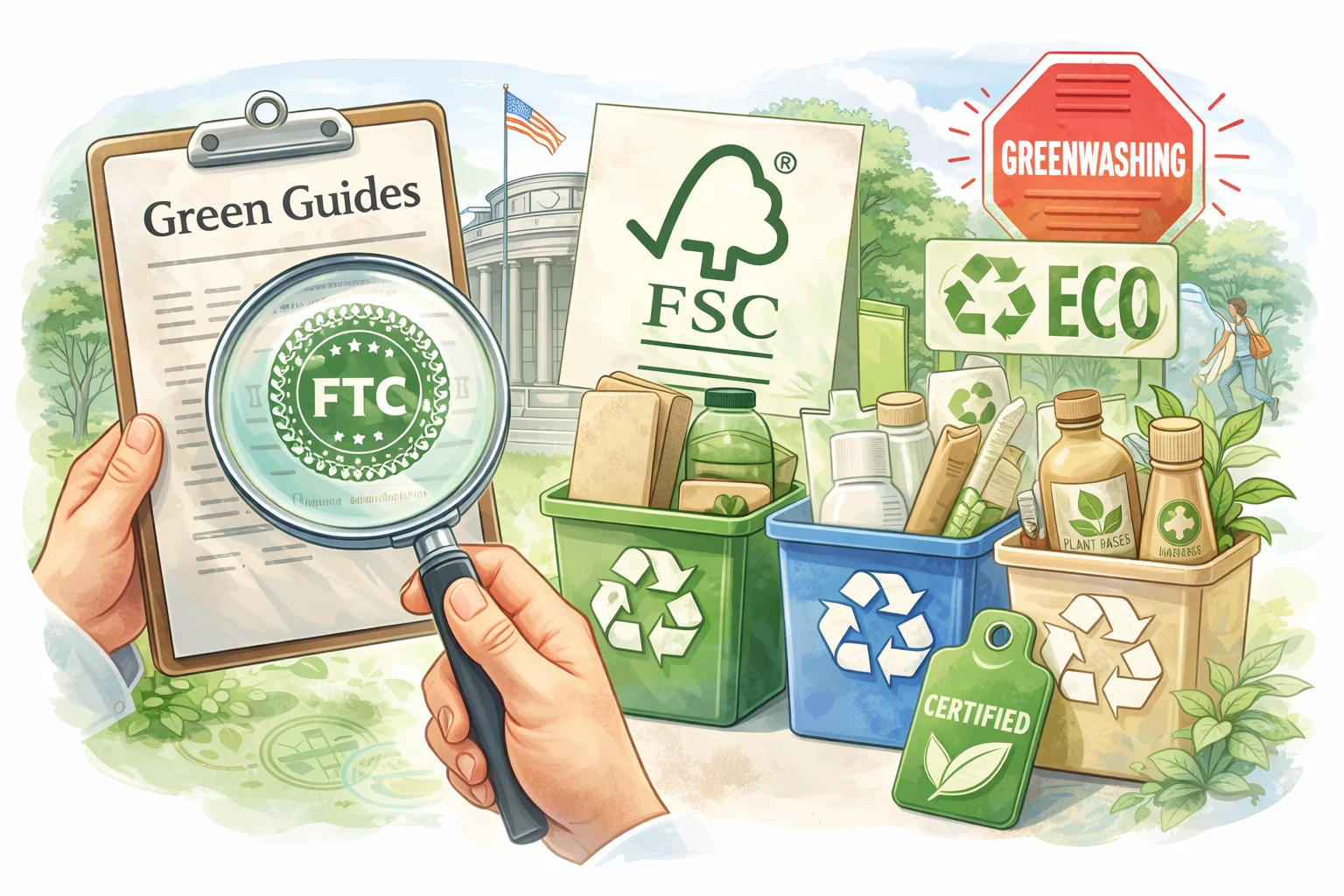
Making claims is a legal minefield. I have seen brands get into serious trouble for using terms they don't fully understand. Your marketing claims must be truthful, specific, and backed by evidence.
The FTC Green Guides
In the United States, the Federal Trade Commission (FTC) has "Green Guides." These are the rules for environmental marketing. The main point is that any claim you make must be substantiated. You can't just say "eco-friendly" or "green" without explaining what you mean. For example, if you claim something is "recyclable," a substantial majority of your customers must have access to recycling facilities for that material.
Common Certifications and Claims
This table can help you understand some common terms.
| Claim/Certification | What It Means | How to Use It Correctly |
|---|---|---|
| FSC Certified | The paper/wood comes from responsibly managed forests. | Look for the FSC logo on your paper packaging. This is a must-have for paperboard boxes. |
| Recyclable | The item can be recycled by consumers. | Be specific. "This bottle is recyclable. Please remove the pump before recycling." Check if it's actually recyclable in most areas. |
| Compostable | The material can break down into natural elements. | Specify if it's "Home Compostable" or "Industrially Compostable." If it requires an industrial facility, it's not a useful claim for most consumers. |
| % Recycled Content | A percentage of the material is from recycled sources. | Be specific, such as "Made with 50% Post-Consumer Recycled (PCR) Plastic." |
The Dangers of Vague Claims
Avoid terms like "earth-friendly," "sustainable," or "green" on their own. They are too broad and are considered greenwashing9 by the FTC. Be specific, be honest, and be able to back up every single claim you make with solid proof.
What Do Brands Often Overlook About Cost, MOQ, and Scalability?
You've found a great eco-material. But then you see the high minimum order quantity (MOQ)13 and hidden costs. These practical issues can stop your project cold. Let's talk reality.
Brands often overlook that sustainable materials10 can have higher MOQs and unit costs. They also forget to factor in new tooling expenses14, slower production cycles, and potential supply chain volatility. True sustainability requires a solution that is also financially and logistically scalable for your business.
This is where my manufacturing experience really comes into play. The most beautiful, "eco" idea in the world is useless if you can't actually produce it consistently and affordably.
The Reality of MOQs and Cost
New, innovative materials often come from specialized suppliers. These suppliers have high minimum order quantities (MOQs) to make their production runs viable. If you're a small brand, a 50,000-unit MOQ might be impossible to meet. Also, the per-unit cost might be 20-50% higher than traditional options. You have to budget for this reality from the very beginning.
The Hidden Cost of Inefficiency
Here's what most people miss: sustainability is about reducing waste, and that includes production waste. A material with an unstable supply or one that requires special machine handling can lead to high scrap rates. I've seen runs where 20% of the packaging had to be thrown out due to defects. That's not sustainable at all. An efficient, reliable production process on standard machinery is often a bigger environmental win than a niche material with a high failure rate.
Planning for Scale
You have to think long-term. Is this material available from multiple sources? Can production speed keep up if your brand grows 10 times bigger? Treating your packaging as a long-term system, not a one-time material swap, is key. Partnering with a manufacturer who understands this will help you choose a solution that works today and five years from now.
How Can You Communicate Sustainability Without Greenwashing?
You've made a positive change and want to tell everyone. But one misstep can look like "greenwashing" and damage your reputation. Let's talk about how to communicate honestly.
Communicate sustainability by being specific, honest, and educational. Instead of vague claims like "eco-friendly," state facts like "This bottle is made from 100% PCR plastic." Educate customers on how to recycle the package and be transparent about your journey, including the challenges.
Your communication strategy is just as important as your packaging choice. Trust is your most valuable asset, and the way you talk about sustainability can either build it or destroy it in an instant.
Honesty Over Perfection
The most powerful strategy is transparency. Don't pretend you've solved every environmental problem. Your customers know that's not realistic. Instead, share your journey. Talk about the choices you made and why. For example: "We chose a 50% PCR bottle because a 100% PCR option didn't meet our quality standards yet, but we're working on it." This kind of honesty builds incredible trust and loyalty with your audience.
Educate Your Customer
Don't assume your customers know what PCR means or how to recycle a mixed-material pump. Use simple language and clear icons on your packaging and website. Create a dedicated sustainability page that explains your choices in detail. Explain how to take apart the package for proper disposal. A small QR code on the box linking to a "how to recycle" video can be very effective. This helps ensure your sustainable design actually results in a sustainable outcome.
Use Your Platform for Good
Your brand has a voice. Use it to talk about the bigger issues. Share information about local recycling programs or highlight challenges in the recycling industry. When you become a source of helpful, honest information, you build a community of loyal fans who see you as more than just a company that sells products.
Conclusion
Implementing eco-friendly packaging is a journey of balancing ideals with reality. By focusing on a holistic system, collaborating with suppliers, and communicating honestly, you can make a real difference.
Explore the advantages of eco-friendly packaging to understand how it can enhance your brand's reputation and customer loyalty. ↩
Learn how to set effective sustainability goals that align with your brand's mission and customer expectations. ↩
Understanding the product lifecycle can help you make informed decisions about sustainable packaging. ↩
Explore how consumer preferences are shaping the future of packaging and sustainability. ↩
Stay updated on environmental regulations to ensure compliance and avoid penalties. ↩
Learn strategies to minimize your packaging's carbon footprint and enhance sustainability. ↩
Discover how sustainable packaging can strengthen your brand identity and attract conscious consumers. ↩
Learn about EPR and its implications for your packaging strategy and compliance. ↩
Understand greenwashing to ensure your marketing claims are truthful and credible. ↩
Discover various sustainable materials that can help reduce your environmental impact while maintaining product quality. ↩
Understand the benefits and challenges of using bioplastics to make informed packaging decisions. ↩
Find out which materials are most recyclable to enhance your packaging's sustainability. ↩
Learn how minimum order quantities can impact your sustainable packaging strategy and costs. ↩
Understand tooling expenses to better plan your budget for sustainable packaging projects. ↩