
Are you struggling to make your cosmetic packaging sustainable? It’s a confusing world of buzzwords and conflicting information, leaving you unsure of the right choice for your brand and the planet.
To make cosmetic packaging more sustainable, you must look beyond just the material. It involves evaluating the entire lifecycle, from sourcing and production to consumer use and disposal. Prioritize recycled content1, mono-materials2, and clear recycling instructions3 to create a truly circular and responsible packaging strategy.
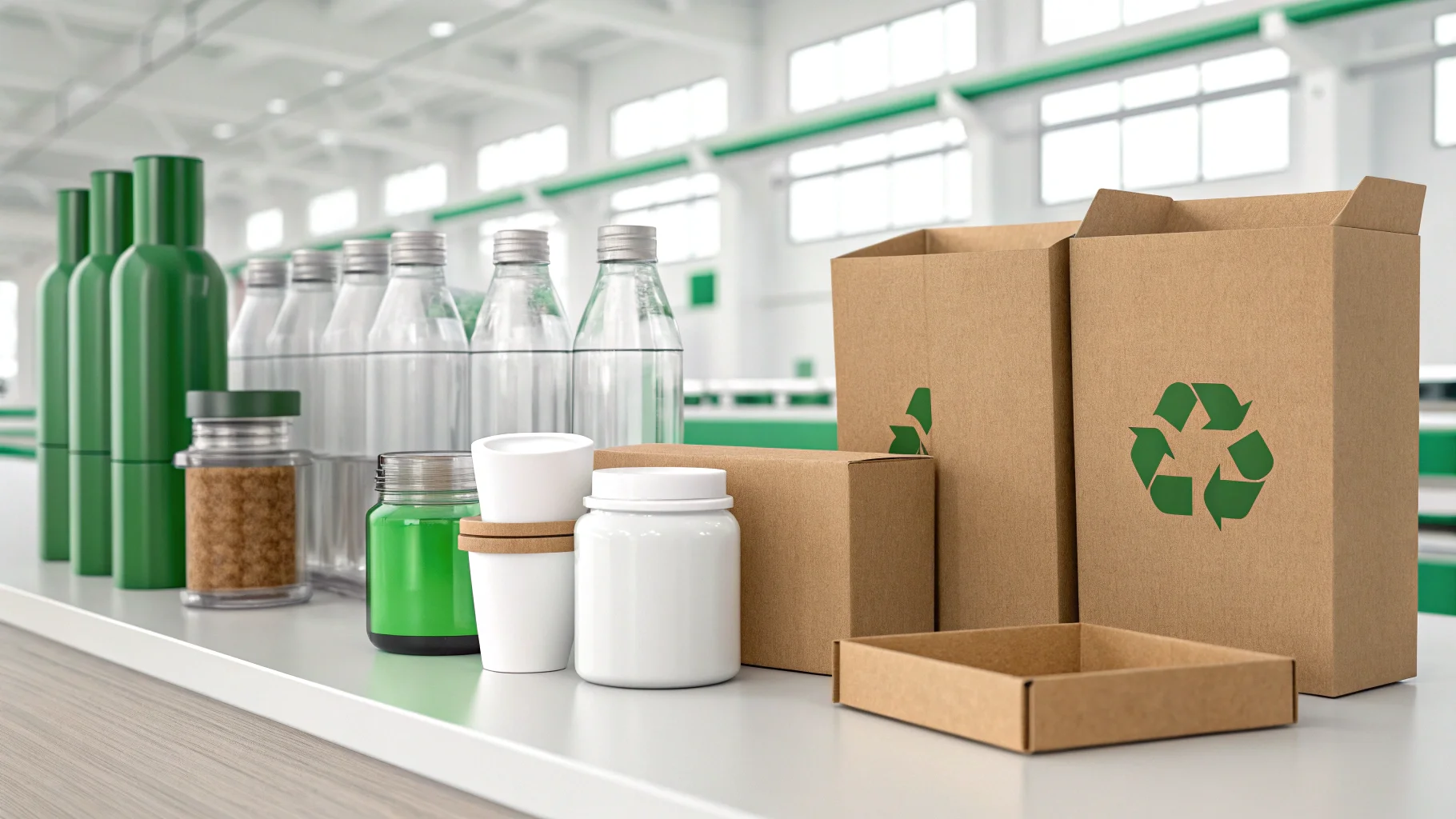
I've worked with dozens of brands, and the journey to sustainability is a big one. But it's also one of the most rewarding. It's about making smart, informed choices, not just following trends. We need to move past the surface-level ideas and dig into what really makes a difference. This guide will walk you through the practical steps and considerations I've learned over the years. Let's build a better, more sustainable future for your brand, together.
Why Does Sustainable Cosmetic Packaging Matter?
Your customers are asking for it, and ignoring them feels like a missed opportunity. You see competitors highlighting their eco-friendly choices, and you worry about being left behind in the market.
Sustainable packaging matters because it directly impacts your brand's reputation and bottom line. Consumers increasingly choose brands that align with their values. Adopting sustainable practices reduces your environmental footprint, builds customer loyalty, and prepares your business for future environmental regulations4. It is a core business strategy.
When I first started, many brands saw sustainability as just a marketing angle. But that has changed completely. I remember working with a small skincare line that was hesitant to invest in Post-Consumer Recycled (PCR)5 plastic bottles because of the slightly higher cost. We ran the numbers and projected the potential customer response. They took the leap, and their sales increased by nearly 30% in the next six months. Their customers weren't just buying a product; they were supporting a mission. This isn't just about feeling good; it's about connecting with your audience on a deeper level. True sustainability shows you care about more than just profit. It demonstrates long-term vision and responsibility, which are powerful assets for any brand.
| Aspect | Unsustainable Packaging | Sustainable Packaging |
|---|---|---|
| Environmental Impact | High carbon footprint6, pollutes oceans, fills landfills. | Reduced carbon footprint6, promotes circular economy7. |
| Consumer Perception | Seen as outdated, irresponsible, or careless. | Viewed as modern, responsible, and ethical. |
| Brand Loyalty | Lower, as customers may switch to eco-conscious brands. | Higher, builds a strong community around shared values. |
| Regulatory Risk | Vulnerable to new plastic taxes and disposal laws. | Proactively compliant and future-proofed. |
What Are the Key Considerations Before Choosing Packaging?
You're ready to choose a sustainable option, but the choices are overwhelming. Making the wrong decision could lead to higher costs, production issues, or a package that doesn't even get recycled correctly.
Before choosing, you must look at the entire lifecycle of the package. Consider where the material comes from, how it's made, and what happens to it after use. You also need to check its practicality, compliance with safety standards, and if it truly fits your brand.

I learned this the hard way. Early in my career, a client was determined to use a specific type of "plant-based" bioplastic. It looked great on paper. However, after we dug deeper, we found it was sourced from overseas, requiring carbon-intensive shipping. Worse, it wasn't recyclable in standard facilities and needed industrial composting, which most customers don't have access to. We pivoted to a locally sourced, 100% PCR plastic bottle that had a measurably lower overall carbon footprint6. The lesson was clear: don't get distracted by buzzwords. You have to evaluate the entire system. A recycled glass jar might seem heavy and energy-intensive to produce, but if it's widely recycled in your target market and reused by customers, it can be a superior choice to a "natural" material that ends up in a landfill.
| Consideration | Key Questions to Ask |
|---|---|
| Lifecycle Assessment | What is the total carbon footprint6 from sourcing to disposal? |
| Material Sourcing | Is it from recycled, renewable, or responsibly managed sources? |
| Practicality & Function | Does it protect the product? Is it easy for the customer to use? |
| End-of-Life | Is it easily recyclable, compostable, or refillable for the average consumer? |
| Brand Alignment | Does the look and feel match your brand's identity and price point? |
| Compliance & Safety | Does it meet all legal and safety requirements for cosmetic products? |
What Types of Sustainable Packaging Are Available?
You hear terms like PCR, mono-material, and compostable thrown around. It feels impossible to know which option is truly the most effective and responsible choice for your specific product.
The main types of sustainable packaging8 include materials with high recycled content1 like PCR plastic, glass, and aluminum. Mono-materials, which are made from a single type of plastic, are also excellent because they are easier to recycle. Refillable and compostable systems are other popular, innovative options.
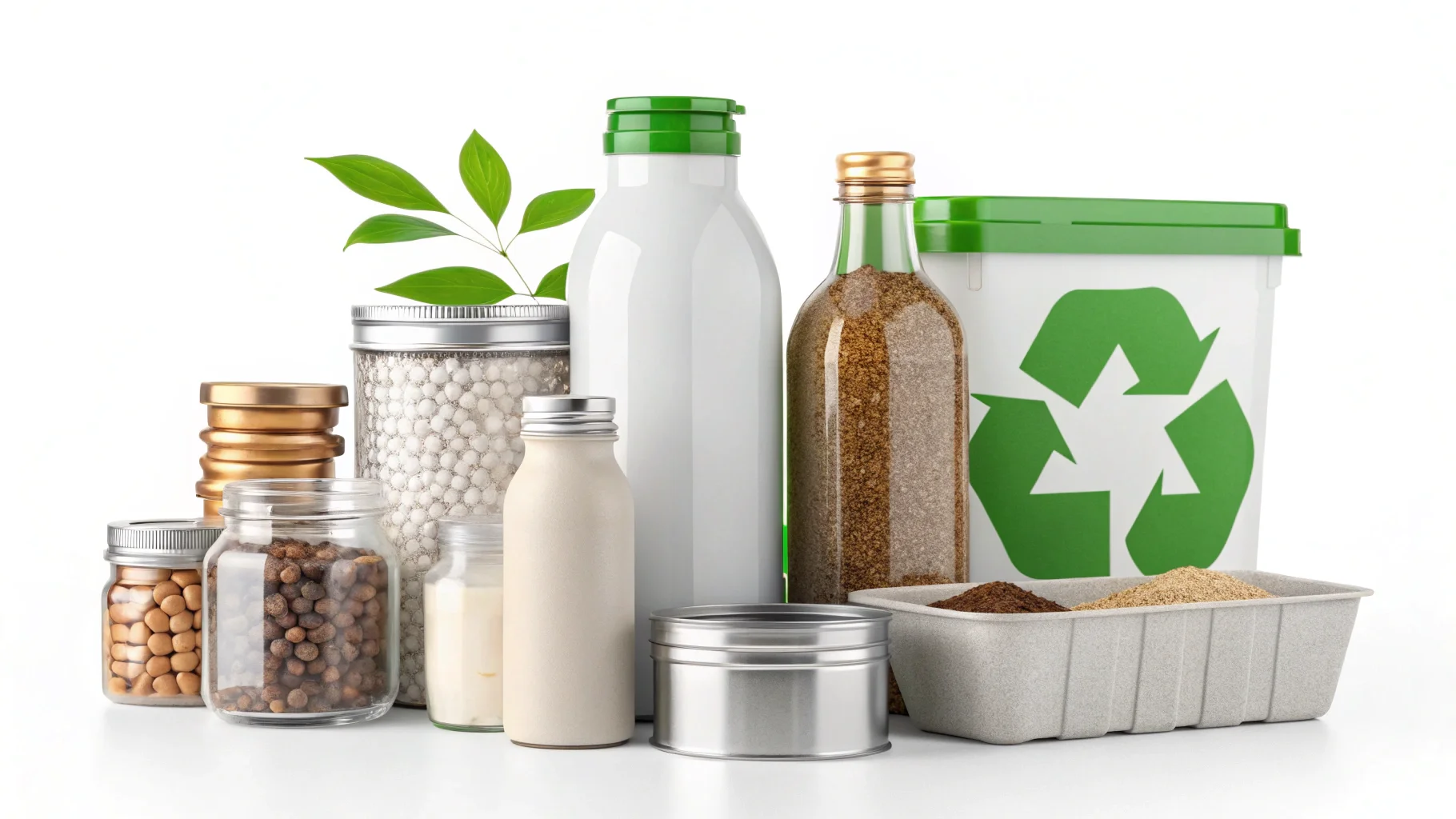
It's tempting to look for a single "best" material, but the right choice always depends on the context. For a heavy cream, a glass jar is classic, highly recyclable, and feels premium. For a lightweight serum, an airless pump made from mono-material PP or PE plastic protects the formula and is designed for recycling. I recently helped a brand launch a new cleanser. We chose an aluminum bottle. Why? Aluminum is infinitely recyclable, and the recycling rates are very high in most places. It's also lightweight, which reduces shipping emissions compared to glass. The key is to match the material and system to the product and the likely disposal scenario for your customer. Thinking in systems, not just materials, is what separates good intentions from real impact.
| Packaging Type | Pros | Cons | Best For |
|---|---|---|---|
| PCR (Post-Consumer Recycled) | Reduces plastic waste, lower carbon footprint6 than virgin plastic. | Can have slight color variations, supply can be limited. | Lotions, cleansers, serums. |
| Glass | Infinitely recyclable, feels premium, excellent barrier properties. | Heavy (higher shipping emissions), can break. | Creams, masks, foundations. |
| Aluminum | Infinitely recyclable, high recycling rates, lightweight. | Can dent easily, may require an internal plastic liner. | Dry shampoo, mists, cleansers. |
| Mono-Materials | Easier to sort and recycle in standard facilities. | May not have the same feel or function as mixed materials. | Tubes, airless pumps, bottles. |
| Refillable Systems | Drastically reduces single-use packaging waste over time. | Requires consumer behavior change, logistical complexity. | Shampoo, body wash, skincare staples. |
How Can You Encourage Recycling & Proper Disposal?
You’ve invested in recyclable packaging, but you fear it will still end up in the trash. If customers don't know how to dispose of it properly, all your hard work is wasted.
Encourage recycling by providing simple, clear instructions directly on your packaging. Use standardized labels like the How2Recycle9 symbol. You can also use a QR code to link to a webpage with detailed instructions, videos, and information on local recycling capabilities.

Communication is everything. I worked with a brand that switched to a mono-material pump that was fully recyclable, but looked just like the old, non-recyclable ones. At first, customers kept throwing them away. We added a small, simple icon on the back that said "Recycle Me Whole!" and a short sentence explaining that the pump and bottle could be recycled together. We also ran a social media campaign showing people how to do it. It was a simple change, but it made a huge difference. You can't assume your customers are experts. Your job is to make doing the right thing as easy as possible. Think of it as part of the user experience. A clear, helpful instruction is a final, positive touchpoint with your brand.
Actionable Steps for Consumer Education
- Use On-Pack Labels: Adopt the How2Recycle9® label system. It is the gold standard and provides clear, location-specific instructions.
- Create a Digital Hub: Add a dedicated "Sustainability" page to your website. Use videos and infographics to show how to disassemble and recycle each component of your packaging.
- Leverage QR Codes: Print a small QR code on your packaging that links directly to your digital recycling hub. This gives immediate access to information.
- Implement a Take-Back Program: For hard-to-recycle items, partner with a service like TerraCycle or create your own mail-back program. Promote it as a premium service.
- Engage on Social Media: Regularly post content about your sustainability efforts10 and how customers can participate. User-generated content showing recycling in action can be very powerful.
What Common Mistakes Should You Avoid?
You're eager to make a change, but you're worried about making a costly mistake. Choosing the wrong "eco" material or communicating poorly can lead to accusations of greenwashing11 and damage your brand's credibility.
The most common mistake is choosing a material for its marketing appeal without a full lifecycle assessment12. Other pitfalls include using mixed materials that can't be recycled, providing vague or misleading disposal instructions, and forgetting that true sustainability must be scalable and practical for your business.
I once consulted for a brand that had launched a beautiful jar with a wooden lid. They marketed it as "natural." The problem was, the lid was a composite of wood and a plastic inner liner, glued together. It was impossible to separate and therefore destined for the landfill. They were well-intentioned but had fallen into the "eco-chic" trap, prioritizing aesthetics over actual recyclability. We helped them transition to a simple, mono-material screw-top lid that was 100% recyclable. It might have looked less "natural," but its environmental performance was far superior. Real sustainability is measurable. It’s not about how eco-friendly something looks; it's about what happens to it when your customer is done with it.
Top Mistakes and How to Fix Them
- Mistake 1: The "Looks Eco" Trap. Choosing materials like bamboo or wood composites that are often not recyclable.
- Fix: Prioritize materials with established recycling streams, like PET, glass, or aluminum.
- Mistake 2: Ignoring the Full Lifecycle. Focusing only on the material and not on the carbon cost of its transportation and production.
- Fix: Perform a simple lifecycle assessment12. Sometimes, a locally sourced recycled plastic is better than an exotic bioplastic shipped from overseas.
- Mistake 3: Creating a Recycling Nightmare. Using mixed materials, dark-colored plastics that sorters can't see, or components that are impossible to separate.
- Fix: Stick to mono-materials2 whenever possible. Use clear or light-colored plastics. Design for easy disassembly.
- Mistake 4: Vague Communication. Using generic terms like "eco-friendly" or "recyclable" without clear instructions.
- Fix: Be specific. Use labels like How2Recycle9 and tell customers exactly what to do.
What Are the Future Trends in Sustainable Packaging?
You've made your current packaging more sustainable, but you know things are always changing. You want to stay ahead of the curve and understand what innovations are coming next for your brand.
The future of sustainable packaging8 is focused on a truly circular economy7. This includes smart packaging13 with digital watermarks for automated recycling, new materials grown from mushrooms or algae, and a massive expansion of refill-and-reuse business models14 that design out waste from the start.
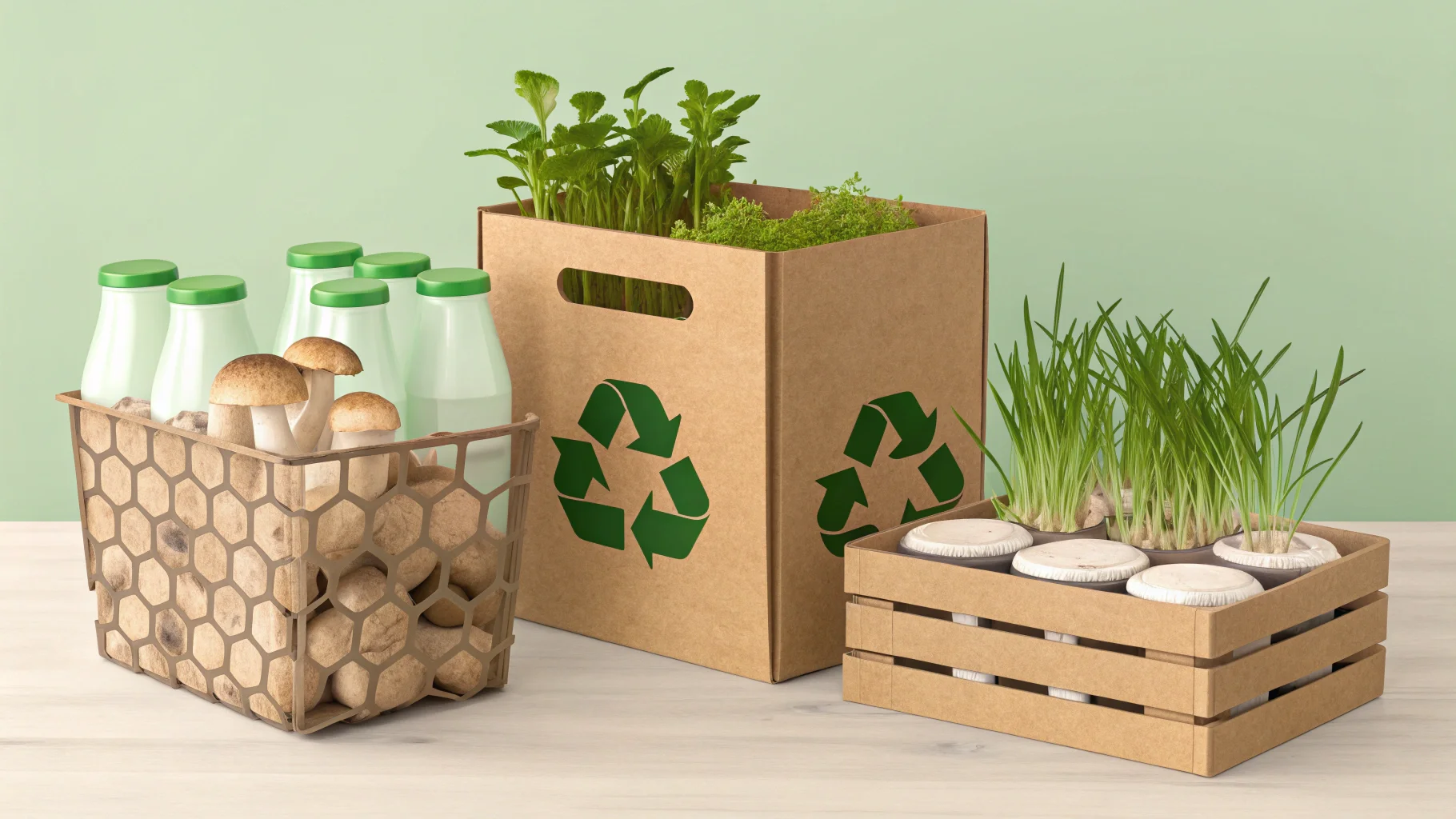
The most exciting shift I see is the move away from "end-of-life" thinking towards "continuous life." Digital watermarks, for instance, are invisible codes embedded in the packaging artwork. When the package reaches a recycling facility, a scanner can instantly identify the exact type of plastic and sort it perfectly, dramatically increasing recycling quality. Another area is carbon-capture technology, where packaging is literally made from captured CO2 emissions. These aren't just sci-fi concepts; they are in development right now. For brands, the biggest opportunity will be embracing circular models. Imagine selling a customer a beautiful "bottle for life" and then providing refills in lightweight, low-impact pouches. This not only eliminates huge amounts of waste but also creates an ongoing relationship with your customer. The future isn't just about better recycling; it's about a world where we don't need to recycle as much in the first place.
| Trend | Description | Impact on Brands |
|---|---|---|
| Smart Packaging | Packaging with digital watermarks or NFC chips for advanced sorting. | Higher recycling rates and purity for your chosen materials. |
| Bio-Fabrication | Materials grown from mycelium (mushrooms), algae, or other organisms. | New aesthetic and storytelling opportunities around natural innovation. |
| Circular Models (Refill/Reuse) | Shifting from selling a disposable product to a reusable container and refills. | Builds long-term customer loyalty and significantly reduces waste footprint. |
| Carbon-Capture Materials | Plastics and other materials created by converting captured carbon emissions. | Offers a powerful marketing story of being "carbon negative." |
Conclusion
True sustainability is an integrated process, not a single choice. It requires a holistic view of your packaging's entire journey, clear communication, and a commitment to measurable, practical solutions.
Learn about the advantages of using recycled materials in your packaging strategy. ↩
Discover the benefits of mono-materials for easier recycling and sustainability. ↩
Find out how to effectively communicate recycling instructions to consumers. ↩
Stay informed about future regulations that may impact your packaging choices. ↩
Find out how PCR plastic can reduce waste and lower your carbon footprint. ↩
Explore strategies to minimize the carbon footprint of your packaging choices. ↩
Understand the principles of a circular economy and how it can transform your packaging approach. ↩
Explore how sustainable packaging can enhance your brand's reputation and attract eco-conscious consumers. ↩
Find out how the How2Recycle label can improve recycling rates for your products. ↩
Discover best practices for showcasing your brand's commitment to sustainability. ↩
Learn how to ensure your sustainability claims are genuine and avoid greenwashing. ↩
Learn how a lifecycle assessment can help you make informed packaging decisions. ↩
Explore the innovative technology behind smart packaging and its benefits. ↩
Discover how refill-and-reuse models can create lasting customer relationships. ↩