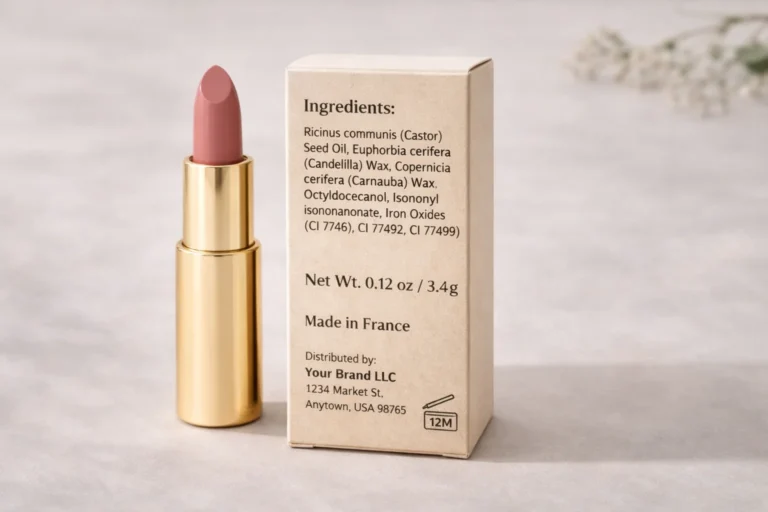
Are you struggling to make a real impact with tiny samples? Full-size makeup subscription boxes1 are your chance to build lasting customer loyalty2 and stand out in a crowded market.
Full-size makeup subscription boxes1 are curated packages sent to subscribers, featuring complete products instead of trial sizes. They are incredibly helpful for brands aiming to build deep customer loyalty2 by providing a genuine, high-value product experience3e](https://en.wikipedia.org/wiki/Customer_experience)%%%FOOTNOTE_REF_4%%% that encourages repeat business and strong brand recognition5.
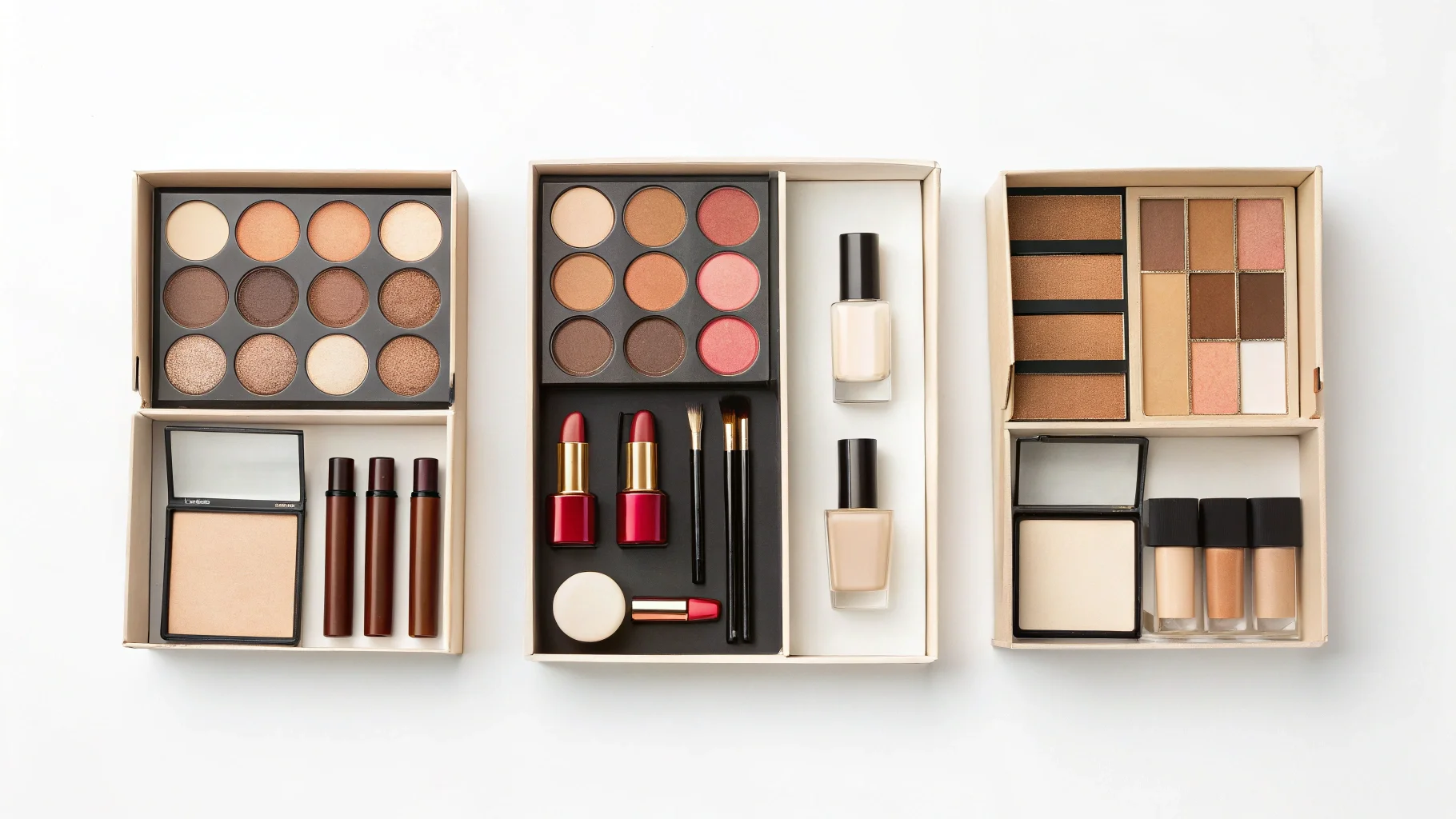
You see the power of giving customers a full product experience4, but launching a subscription box feels like a huge undertaking. It’s about so much more than just putting nice products in a box. I've been on the manufacturing side of these projects for years, and I've seen what separates the runaway successes from the expensive failures. It often comes down to small, practical decisions made long before the first box ever ships. Let's break down exactly how you can make this model work for your brand, starting with the very basics.
What Are Full Size Makeup Subscription Boxes (and Why They Matter)?
Your brand gets lost in a sea of tiny, forgettable samples. Customers might try your product once, but they don't form a real connection. How do you make a truly lasting impression?
Full-size makeup subscription boxes1 deliver complete products directly to consumers on a recurring basis. They matter because they provide a true product experience4, create high perceived value, and turn one-time samplers into long-term customers who understand your brand's full potential.
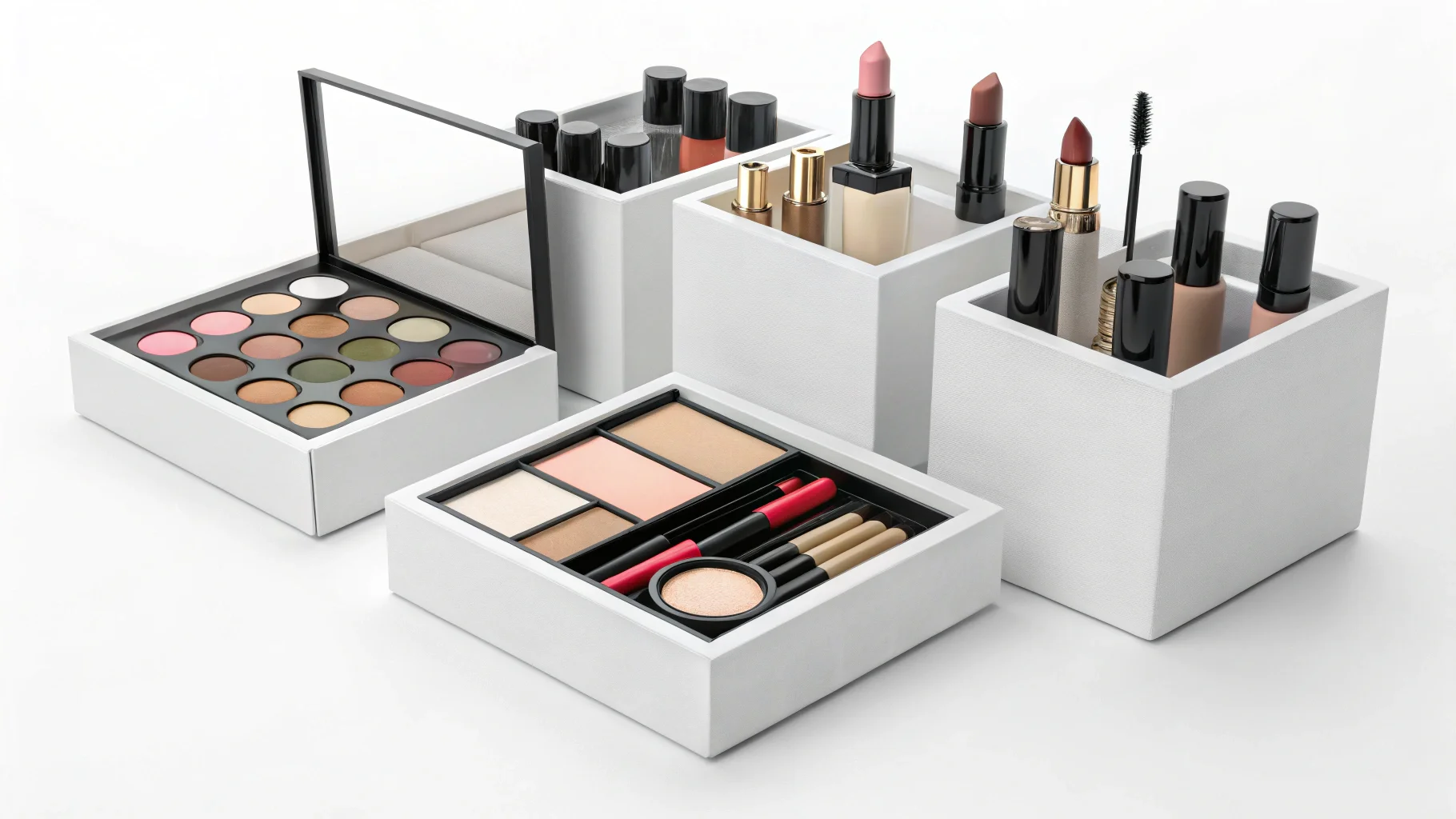
When a customer receives a full-size product, they aren't just "trying" your brand; they are integrating it into their daily life. This is the fundamental difference, and it's a powerful one. A tiny foil packet of foundation is used once and tossed. A full bottle of that same foundation sits on their vanity for weeks. They use it, learn its texture, see the results over time, and form a real opinion. From a brand perspective, this is where true loyalty begins. I’ve seen that this shift from "try" to "own" is what creates brand advocates.
The Customer Experience
Customers feel like they are receiving a true gift, not just a handful of leftovers. The value is obvious. They can use the product for weeks or months, giving it a fair chance to work. This builds trust and a positive association with your brand.
The Brand Benefit
For you, the brand, it's a direct channel to your most engaged customers. You're not just a face on a shelf at a big retailer. You are a welcome guest in their home every month. This creates a powerful feedback loop and a community around your products. It’s not just a marketing tool; it's a logistics operation that builds relationships.
Full Size vs Sample Size Boxes: Which One Is Right for Your Brand?
Choosing between full-size and sample boxes feels like a big risk. One seems incredibly expensive, while the other can feel cheap and ineffective. How do you decide which path is right?
Choose full-size boxes when your goal is to build deep brand loyalty and showcase the true value of your hero products6. Sample-size boxes are better for new product discovery and reaching the widest possible audience on a smaller budget. Your choice depends entirely on your goals.
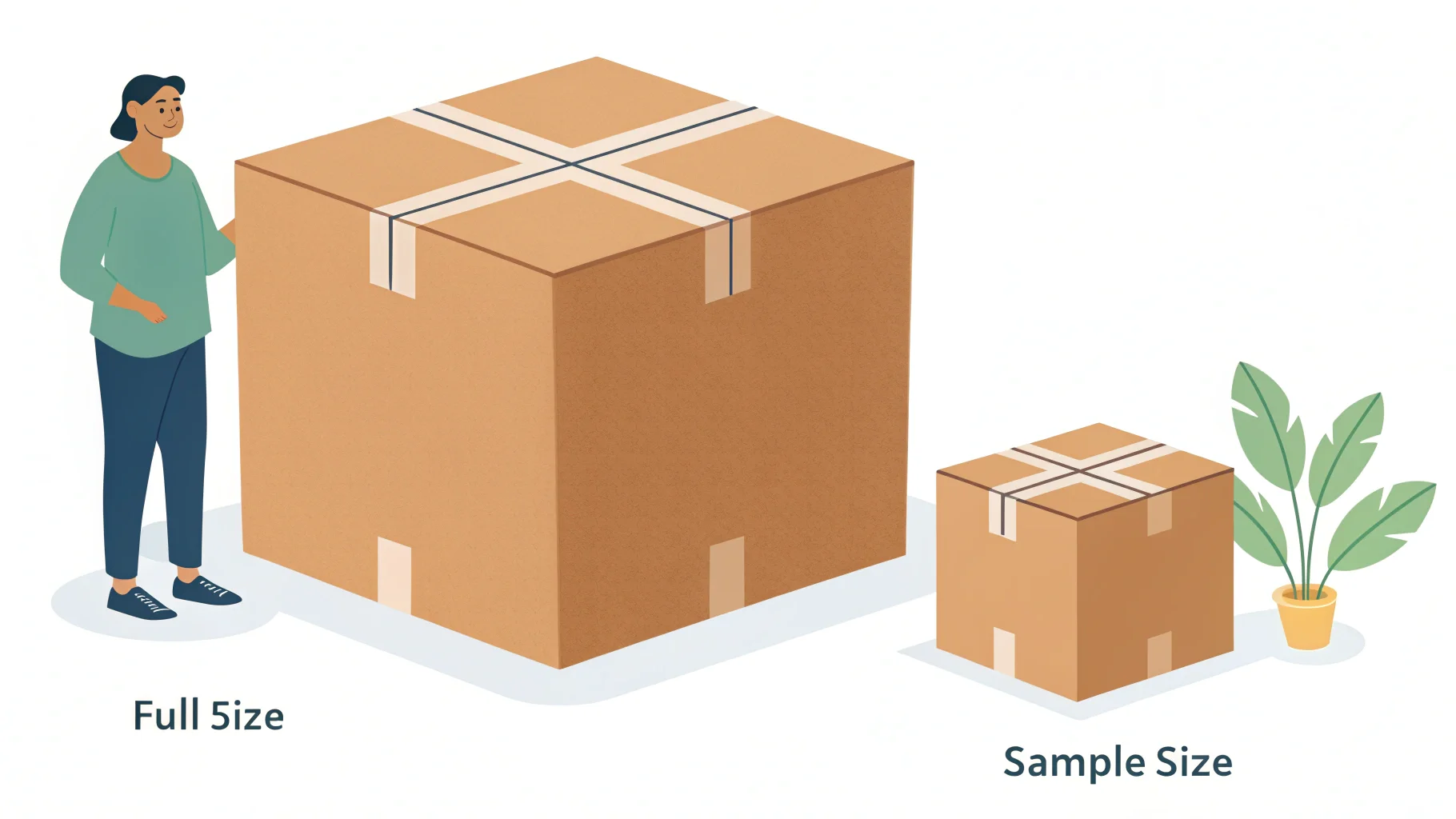
The decision between full-size and sample-size boxes7 comes down to your primary objective: acquisition or retention. Sample boxes are a numbers game. You spend a little to reach a lot of people, hoping a small percentage will convert to a full-size purchase later. It's a great strategy for broad-based brand awareness and launching something totally new.
Full-size boxes are an investment in your best customers. You spend more per customer, but the goal is different. You want to turn a curious subscriber into a lifelong fan. From my experience in production, the logistics are also completely different. The packaging for full-size items must be far more robust to prevent damage. A broken eyeshadow palette is a customer service nightmare. This isn't as big a concern for tiny, durable vials. Think carefully about what you want to achieve before you commit.
| Feature | Full-Size Box | Sample-Size Box |
|---|---|---|
| Primary Goal | Retention & Loyalty | Acquisition & Discovery |
| Customer Impact | High perceived value | Low-risk trial |
| Cost Per Unit | High | Low |
| Logistical Needs | Robust, protective packaging | Simpler, smaller packaging |
| Best For | Hero products, building community | New product launches, wide reach |
What Products Work Best in Full Size Makeup Subscription Boxes?
You're excited to launch a box, but you're stuck on what to include. Choosing the wrong products can lead to wasted inventory and unhappy subscribers. What's the secret to perfect curation?
Products with broad appeal and high perceived value work best. Think universal items like mascaras, primers, setting sprays, or lip balms. Avoid highly specific products like foundation unless you offer robust customization. Your "hero" products with a strong story also perform exceptionally well.
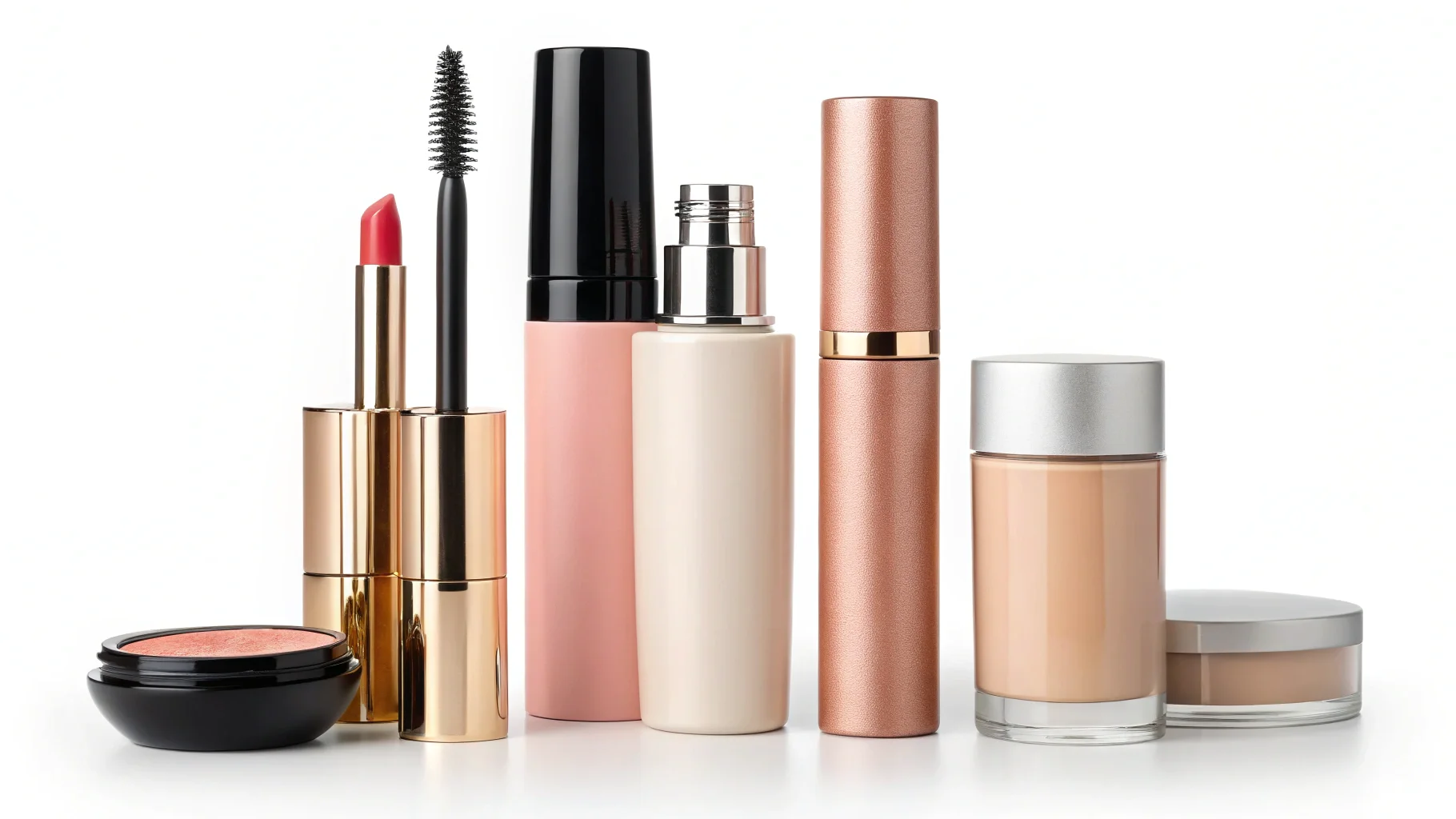
The key to great curation is minimizing the risk of a customer feeling like a product "isn't for them." This is why universal products are the backbone of most successful subscription boxes.
The "Universals"
These are the easy wins. A black mascara, a clear brow gel, a hydrating primer, or a translucent setting powder works for a huge range of skin tones and types. They are low-risk and high-reward because nearly every subscriber can use them immediately. These products are also often "re-up" items, meaning customers will come back to your site to buy them again.
The "Hero" Products
Including your single best-selling product is a great strategy. It reinforces its value and introduces it to a captive audience who might not have purchased it on their own. This is your chance to prove why it's a bestseller.
The "Careful" Categories
Foundation and concealer are the riskiest items due to shade matching. Unless you have a very sophisticated quiz and fulfillment process8, I advise brands to avoid these. Bold or unusual lipstick colors can also be polarizing. From a supply chain perspective, the best products are also easy to pack. I always tell clients to consider a product's "packability." Standard round or square containers are much easier and cheaper to secure in an insert than oddly shaped ones.
How to Design an Effective Full Size Subscription Box?
Your box finally arrives, but the packaging feels flimsy and cheap. The unboxing is a letdown, and your brand image takes a hit. How do you design a box that protects products and wows customers?
An effective design must balance brand aesthetics with structural integrity. It should protect the products, create a memorable unboxing experience9, and be cost-effective to produce and ship. Focus on a secure fit for products and a clear, branded presentation from the moment it's opened.
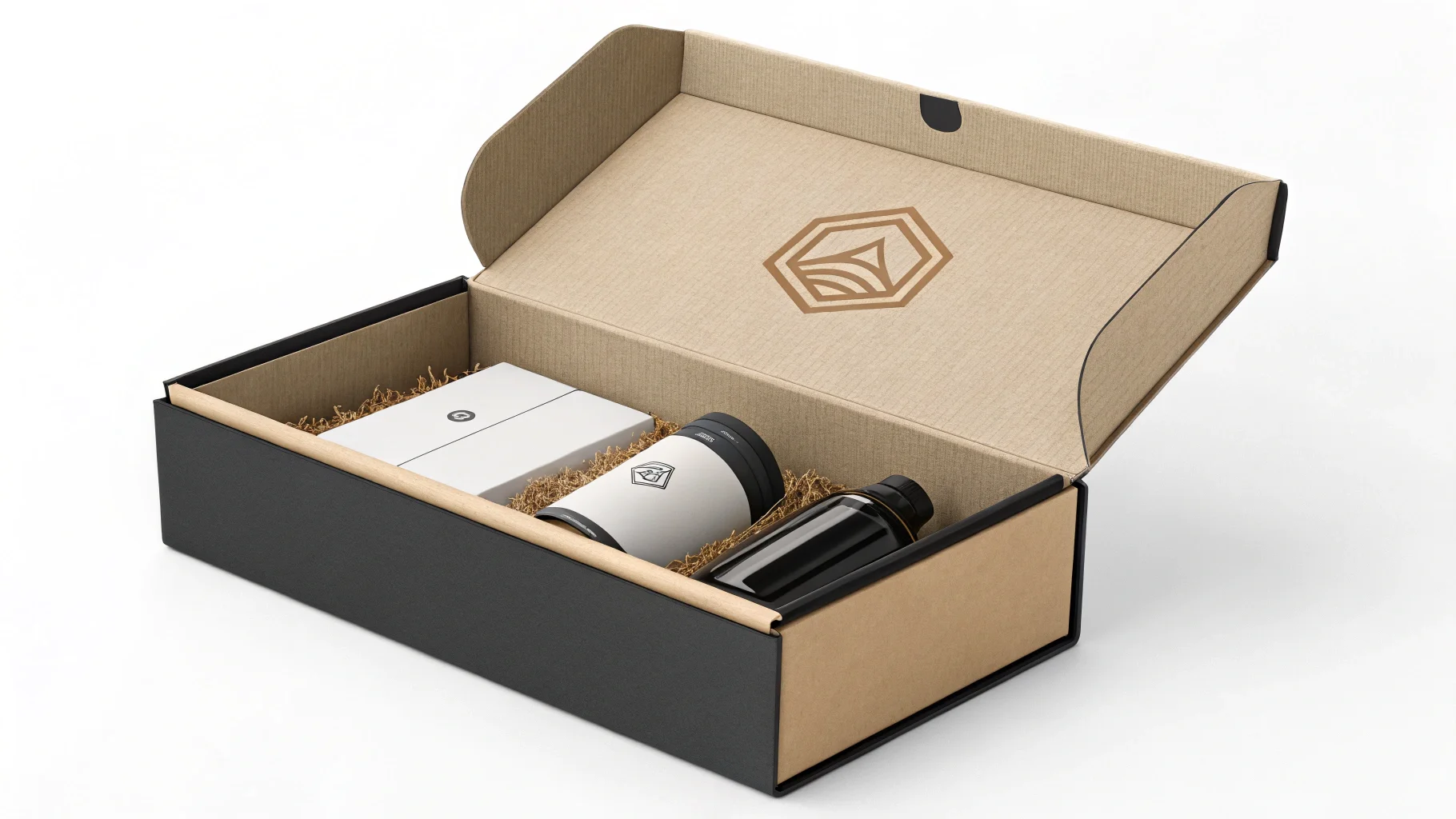
I have seen so many brands fall in love with a beautiful design that completely fails during shipping. An effective box starts with function, not just form. The goal is to deliver a perfect experience, and that experience begins with an undamaged product.
Step 1: The Structural Blueprint
The first thing we figure out is the structure. This usually means a roll-end front-tuck (REFT) mailer box made of corrugated cardboard. Then, we design the insert. This is the most critical part for full-size products. It can be made from paperboard or foam, and it must hold each item snugly. We focus on "right-sizing" the box to eliminate empty space. This reduces costs and prevents items from rattling around and breaking.
Step 2: The Unboxing Experience
Once the products are secure, we can think about the presentation. How does the customer open it? We can use tissue paper with a branded sticker to create a "reveal" moment. A printed card on top that says "Welcome" or "Thank You" adds a personal touch. The goal is to make opening the box feel like opening a gift.
Step 3: Material and Finish
Finally, we choose the materials. Do you want a natural kraft look or a clean white box? A matte or gloss finish? My advice is always to not overspend on fancy finishes if the core structure is weak. A simple, sturdy box with a great one-color print often performs better and is more scalable than a complex, full-color box that arrives crushed.
Customization Options That Add Real Brand Value?
A one-size-fits-all box can feel impersonal and wasteful. Customers get products they can't use, and your brand loses its connection. How do you make your box feel uniquely special?
Real value comes from customization that solves a customer's problem. Offer choices based on skin type (oily/dry), color preference (nudes/bolds), or product focus (skincare/makeup). Even simple monogramming on a note or sleeve adds a personal touch without complicating logistics.
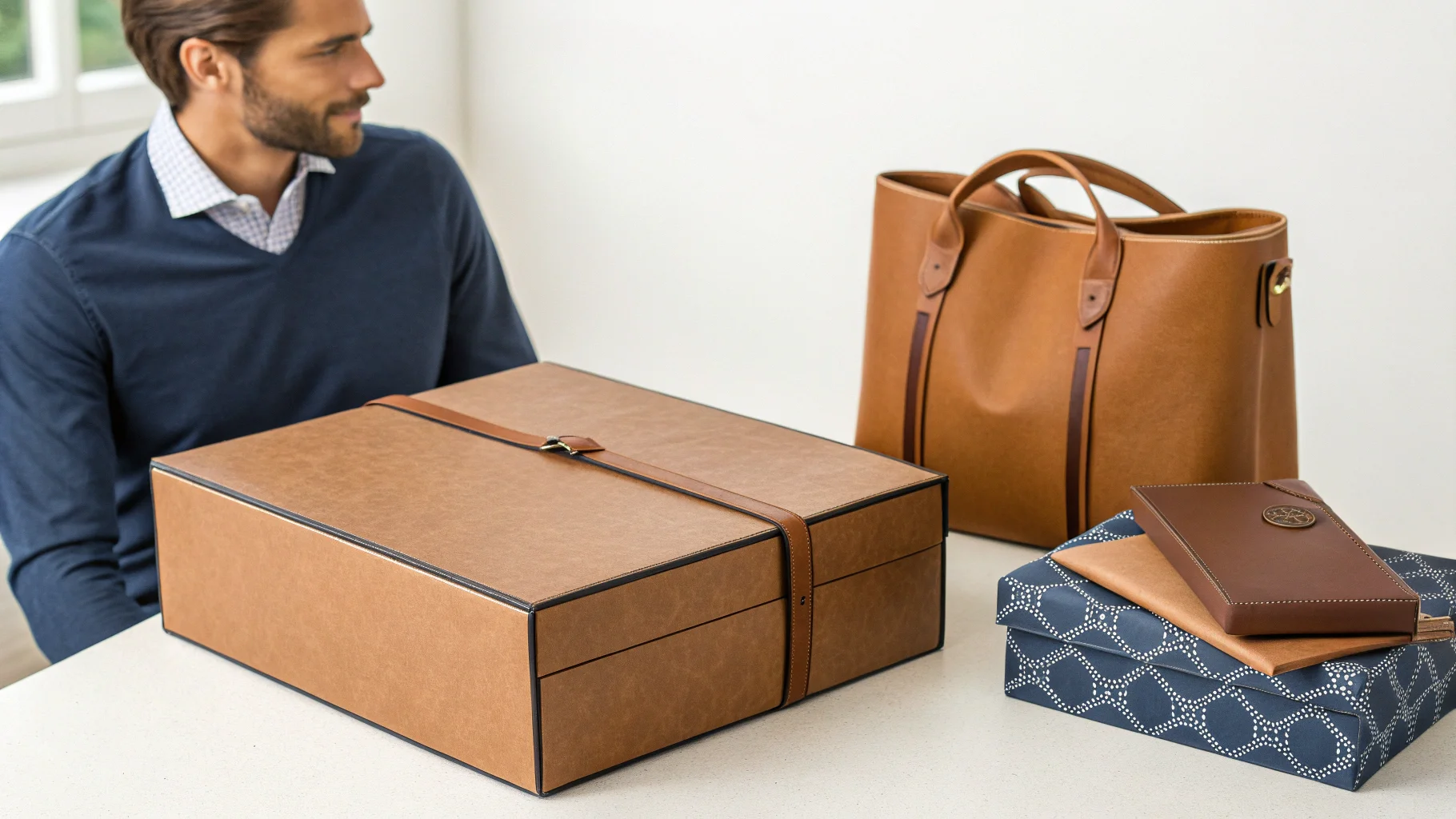
Customization is the next level of subscription box service, but it can also be a logistical nightmare if not planned correctly. The key is to offer meaningful choices that don't break your fulfillment process8. From a supply chain perspective, I've seen brands succeed by starting simple and scaling up.
Product-Level Customization
This is the most complex but also the most valuable to the customer. This involves letting a subscriber choose their lipstick shade, serum type, or eyeshadow palette from a few options. It requires a very sophisticated inventory and fulfillment system to get right, as you are essentially creating unique boxes for each person.
Theme-Level Customization
This is a much more manageable approach. You create two or three different box "themes" for the month. For example, a "Natural Glow" box and a "Bold Glam" box. The products in each are fixed, but the customer gets to choose the theme that best fits their style. This simplifies picking and packing immensely.
Simple Personal Touches
Never underestimate the power of small gestures. Including a welcome card with the subscriber's name printed on it is a simple, effective touch. Some brands offer a choice of add-on samples at checkout. These options make the customer feel seen without requiring you to overhaul your entire assembly line. I often recommend brands start here to test the waters.
Branding, Marketing & Retention Benefits?
You spend a fortune on digital ads, but customers don't seem to stick around. Your marketing feels like you're shouting into the void. How can you build a brand that people actually love and talk about?
Subscription boxes are a powerful retention machine. They create a recurring brand touchpoint, foster a community through shared experiences, and generate authentic user-generated content10 for marketing. This builds a loyal customer base that feels connected to your brand beyond a single transaction.

A subscription box transforms your marketing from a one-way announcement to a two-way relationship. It’s a physical piece of your brand that lives in your customer's home.
Branding: Your Box is a Billboard
Every month, a box with your logo arrives at their door. It sits on their counter. They interact with your products daily. This constant, physical presence builds brand recall in a way a digital ad never can. The box itself is a vessel for your brand story, told through its design, curation, and the products inside.
Marketing: The Power of User-Generated Content
Unboxing videos and Instagram posts are free, authentic advertising. People love to share their new goodies. You can encourage this by creating a unique hashtag or even running a contest for the best unboxing photo. This content is far more trustworthy and influential to potential new customers than a polished ad.
Retention: Building a Habit and a Community
The monthly arrival creates anticipation and a routine. It becomes a treat that customers look forward to. I've seen brands use their box to make subscribers feel like insiders. They might launch a new product exclusively to subscribers first or include a note from the founder. This makes the community feel special and valued, dramatically boosting loyalty and reducing churn.
Cost Factors Brands Should Consider Before Launching?
The idea of a subscription box is exciting, but the fear of hidden costs is real. You launch, and suddenly you realize you're losing money on every box. How do you plan your budget effectively?
Key costs include the products (COGS), custom packaging, fulfillment labor (pick, pack, and ship), shipping fees, and marketing. Underestimating packaging and shipping costs is the single most common and dangerous mistake. You must calculate your total cost per box to set a profitable price.

Profitability in subscription boxes is a game of inches. A few cents saved on packaging or a few ounces saved on shipping weight can make all the difference when you scale. I always force my clients to build a detailed cost sheet before they even think about marketing.
Here are the line items you cannot ignore:
- Products (COGS): This is the cost of the actual full-size items you're putting in the box. This is usually the biggest single expense.
- Packaging: This is where brands get surprised. It's not just the mailer box. It's the custom inserts, any filler paper, tissue, stickers, tape, and shipping labels. I always tell them to get packaging quotes early. A complex die-cut insert can easily cost more than the box itself. Simplify to save.
- Fulfillment: This is the labor cost to physically assemble each box. Whether you do it in-house or use a 3PL (third-party logistics) company, someone's time costs money.
- Shipping: This is the actual postage. Right-sizing your box is critical here. I've seen a box that was just one inch too big push a brand into a higher shipping tier, destroying their profit margin on thousands of units. We measure everything to prevent this.
- Marketing & Overheads: Don't forget the cost to acquire the customer in the first place, plus credit card processing fees and customer service costs.
Common Mistakes to Avoid with Full Size Subscription Boxes?
So many brands have tried and failed with subscription boxes, becoming a cautionary tale. You don't want to be another one. What are the hidden traps that sink these exciting projects?
Common mistakes include poor product curation, wildly underestimating shipping and packaging costs, and using weak packaging that leads to damaged goods. The biggest mistake is designing packaging for looks alone, completely ignoring the practical demands of shipping and fulfillment.
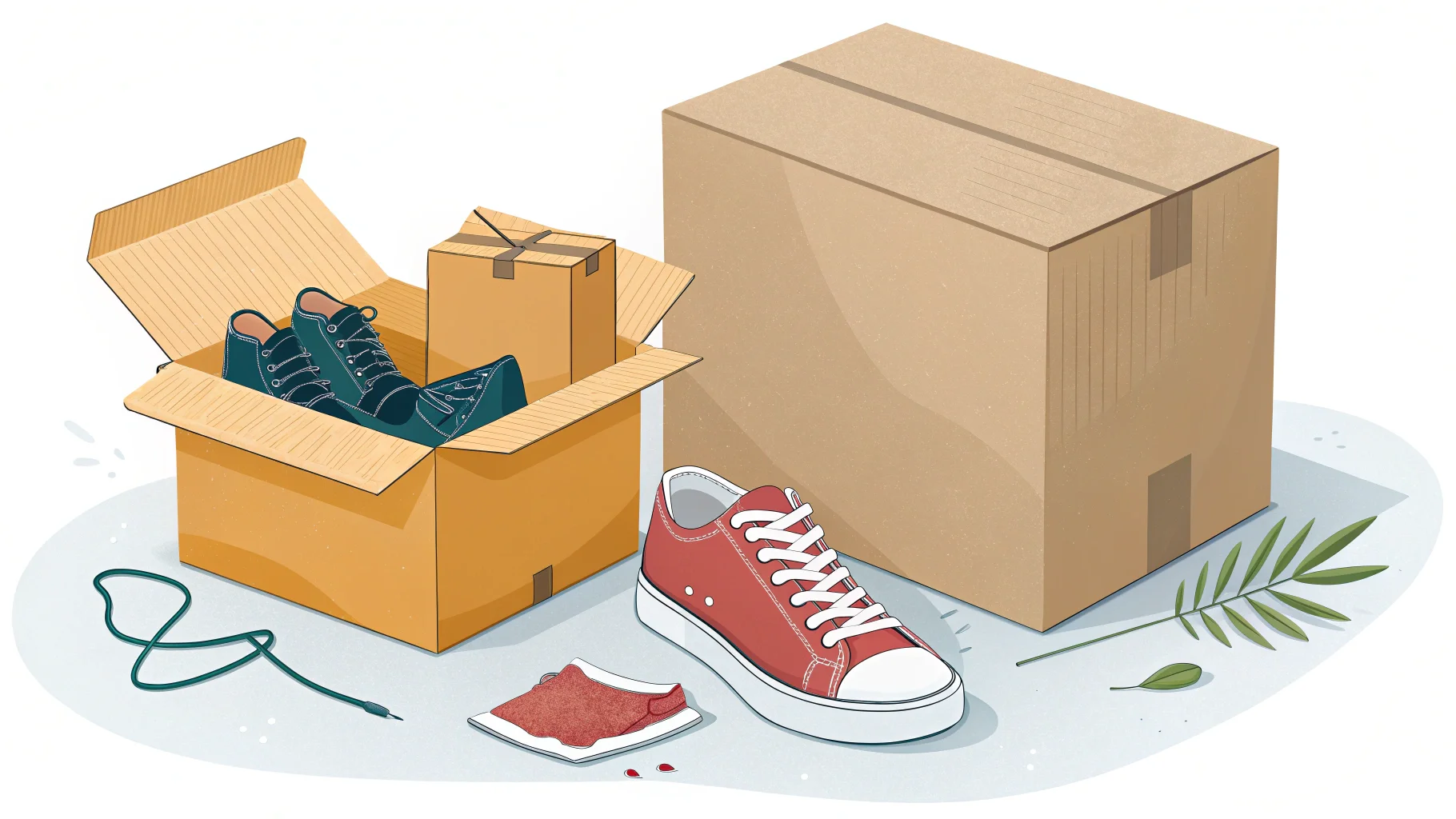
Over the years, I've been called in to fix a lot of subscription box programs that have gone off the rails. The problems are almost always the same. Avoiding these few common pitfalls can put you light-years ahead of the competition.
Mistake 1: Ignoring the Math
This is the most frequent and fatal error. Brands get excited about the marketing potential and forget to calculate the total, all-in cost for every single box they ship. They price it too low, and with every new subscriber, they lose more money. You must know your numbers.
Mistake 2: Prioritizing Beauty Over Brawn in Packaging
This is my pet peeve. I've had to redesign so many "beautiful" boxes because they simply couldn't survive a trip through the postal system. A crushed box with broken product is the worst possible first impression. Your design process must be logistics-first. A sturdy, protective box is non-negotiable.
Mistake 3: One-and-Done Thinking
You put all your energy into launching the first box, but you have no plan for months two, three, and four. Subscription is a long-term game. You need a product and content calendar planned out for at least six months to ensure the experience stays fresh and valuable, preventing customers from canceling after their first box.
How to Choose the Right Packaging Supplier?
You found a cheap supplier online, but they miss deadlines, and the color is inconsistent. Your big launch is delayed, and your brand looks unprofessional. How do you find a true partner?
Choose a supplier who understands subscription box logistics, not just printing. Look for deep experience in e-commerce packaging, proven quality control, and the ability to scale with you. Ask for structural samples of their work, not just pretty pictures, and verify their production lead times.
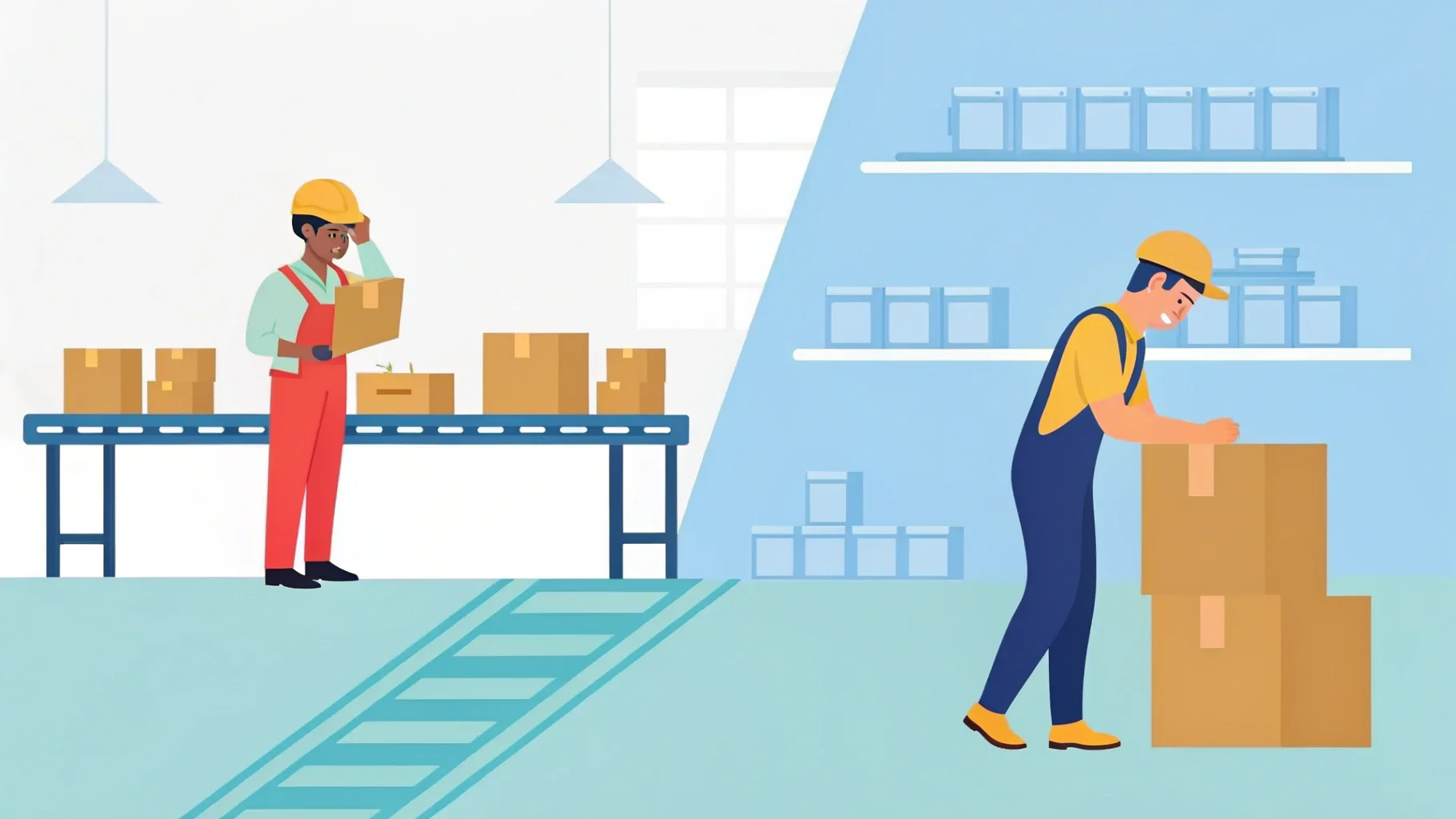
Your packaging supplier isn't just a vendor; they are one of your most important partners in a subscription business. A bad supplier can sink your entire operation with delays, quality issues, and poor advice. Finding the right one is critical.
Look for E-commerce and Fulfillment Experience
A good supplier knows the difference between a retail box and a mailer box. They understand the requirements of shipping carriers like UPS and USPS. They can advise you on materials that reduce weight and structures that survive fulfillment center automation. If they don't ask you about your fulfillment process, that's a red flag.
Always Ask for a Structural Sample
A pretty PDF proof or a printed sample means nothing about durability. I always insist my clients get a physical, non-printed "white sample" first. I have them put their actual products inside. We shake it. We drop it. We try to crush it with our hands. This simple test tells you more about the box's quality than any sales pitch.
Discuss Scalability from Day One
The supplier you choose should be able to produce 1,000 boxes for your launch and 10,000 boxes six months later without a drop in quality. Ask them about their capacity. A good supplier is a long-term partner who can grow with you. I can tell you from experience that switching packaging suppliers mid-stream is a logistical nightmare that you want to avoid at all costs.
FAQ: Full Size Makeup Subscription Boxes?
You still have questions and feel a little uncertain about the details. That's normal. Small decisions can make or break your launch. Let's tackle the most common questions I hear from brands.
The most common question is about profitability. To be profitable, your subscription price must comfortably cover all costs: products, packaging, fulfillment, shipping, and marketing. A good rule of thumb is for the total retail value of the products inside to be 3-4x the box price.
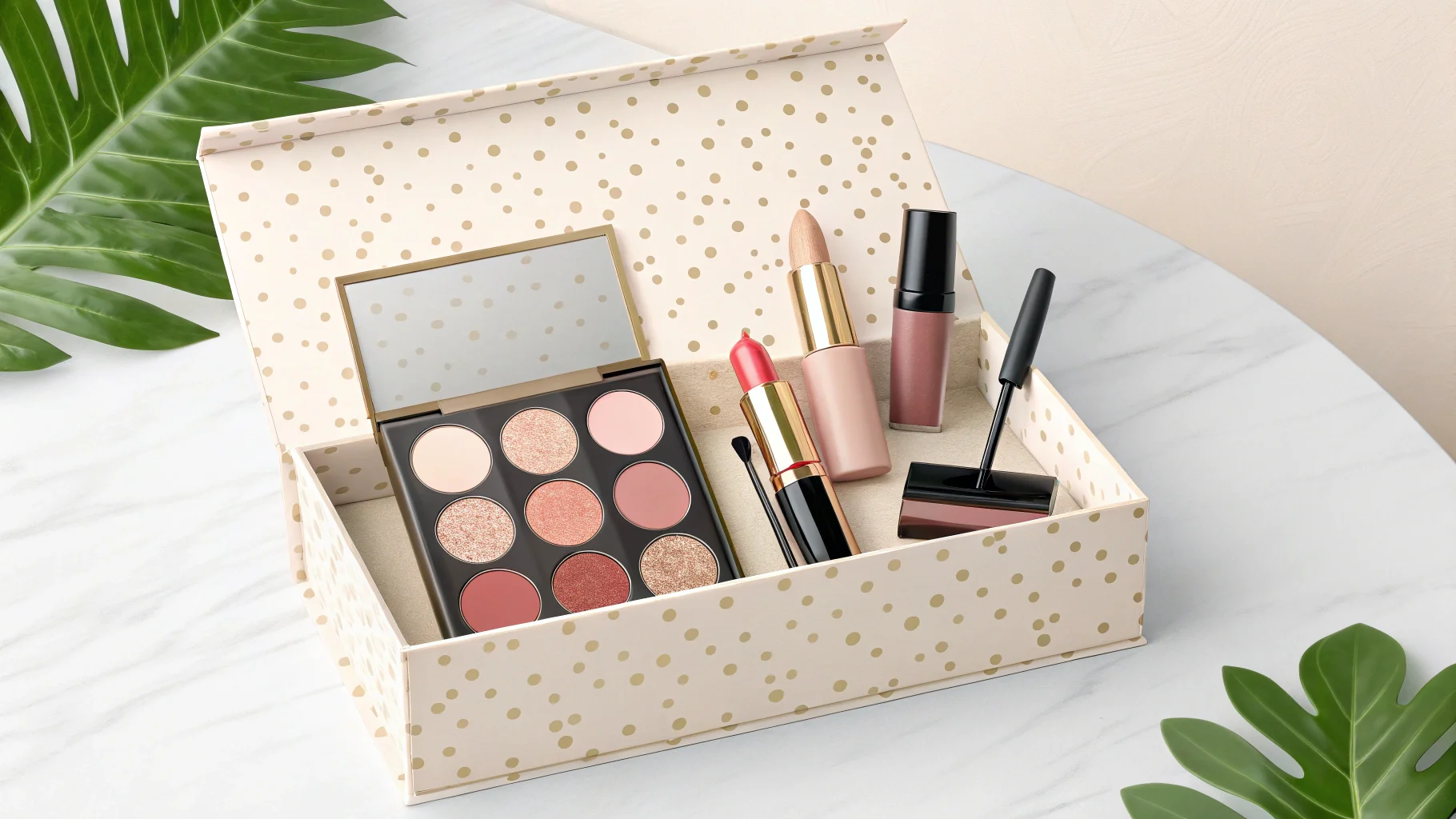
Diving into a subscription box model involves a lot of moving parts. Here are quick, practical answers to the questions I get asked most often by brands just like yours.
Q: What's a good starting order quantity?
A: Start as small as your supplier will allow to test the market, which is often between 500 to 1,000 units. This minimizes your initial financial risk while still giving you enough volume to get a feel for the process. Make sure your supplier can handle this initial run but is also fully prepared to scale to 5,000 or 10,000 units quickly. This ensures you won't have to switch partners right when you start growing.
Q: How far in advance should I plan everything?
A: Plan for a minimum of 4-6 months from idea to first shipment. From my direct experience, the packaging part alone—design, structural sampling, print proofing, production, and freight shipping to your fulfillment center—can easily take 8-12 weeks. Rushing this process is the number one reason for costly mistakes like weak boxes or poor print quality. Plan early so you have time to get it right.
Q: Can I use my products' existing retail packaging inside the box?
A: Absolutely, but your subscription box inserts must be designed to hold them perfectly. A product rattling around inside the mailer feels cheap and is at high risk of getting damaged. During the structural design phase, we use the exact dimensions of your retail-packaged items to create die-lines for an insert that will hold them securely in place.
Conclusion
Full-size subscription boxes are a fantastic tool for growth. When you balance amazing products with smart, scalable, and protective packaging, you create a sustainable channel for building true customer loyalty.
Explore this resource to understand the benefits and mechanics of full-size makeup subscription boxes. ↩
Learn strategies for enhancing customer loyalty through effective subscription box offerings. ↩
Discover what makes a product experience valuable and how it impacts customer retention. ↩
Understand the critical role of product experience in retaining customers and building loyalty. ↩
Find out how subscription boxes can significantly boost your brand's visibility and recognition. ↩
Learn about the significance of hero products in driving sales and customer engagement. ↩
Explore the benefits of using sample-size boxes for product discovery and audience reach. ↩
Understand the steps involved in the fulfillment process to ensure timely delivery and customer satisfaction. ↩
Discover tips for designing an unboxing experience that delights customers and enhances brand perception. ↩
Learn how to leverage user-generated content for authentic marketing and brand engagement. ↩